New AI Model Transforms Brain Scan Analysis for Doctors

AI Breakthrough in Medical Imaging

In a significant leap for medical technology, Yinghe Yimei has unveiled "Xiaojun Doctor 2.0" - an artificial intelligence system that could revolutionize how doctors interpret cranial CT scans. The launch event in Beijing on April 24 drew crowds of medical professionals eager to see this innovation firsthand.

How It Works

The system taps into Beijing Tiantan Hospital's vast collection of brain scan data, using deep learning to spot patterns human eyes might miss. What sets it apart? This isn't just another narrow AI tool focused on specific conditions. The model covers the full spectrum of brain disorders, from everyday cases to medical rarities.

"We've moved beyond simple image recognition," explains the development team. "Our 'base model' and 'AI Agent' architecture allows the system to understand context like a seasoned radiologist would."

Real-World Impact

For patients, this translates to quicker, more precise diagnoses. Picture this: instead of waiting days for scan results, your doctor could have a detailed report almost immediately after your CT exam. For radiologists drowning in mounting caseloads, it's like gaining an ultra-efficient assistant who never tires.

Hospitals stand to benefit too. With faster turnaround times and reduced diagnostic errors, patient care improves while costs potentially decrease. Early tests show particular promise in catching subtle abnormalities that sometimes slip through in busy clinical settings.

The Human Touch

The developers emphasize this isn't about replacing doctors but empowering them. "Think of it as GPS for radiology," one team member suggests. "You still need the skilled driver, but the technology helps navigate complex terrain more efficiently."

As digital healthcare evolves, tools like Xiaojun Doctor 2.0 highlight how AI can tackle medicine's most pressing challenges - not with flashy promises, but practical solutions that make a difference where it counts.

Key Points:

  • Faster diagnoses: Patients get scan results quicker than ever before
  • Comprehensive analysis: Detects both common and rare brain conditions
  • Doctor-friendly design: Enhances rather than replaces medical expertise
  • Real hospital data: Built on Tiantan Hospital's extensive case library
Enjoyed this article?

Subscribe to our newsletter for the latest AI news, product reviews, and project recommendations delivered to your inbox weekly.

Weekly digestFree foreverUnsubscribe anytime

Related Articles

News

Medical AI Milestone: Tiantan Hospital Unveils Breakthrough Brain Scan Analysis Tool

Beijing's prestigious Tiantan Hospital has teamed up with Yinghe Yimei to introduce 'Xiaojun Doctor 2.0', a revolutionary AI system that can analyze cranial CT scans and generate comprehensive diagnostic reports. This world-first technology moves beyond simple lesion detection to mimic clinical reasoning, potentially transforming how doctors interpret brain scans. The system promises to standardize neuroimaging diagnosis while handling the full spectrum of cranial diseases - a significant leap forward for medical AI applications.

April 24, 2026
medical AIneuroradiologyhealthtech innovation
News

OpenAI gives doctors free access to specialized ChatGPT

OpenAI is making waves in healthcare by offering medical professionals free access to a clinical version of ChatGPT. Designed specifically for doctors, nurses, and pharmacists, this tool aims to streamline medical workflows and support decision-making. The service will debut in the U.S. with robust verification systems to ensure security and professional standards. This initiative could transform how healthcare workers retrieve information, analyze cases, and generate reports.

April 23, 2026
OpenAIhealthcare technologymedical AI
Google's MedGemma 1.5 AI Takes Medical Imaging to the Next Dimension
News

Google's MedGemma 1.5 AI Takes Medical Imaging to the Next Dimension

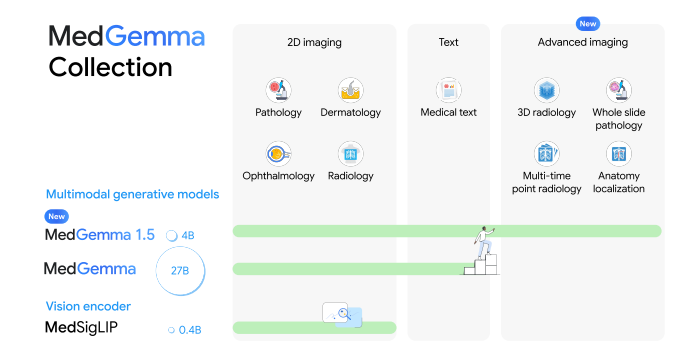
Google has just unveiled MedGemma 1.5, its latest open-source medical AI that can interpret complex 3D scans with remarkable accuracy. This upgrade moves beyond traditional 2D image analysis, offering doctors potential new tools for everything from tumor tracking to digital pathology. While not yet ready for clinical use, the model shows impressive improvements - achieving double-digit accuracy gains while maintaining its efficient 4 billion parameter size.

April 17, 2026
medical AIGoogle ResearchAI in healthcare
Virtual Doctors Meet AI Patients in Tsinghua’s Groundbreaking Digital Clinic
News

Virtual Doctors Meet AI Patients in Tsinghua’s Groundbreaking Digital Clinic

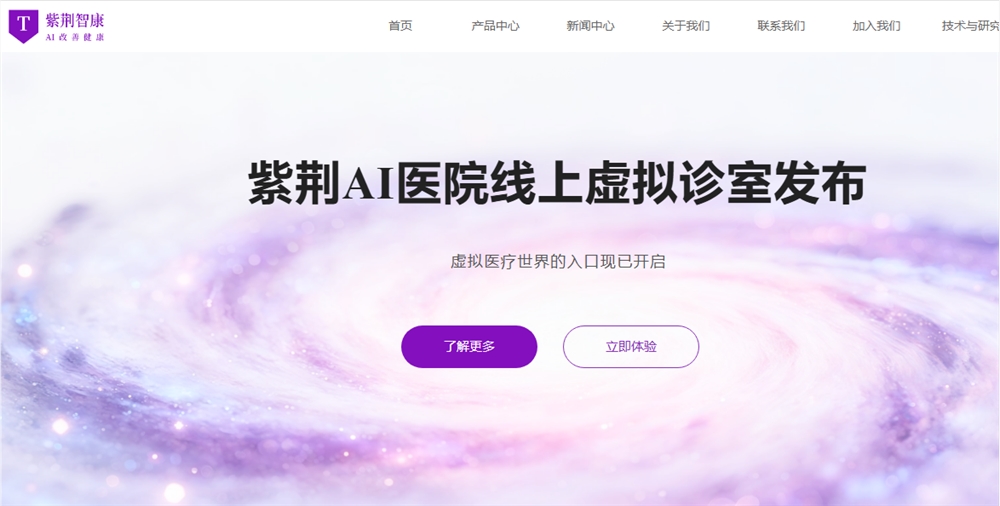
Tsinghua University's Zijing Zhikang has unveiled a futuristic 'AI Hospital' where doctors can create digital twins of themselves. These virtual physicians interact with hyper-realistic AI patients in simulated consultations, allowing for real-time skill development. The system spans 26 clinical specialties and builds on Tsinghua's pioneering 'Agent Hospital' concept. This marks a major leap from experimental tech to practical medical training tools.

April 13, 2026
medical AIvirtual healthcaredoctor training
How an AI Nutrition Coach Outperformed Human Experts
News

How an AI Nutrition Coach Outperformed Human Experts

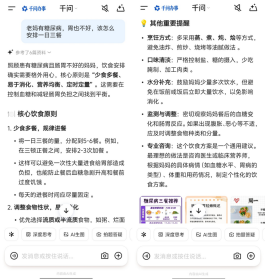
When 68-year-old diabetic patient Li needed dietary advice, her son turned to an AI app - and was stunned by the practical, personalized response. A recent blind test pitting three AI health assistants against nutrition experts revealed one clear winner: Qwen. With its authoritative data sources and actionable advice, this AI is changing how we approach everyday health questions - though doctors warn it's no replacement for medical diagnosis.

April 9, 2026
AI health assistantsnutrition technologymedical AI
Ant Health's AI Now Taps Into China's Premier Medical Database
News

Ant Health's AI Now Taps Into China's Premier Medical Database

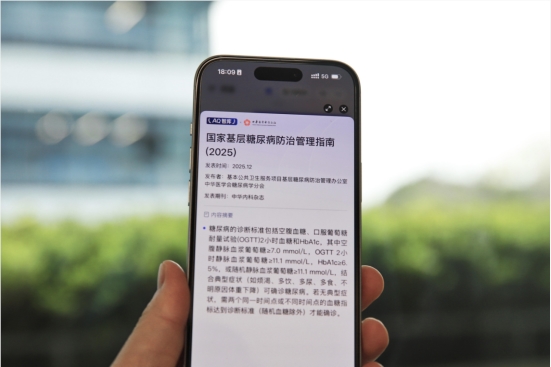
In a major step for digital healthcare, Ant Health's AI assistant Afu has gained full access to the Chinese Medical Association Journal's authoritative knowledge base. This integration allows Afu to reference the latest clinical guidelines and research when answering health queries, bringing professional medical insights to millions of users. The move represents a significant bridge between specialized medical knowledge and public accessibility through AI technology.

March 17, 2026
digital healthmedical AIhealth technology