Musk Foresees AI Writing Code Directly - Is Programming Doomed?

Musk's Radical Prediction: The End of Programming As We Know It

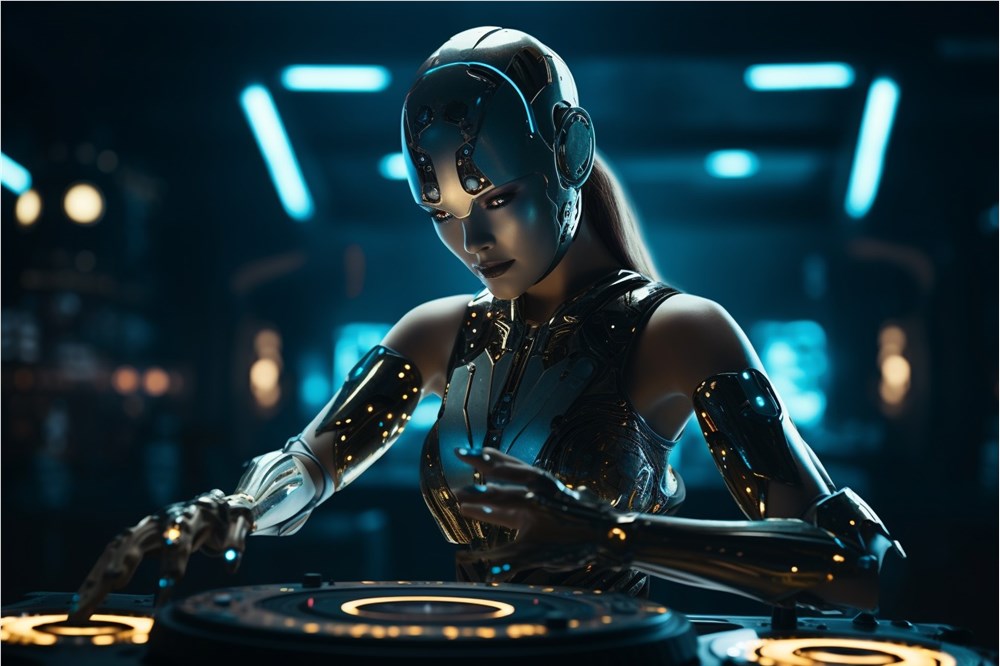
In a recent video that sent shockwaves through tech circles, Elon Musk made a bold declaration: "By late 2026, humans won't need to program anymore." The billionaire entrepreneur envisions AI systems that can generate optimized binary code directly from human requirements, skipping traditional programming languages altogether.
Image

From Code to Conversation: The Coming Shift

Musk argues that current programming represents an unnecessary middle step. "Why translate ideas into imperfect human-readable code," he asks, "when AI can go straight from requirements to machine-optimized binaries?" This radical approach could collapse the distance between concept and execution dramatically.

The implications are staggering:

  • Traditional compilers might become obsolete
  • Programming languages could fade into history
  • Software development may shift entirely to requirement specification

China's AI Coding Revolution Gains Momentum

The timing coincides with explosive growth in China's AI coding sector:

  • ByteDance launched Doubao 2.0 on Valentine's Day featuring enhanced code interpretation capabilities
  • MiniMax debuted M2.5 - touted as the first production-ready Agent-native model for full-stack programming
  • Zhipu AI's GLM-5 shows remarkable autonomy in complex engineering tasks
  • DeepSeek V4, expected soon, promises continued dominance in coding benchmarks

Programmers Evolve or Perish?

The Anthropic research group offers a nuanced perspective in their latest report. While acknowledging massive productivity gains (projects completing weeks instead of months), they see programmers transitioning rather than disappearing:

"Tomorrow's developers will be architectural overseers and Agent coordinators rather than hands-on coders," explains their trends analysis.

The market potential is enormous - Grand View Horizon projects $2.6 billion for AI coding tools by 2030. Chinese firms appear particularly well-positioned thanks to cost advantages and deep integration with local development ecosystems.

As Musk puts it: "We're rewriting ten thousand years of human creation." Whether his timeline proves accurate remains uncertain, but the transformation underway is undeniable.

Key Points:

  1. Musk predicts direct binary generation by late 2026
  2. Major Chinese tech firms are investing heavily in Agent-native coding models
  3. Programmer roles likely to shift toward oversight rather than hands-on coding
  4. Global market projected at $2.6 billion within six years
Enjoyed this article?

Subscribe to our newsletter for the latest AI news, product reviews, and project recommendations delivered to your inbox weekly.

Weekly digestFree foreverUnsubscribe anytime

Related Articles

Gemini 3 Deep Think Outsmarts All But Seven Programmers Worldwide
News

Gemini 3 Deep Think Outsmarts All But Seven Programmers Worldwide

Google's Gemini 3 Deep Think AI has made staggering leaps in programming and scientific reasoning, now outperforming all but seven human competitors on Codeforces. Beyond coding, it spots subtle errors in physics papers that escape peer review and transforms rough sketches into precise 3D models overnight. This upgrade marks a watershed moment where AI reasoning begins matching human intuition.

February 13, 2026
ArtificialIntelligenceProgrammingScientificResearch
News

Musk's Moon Factory: How xAI Plans to Train AI in Space

Elon Musk's xAI unveiled ambitious plans to build AI satellites on the Moon and train models in orbit, leveraging SpaceX's infrastructure. The company also announced organizational changes, with Imagine image generator hitting 12 million daily users. Space-based computing could solve Earth's energy and cooling challenges for AI development.

February 12, 2026
SpaceXArtificial IntelligenceFuture Tech
Musk's xAI unveils lunar ambitions amid team shakeup
News

Musk's xAI unveils lunar ambitions amid team shakeup

Elon Musk's xAI dropped a bombshell 45-minute meeting video revealing major organizational changes and sci-fi ambitions. The restructured company now operates through four specialized teams while grappling with content moderation challenges. Most strikingly, Musk outlined plans for a lunar AI factory that could harness solar energy on an unprecedented scale - if they can get past the current growing pains.

February 12, 2026
Elon MuskArtificial IntelligenceSpace Technology
News

Doubao Joins Spring Festival Gala with High-Tech Giveaway

ByteDance's AI assistant Doubao is making waves this Lunar New Year by announcing its participation in the CCTV Spring Festival Gala. Unlike traditional cash giveaways, Doubao is offering over 100,000 smart devices enhanced with its AI technology, from drones to smart home appliances. The event kicks off with preheating activities on February 13th before the main event during the gala broadcast on New Year's Eve.

February 10, 2026
AISpringFestivalGalaTechGiveaway
Alibaba's Qwen3.5 AI Model Nears Release with Vision-Language Capabilities
News

Alibaba's Qwen3.5 AI Model Nears Release with Vision-Language Capabilities

Alibaba's next-generation AI model Qwen3.5 appears ready for launch, with code appearing in the HuggingFace repository. The model reportedly features a hybrid attention mechanism and may debut as a native vision-language model (VLM). Developers have spotted references to both a compact 2B dense model and a more powerful 35B-A3B MoE variant. If current rumors hold true, Chinese New Year celebrations might coincide with this significant open-source release in the AI community.

February 9, 2026
AIMachine LearningAlibaba
News

Musk Sounds Alarm: AI and Robotics Could Be America's Financial Lifeline

Elon Musk has issued a stark warning about America's mounting debt crisis, suggesting that artificial intelligence and robotics may be the only solution to avoid economic collapse. With U.S. debt reaching $38.5 trillion and annual interest payments surpassing defense spending, Musk argues that technological innovation isn't just beneficial—it's essential for national survival. His controversial proposal includes government austerity measures to fund AI development, despite potential deflationary risks.

February 9, 2026
Elon MuskEconomic CrisisArtificial Intelligence