Mozilla Shuts Down AI Detection Tool 'Deep Fake Detector'

Mozilla Discontinues AI Content Detection Tool

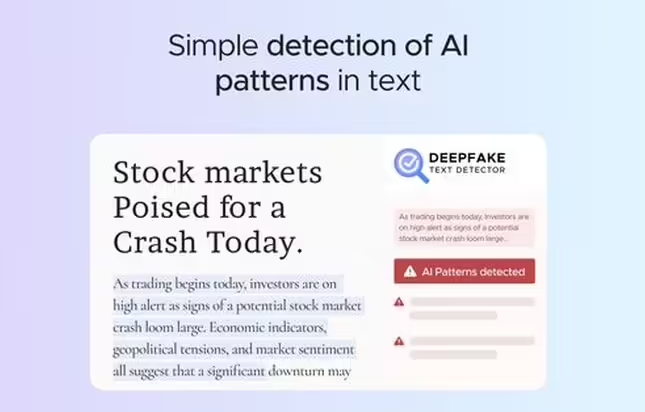
Mozilla Corporation has announced that it will officially discontinue its AI content detection extension, 'Deep Fake Detector,' on June 26. The same day will also mark the shutdown of another Mozilla extension, Orbit, an AI assistant tool. The decision has sparked significant attention from both users and media outlets.
Image

About 'Deep Fake Detector'

The 'Deep Fake Detector' was designed to help users identify AI-generated content, leveraging open-source models like ApolloDFT and Binocular for analysis. Unlike many commercial detection services, Mozilla's tool was open-source, which garnered favor among certain users. However, its adoption fell short of expectations. According to Mozilla's official store data, the tool had only around 3,300 active users at the time of the announcement.

Implications of the Shutdown

Tech media outlet omgubuntu speculated that Mozilla's decision to shutter the tool might reflect a default acceptance of AI-generated content. As AI content becomes increasingly prevalent, the move could pose risks for Mozilla's Firefox browser, potentially leading to a decline in content quality and user experience. This, in turn, might affect the company's long-term viability.

Lack of Official Explanation

Mozilla has not provided a detailed explanation for the discontinuation. For users who rely on tools to verify content authenticity, the news is disappointing. With the rise of AI-generated material online, the demand for reliable detection tools is growing—making Mozilla's exit from this space particularly notable.

Balancing Innovation and User Needs

The shutdown underscores broader challenges in the tech industry: how to balance innovation with user needs. As AI continues to evolve, companies like Mozilla must navigate these complexities carefully to maintain trust and relevance.

Key Points

  • 🚀 Mozilla discontinues 'Deep Fake Detector' and Orbit extensions on June 26.
  • 🔍 The tool had just 3,300 active users despite its open-source appeal.
  • 📉 Shutdown may signal Mozilla's tacit acceptance of AI-generated content.
  • No official explanation provided for the decision.
  • 🌐 Growing need for reliable AI content verification tools remains unmet.

Enjoyed this article?

Subscribe to our newsletter for the latest AI news, product reviews, and project recommendations delivered to your inbox weekly.

Weekly digestFree foreverUnsubscribe anytime

Related Articles

India's Alpie AI Model Makes Waves - But Is It Truly Homegrown?
News

India's Alpie AI Model Makes Waves - But Is It Truly Homegrown?

A new AI contender from India called Alpie is turning heads with performance that rivals giants like GPT-4o and Claude3.5 in math and coding tests. However, technical analysis reveals it's actually built on a Chinese open-source model, raising questions about innovation versus optimization. What makes Alpie special is its ability to run efficiently on consumer hardware, potentially democratizing AI access for smaller developers.

January 15, 2026
AIMachine LearningIndia Tech
Mugen3D Turns Single Photos Into Stunning 3D Worlds
News

Mugen3D Turns Single Photos Into Stunning 3D Worlds

A groundbreaking AI tool called Mugen3D is transforming how we create 3D content. Using advanced 3D Gaussian Splatting technology, it can generate remarkably realistic models from just one image - capturing textures, lighting, and materials with astonishing accuracy. This innovation promises to democratize 3D creation across industries from gaming to e-commerce.

January 12, 2026
AIComputerGraphicsDigitalCreation
News

Qualcomm and Google Join Forces to Revolutionize Car Tech with AI

Qualcomm and Google are teaming up to tackle one of the automotive industry's biggest headaches: fragmented in-car systems. Their new 'Automotive AI Agent' combines Qualcomm's Snapdragon Digital Chassis with Google's Android Automotive OS, promising smoother development and smarter features like facial recognition. The partnership also introduces cloud-based development tools that could cut R&D time significantly. This collaboration marks a major step toward more unified, intelligent vehicle systems.

January 9, 2026
automotive-techAIsmart-cars
News

Bosch Bets Big on AI with €2.5 Billion Push Into Smart Cars

At CES 2026, automotive giant Bosch unveiled plans to invest over €2.5 billion in AI development by 2027, targeting smarter cockpits and safer autonomous driving systems. The German supplier aims to transform from hardware specialist to software leader, projecting its tech division could hit €10 billion in sales by the mid-2030s.

January 7, 2026
BoschAIautonomous vehicles
MiniMax IPO Fever: Hong Kong Investors Flock to China's AI Pioneer
News

MiniMax IPO Fever: Hong Kong Investors Flock to China's AI Pioneer

MiniMax, China's rising star in AI technology, has concluded its Hong Kong IPO with staggering investor enthusiasm. The offering saw subscriptions oversubscribed by 1,209 times, raising over HK$253 billion. Backed by heavyweight investors like Alibaba and Abu Dhabi Investment Authority, MiniMax is set to become one of the fastest-growing AI companies ever to go public when it lists on January 9.

January 6, 2026
AIIPOHongKongMarkets
NVIDIA CEO Hails Open-Source AI Breakthroughs at CES 2026
News

NVIDIA CEO Hails Open-Source AI Breakthroughs at CES 2026

At CES 2026, NVIDIA's Jensen Huang made waves by championing open-source AI development, singling out DeepSeek-R1 as a standout success. The tech leader revealed NVIDIA's plans to open-source training data while showcasing their new Vera Rubin chip. Huang outlined four key areas where AI is transforming industries, predicting these changes will define future technological paradigms.

January 6, 2026
AIOpen SourceNVIDIA