Moonshot AI and Tsinghua University Pioneer New Approach to Boost AI Model Performance
Moonshot AI and Tsinghua University Crack the Code for Faster AI Processing
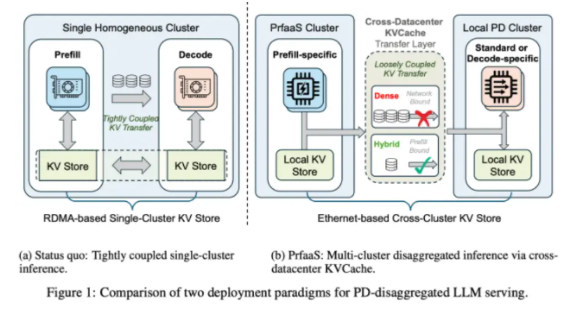
In a significant leap forward for artificial intelligence, Moonshot AI has partnered with Tsinghua University to develop a novel approach that dramatically improves how large language models operate. Their Prefill-as-a-Service (PrfaaS) architecture promises to solve one of the most persistent headaches in AI deployment - the inefficient use of computing resources.
The Bottleneck That's Been Slowing Down AI
Imagine a busy restaurant where the same chef must both prepare ingredients and cook meals simultaneously. That's essentially how current AI systems operate, juggling two fundamentally different tasks:
- Prefill Phase: The computational heavy lifting where the system processes inputs and prepares its "memory" (KVCache)
- Decode Phase: The creative process where it generates responses word by word
The problem? These phases have completely different hardware needs, yet they're typically crammed into the same servers. It's like trying to run a marathon while carrying weights - possible, but far from optimal.
A Surgical Solution: Splitting Up the Workload
The research team's breakthrough came from a simple yet radical idea: what if we performed these tasks in different locations? PrfaaS acts like a well-orchestrated relay race:
- High-powered computing clusters handle the intensive prefill work
- The prepared data travels securely via standard Ethernet networks
- Local servers then focus solely on generating responses
"This separation allows each component to specialize," explains one researcher. "It's like having dedicated stations in an assembly line rather than asking one worker to do everything."
The system employs smart scheduling that adapts to traffic patterns in real-time, preventing bottlenecks even during peak usage. Early tests show particularly impressive results with long-form content generation, where traditional systems often struggle.
Real-World Impact: Faster Responses, More Capacity
The numbers speak for themselves:
- 54% boost in system throughput
- Noticeably faster first responses for users
- Dramatically improved resource efficiency
Perhaps most importantly, this approach makes better use of existing infrastructure. Data centers can now distribute workloads geographically while maintaining seamless performance - a crucial advantage as AI adoption grows exponentially.
The collaboration between Moonshot AI and Tsinghua University represents more than just a technical achievement. It provides a blueprint for how we might build tomorrow's distributed AI networks, potentially transforming everything from customer service chatbots to scientific research tools.
Key Points:
- PrfaaS separates computation-heavy and memory-intensive AI tasks across different servers
- Uses standard Ethernet for efficient data transfer between locations
- Delivers 54% better throughput while reducing latency
- Could enable more sustainable scaling of AI infrastructure
- Opens new possibilities for distributed computing networks