Starbucks Brews Up AI-Powered Drink Suggestions Based on Your Mood

Your Morning Coffee Just Got Smarter

Starbucks is blending artificial intelligence with your daily caffeine fix in a surprisingly personal way. Forget scrolling endlessly through the menu - now your phone might suggest the perfect drink based on whether you're dragging through a Monday or celebrating a Friday afternoon.
Image

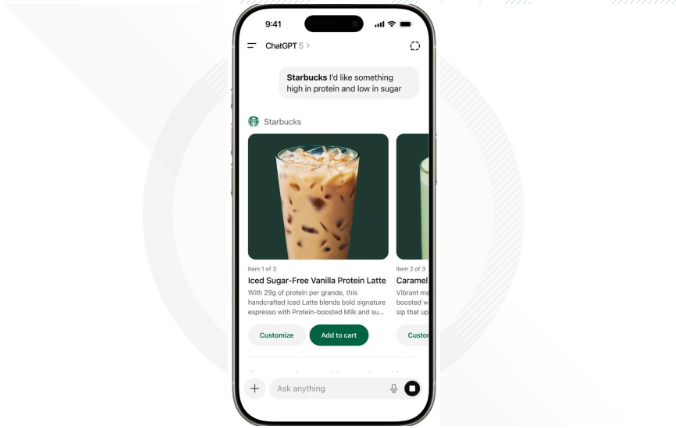
How it works: Type something like "I need something sweet but not too heavy" or "Give me a boost for my 3pm slump" into the app. The ChatGPT-powered system analyzes your words and serves up tailored recommendations. Feeling extra creative? Snap a picture of your sunny backyard or cozy workspace, and let the AI match a drink to your vibe.

"We're seeing more customers discover drinks through social media and word-of-mouth," a Starbucks spokesperson explained. "This tool helps recreate that 'What should I try today?' moment digitally."

The Human Touch Still Percolates

While the tech is impressive, some coffee lovers aren't ready to swap their barista banter for bot suggestions. "Half the fun is asking the person behind counter what's new or what they recommend," says regular customer Mark Reynolds. "An app can't quite capture that human connection."

Starbucks assures this isn't about replacing staff interactions, but adding another way to explore their menu. After getting an AI suggestion, you can still tweak your order and - importantly - pick it up from your favorite neighborhood barista.

What's Next in Your Cup?

This move represents Starbucks' latest push to blend technology with personalization. While other chains focus on speeding up service, Starbucks seems equally interested in making the ordering experience more intuitive and even a bit playful.

Will this change how we order coffee long-term? Only time will tell if customers warm to robot recommendations as much as their usual oat milk lattes. One thing's certain - your morning coffee run just got more interesting.

Key Points

  • Mood-based ordering: Describe how you feel or snap a photo for drink suggestions
  • Seamless integration: Get recommendations, customize, and pay all in one flow
  • Barista bond remains: Starbucks insists this complements rather than replaces human interaction
  • Tech meets tradition: Part of broader efforts to enhance (not eliminate) the coffee shop experience
Enjoyed this article?

Subscribe to our newsletter for the latest AI news, product reviews, and project recommendations delivered to your inbox weekly.

Weekly digestFree foreverUnsubscribe anytime

Related Articles

ChatGPT rolls out smart age detection to protect young users
News

ChatGPT rolls out smart age detection to protect young users

OpenAI is introducing an innovative age prediction system for ChatGPT that analyzes user behavior to identify minors. When the AI detects someone under 18, it automatically activates protective filters that block sensitive content. The feature includes optional identity verification through Persona, requiring selfies or IDs for confirmation. Launching first in Europe, this move shows OpenAI's commitment to creating safer digital spaces for teenagers as AI becomes more prevalent in daily life.

April 20, 2026
ChatGPTonline safetyAI ethics
News

Starbucks' new AI barista suggests drinks based on your mood

Starbucks is testing a ChatGPT-powered feature that acts like your personal coffee concierge. Just tell the app how you're feeling - tired, stressed, or needing energy - and get customized drink recommendations. While promising more personalized orders, some experts caution about becoming too reliant on algorithmic suggestions for simple daily choices.

April 17, 2026
StarbucksAI personalizationChatGPT applications
News

ChatGPT's Gender Milestone: Women Now Majority in AI Adoption

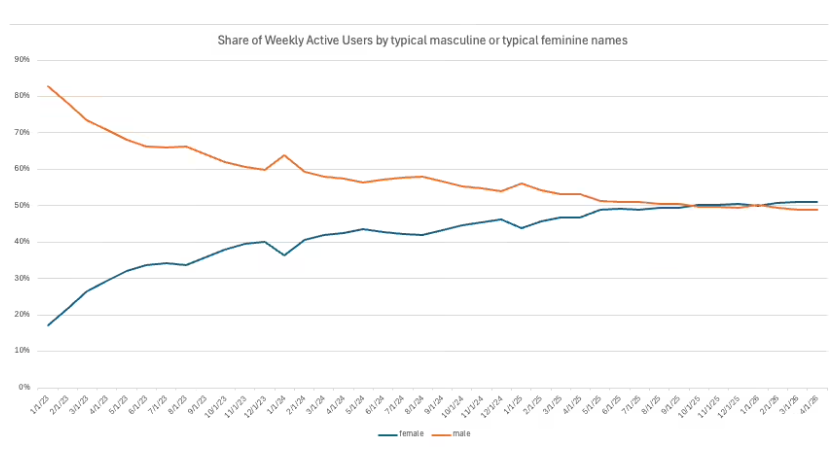
In a significant shift for the AI landscape, women have surpassed men as the majority users of ChatGPT, marking a cultural turning point in technology adoption. The latest data reveals female users now represent over 50% of the platform's near-billion user base, a dramatic change from the 80-20 male dominance at launch. Meanwhile, OpenAI's computing power expansion signals aggressive plans for future AI development.

April 17, 2026
AI trendsChatGPTtechnology demographics
ChatGPT Hits 1 Billion Users as Women Take the Lead
News

ChatGPT Hits 1 Billion Users as Women Take the Lead

OpenAI's ChatGPT has reached a major milestone with nearly 1 billion weekly active users. In a striking shift, women now make up over 50% of users for the first time - up from just 20% when the platform launched. This reflects AI's growing mainstream appeal across demographics. Meanwhile, OpenAI's computing power is skyrocketing, expected to grow nearly tenfold by 2025 to support this expanding user base.

April 17, 2026
ChatGPTAI TrendsTechnology Demographics
Tencent's Latest AI Breakthrough Lets You Build 3D Worlds With a Click
News

Tencent's Latest AI Breakthrough Lets You Build 3D Worlds With a Click

Tencent has unveiled its open-source Huan Yuan 3D World Model 2.0, revolutionizing digital content creation. This cutting-edge AI tool transforms text, images, and videos into fully interactive 3D environments complete with realistic physics. Game developers and digital artists can now generate editable assets that work seamlessly with Unity and Unreal Engine, dramatically simplifying 3D world building.

April 16, 2026
3D modelingAI innovationgame development
MiniMax's MaxHermes: AI That Teaches Itself New Tricks
News

MiniMax's MaxHermes: AI That Teaches Itself New Tricks

MiniMax has unveiled MaxHermes, a groundbreaking cloud sandbox that learns autonomously. Unlike traditional AI tools requiring manual programming, MaxHermes extracts 'skills' from task performance and improves through user feedback. The system combines persistent memory, natural language scheduling, and multi-agent operations to create what might be the first truly self-evolving AI assistant. Powered by MiniMax's latest M2.7 model, this innovation could redefine how we think about AI capabilities in real-world applications.

April 16, 2026
AI innovationMachine learningAutonomous systems