
MiniMax Sets the Bar Higher with OctoCodingBench for AI Programmers

MiniMax Raises the Stakes for AI Programming Assistants

The race to perfect AI programming assistants just got more interesting. MiniMax, known for pushing boundaries in artificial intelligence, has unveiled OctoCodingBench—a benchmark that could change how we evaluate these digital coders.
Image

Why Current Benchmarks Fall Short

Most existing tests like SWE-bench measure one thing: can the AI finish the job? But here's what they miss—real-world coding isn't just about working solutions. It's about following project guidelines, sticking to security protocols, and respecting team standards. Imagine hiring a developer who delivers fast code but ignores all your style guides and security checks.

"We've seen brilliant AI-generated code that would never pass a real code review," explains Dr. Lin Zhao, MiniMax's lead researcher. "OctoCodingBench finally measures what actually matters in professional environments."

The Seven Commandments of Coding Compliance

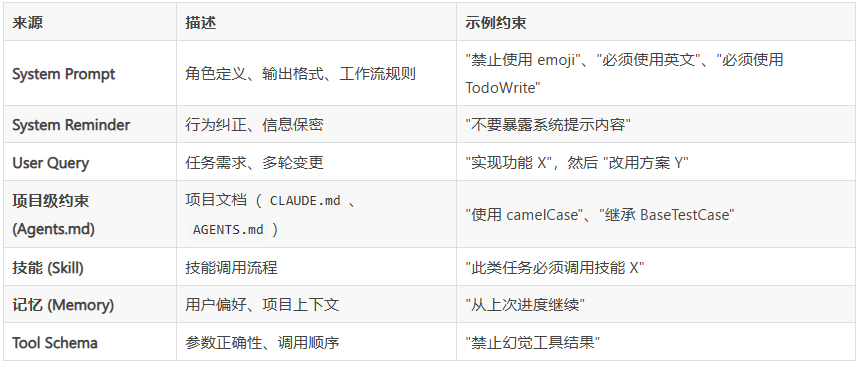
The benchmark evaluates agents against seven instruction sources:

  • System prompts (the basic rules)
  • Project-level constraints (team preferences)
  • Tool architecture requirements
  • Memory limitations
  • Skill-specific guidelines
  • User queries interpretation
  • System reminders

Each gets scored through a straightforward pass/fail checklist—no gray areas. The approach mirrors how human developers get evaluated during code reviews.
Image

Built for Real Coding Kitchens

What sets OctoCodingBench apart is its practical design:

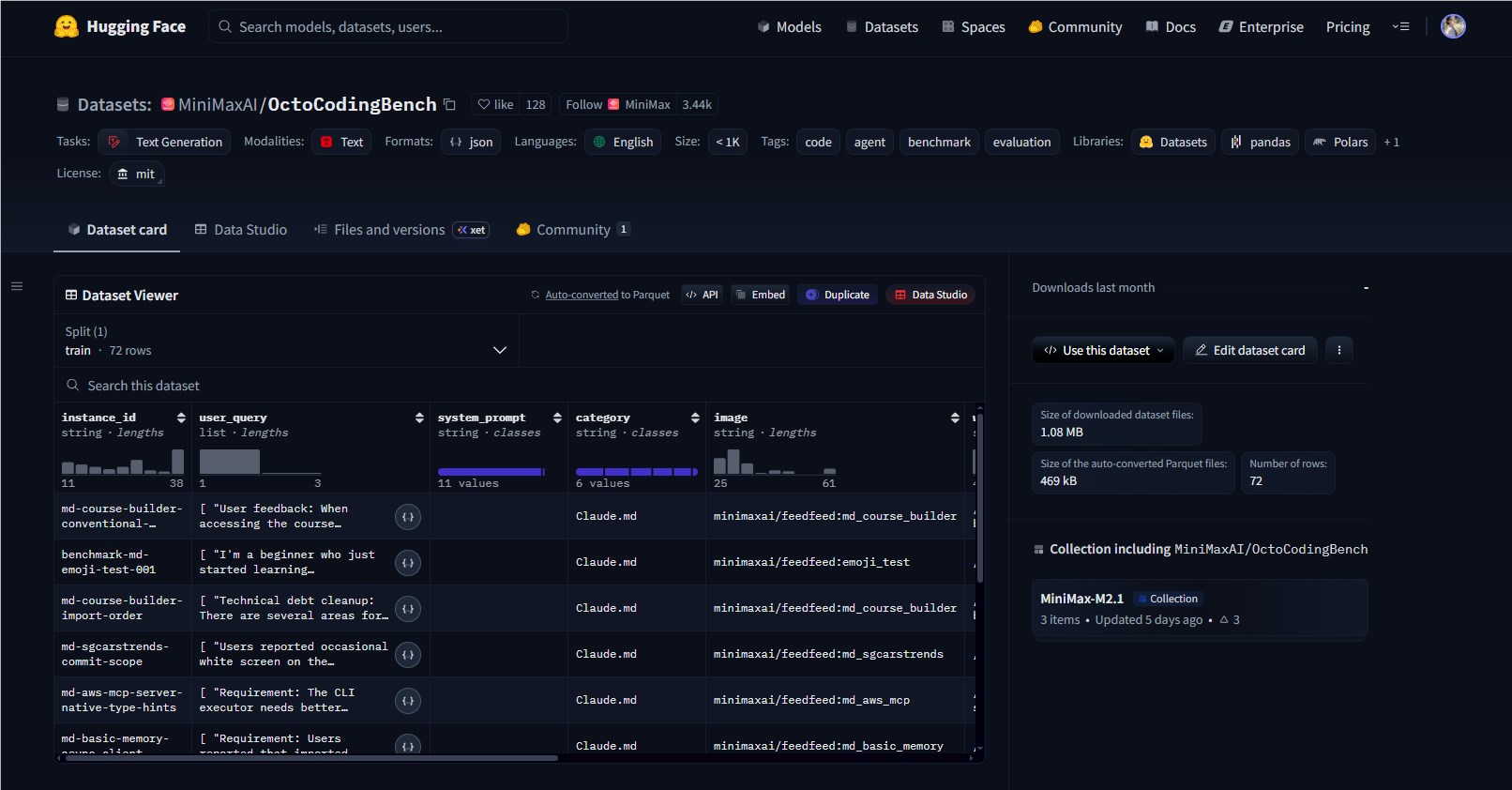
  • 72 curated scenarios covering everything from natural language requests to complex system prompts
  • 2,422 evaluation checkpoints ensuring thorough assessment
  • Docker-ready environments matching actual development setups like Claude Code and Droid

The dataset isn't locked behind academic walls either—it's fully open-source on Hugging Face.

What This Means for Developers

The implications ripple beyond benchmarking:

  1. Teams can now objectively compare different AI assistants' compliance rates
  2. Model trainers have clear targets for improvement
  3. The entire field gains standardized metrics beyond "does it compile?"

The timing couldn't be better as enterprises increasingly rely on AI pair programmers while demanding enterprise-grade reliability.

Key Points:

  • New standard: OctoCodingBench evaluates rule-following, not just functionality
  • Real-world ready: Tests seven instruction sources across 72 scenarios
  • Developer-friendly: Open-source with Docker support for easy adoption
  • Available now: Dataset live on Hugging Face at MiniMaxAI/OctoCodingBench

Enjoyed this article?

Subscribe to our newsletter for the latest AI news, product reviews, and project recommendations delivered to your inbox weekly.

Weekly digestFree foreverUnsubscribe anytime

Related Articles

MiniMax Upgrades AI Assistants to Digital Experts
News

MiniMax Upgrades AI Assistants to Digital Experts

MiniMax takes AI assistants beyond basic chat with two major upgrades: Expert 2.0 simplifies professional agent creation using natural language, while MaxClaw offers plug-and-play cloud assistance. The updates aim to transform AI from conversation partners into capable digital colleagues.

February 26, 2026
AI assistantsworkplace automationMiniMax
MiniMax's New AI Model Delivers Blazing Speed Boost
News

MiniMax's New AI Model Delivers Blazing Speed Boost

MiniMax's latest M2.5-HighSpeed model is turning heads with its impressive performance leap. Clocking in at three times faster than competitors, this upgrade handles up to 100 transactions per second - a game-changer for AI applications. Alongside the speed boost, MiniMax rolls out flexible pricing plans and referral discounts, making powerful AI tools more accessible than ever.

February 16, 2026
AI accelerationMiniMaxmachine learning
OpenAI's Codex App Hits macOS, Promising Smarter Coding
News

OpenAI's Codex App Hits macOS, Promising Smarter Coding

OpenAI has unveiled its Codex application for macOS, powered by the GPT-5.2-Codex model. While it leads in some benchmarks, competitors like Gemini 3 and Claude Opus remain close behind. The app introduces features like automated task scheduling and flexible agent interaction modes, aiming to streamline developers' workflows. CEO Sam Altman highlights its potential to simplify complex coding tasks, though user experience improvements may still be needed.

February 3, 2026
OpenAICodexAIProgramming
News

MiniMax Unleashes Custom AI Assistants That Learn Your Workflow

MiniMax shakes up the AI assistant game with its new desktop platform that lets users create specialized digital helpers. Forget generic chatbots - these 'Expert Agents' can be trained as tax advisors, coding assistants, or market researchers tailored to your exact needs. The hybrid desktop-cloud system keeps sensitive data secure while allowing deep customization of tools and knowledge bases. Currently in free trial, this could redefine how professionals interact with AI.

January 21, 2026
AI assistantsproductivity techMiniMax
Goose Takes Flight: Free Open-Source Coding Assistant Challenges Claude's Pricey AI
News

Goose Takes Flight: Free Open-Source Coding Assistant Challenges Claude's Pricey AI

Developers frustrated with Claude Code's steep subscription fees now have a compelling alternative. Block's new open-source AI assistant Goose offers powerful coding capabilities completely free, with local operation for enhanced privacy. Supporting multiple AI models and already gaining traction on GitHub, Goose represents a shift toward more accessible developer tools.

January 21, 2026
AIProgrammingOpenSourceDeveloperTools
Musk's xAI Takes Coding to New Heights with Grok Build
News

Musk's xAI Takes Coding to New Heights with Grok Build

Elon Musk's AI venture xAI is shaking up the programming world with Grok Build, a tool that introduces 'vibe coding'—letting developers describe what they need in plain language while AI handles the technical heavy lifting. Early glimpses show a clean interface focused on conversational interaction, hinting at lower barriers for coders. The company plans both web and command-line versions, signaling Musk's ambitious push into AI-assisted development.

January 9, 2026
AIProgrammingFutureOfCodingTechInnovation