Microsoft Unveils Magentic-UI: A Human-Centric AI for Web Automation
Microsoft Research has launched Magentic-UI, an open-source AI agent prototype that revolutionizes how users tackle complex web tasks. Unlike traditional automation tools that operate as black boxes, this innovative system places human oversight at its core, allowing real-time collaboration between users and AI.
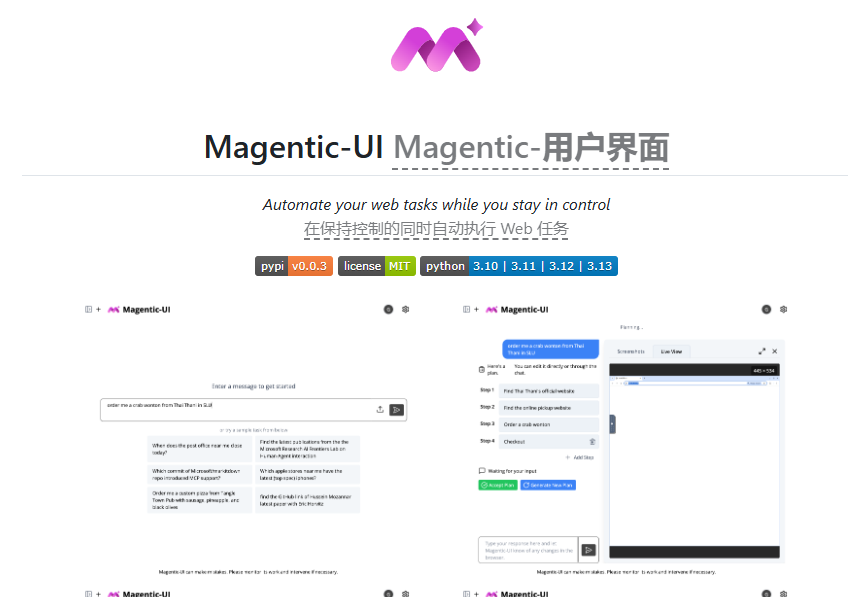
Built upon Microsoft's Magentic-One multi-agent system and AutoGen framework, Magentic-UI shines in scenarios requiring precise web interactions—from filling forms to analyzing flight data. What sets it apart? Users can review and modify the AI's action plan before execution through an intuitive editor, ensuring complete transparency.
Security Meets Flexibility
The system introduces groundbreaking safety measures:
- Action guards require explicit user approval for sensitive operations
- Docker sandboxes isolate runtime environments
- Website whitelists prevent unauthorized access
Microsoft's red team tests confirm Magentic-UI successfully thwarted phishing attempts and cross-site scripting attacks. Users can customize approval frequency, balancing security with workflow efficiency.
Four Specialized Agents Working in Concert
At its heart lies a sophisticated multi-agent architecture:
- Orchestrator: The conductor managing task planning and coordination
- WebSurfer: Handles navigation and interaction with web elements
- Coder: Generates and executes scripts for data tasks
- FileSurfer: Manages local file operations
These agents collaborate through dual-loop mechanisms—external loops handle overall strategy while internal loops monitor subtask progress. Imagine automating flight searches: WebSurfer navigates airline sites while Orchestrator adjusts filters based on your preferences.
Open Innovation Platform
Available under the MIT license on GitHub and integrated with Azure AI Foundry Labs, Magentic-UI offers:
- Natural language interaction with image attachment support
- Plan learning from historical tasks
- Modular architecture for developer customization
The system evolves through user feedback, continuously refining its human-centered design. Researchers particularly value its transparent decision-making—a stark contrast to opaque AI models.
Key Points
- Combines multi-agent automation with unprecedented user control
- Passed rigorous security testing against web-based threats
- Open-source availability accelerates AI research applications
- Learns from user corrections to improve future task execution