Meta AI Lab Faces Leadership Clashes and Talent Exodus
Meta's AI Ambitions Tested by Internal Turmoil
Meta's Superintelligence Lab (MSL), established to develop artificial general intelligence (AGI), is facing significant challenges that threaten to derail its ambitious goals. Recent developments reveal deep divisions within the organization, from leadership conflicts to talent retention issues and cultural misalignment.
Leadership Rift: LeCun vs. Wang
Yann LeCun, Meta's Chief AI Scientist and Turing Award winner, has reportedly clashed with Alexandr Wang, the 28-year-old Chief AI Officer. Sources indicate LeCun now reports to Wang, creating tension within the organization. During a recent internal meeting, LeCun advocated for long-term research approaches while Wang pushed aggressive R&D timelines, stating: "We are developing superintelligence, not debating philosophy."
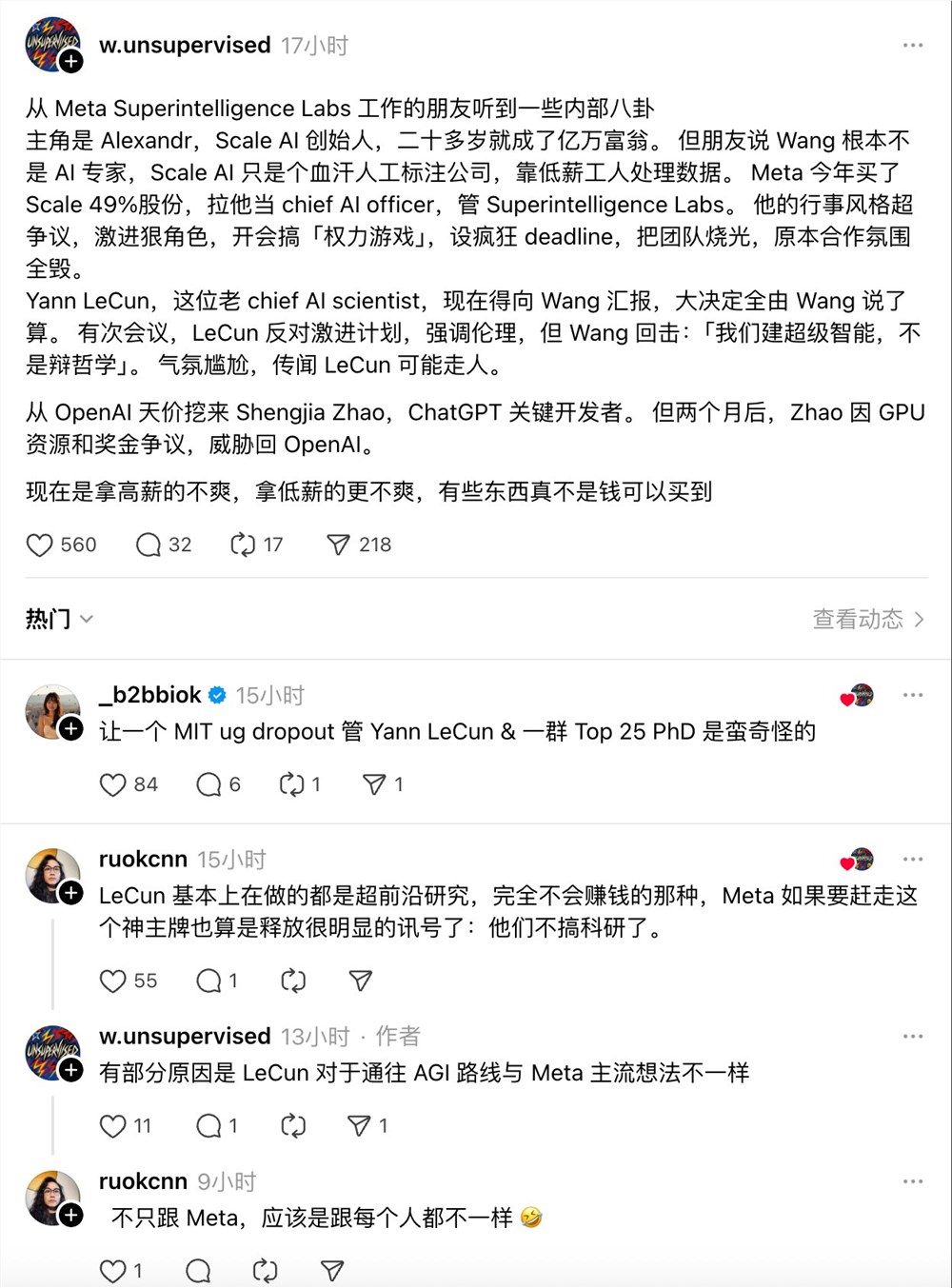
The ideological divide highlights Meta's struggle to reconcile scientific research with commercial pressures. Industry analysts suggest this conflict could impact the lab's strategic direction and potentially lead to further executive departures.
Talent Retention Challenges
Meta made headlines by poaching Shengjia Zhao, a key ChatGPT developer from OpenAI, offering multimillion-dollar compensation packages. However, Zhao nearly returned to OpenAI due to disputes over GPU resource allocation and bonus structures. While Meta eventually stabilized the situation by appointing Zhao as chief scientist, the incident exposed significant management weaknesses.

The lab has aggressively recruited from competitors like Google DeepMind and Anthropic, but insiders report growing dissatisfaction among researchers regarding:
- Uneven resource distribution
- Unclear promotion pathways
- Disconnect between compensation and project impact
Cultural Crossroads
Meta's "mercenary culture" of high salaries but limited mission alignment contrasts sharply with competitors like OpenAI. One industry executive commented: "Talented people with a sense of mission will eventually defeat mercenaries." Employee surveys show:
- 42% of high-paid researchers feel under-resourced
- 67% of junior staff report declining morale
- Only 28% believe in the lab's stated mission
The cultural challenges coincide with technical setbacks. The Llama4 model release drew criticism for performance issues and lack of transparency, raising questions about Meta's ability to deliver on its AI promises.
Resource Allocation Struggles
MSL plans to deploy a massive 1-gigawatt Prometheus cloud cluster in Ohio by 2026 to support AI training. However, current resource constraints have already caused:
- Project delays averaging 3-6 months
- Increased competition between teams for compute time
- At least two high-profile researcher departures
The lab faces mounting pressure to demonstrate progress as competitors advance their own AGI initiatives.
Key Points:
- Leadership tensions between LeCun and Wang reflect fundamental disagreements about AI development approaches.
- Talent retention issues persist despite multimillion-dollar compensation packages.
- Cultural misalignment threatens long-term research sustainability.
- Resource constraints are delaying critical projects and causing frustration.
- Technical setbacks like Llama4's performance issues damage credibility.
The coming months will prove critical for Meta as it attempts to stabilize its AI division while maintaining competitive momentum in the rapidly evolving AGI landscape.