Manus AI Brings 'My Computer' to Life with 20-Minute App Creation

Manus Takes AI From the Cloud to Your Desktop

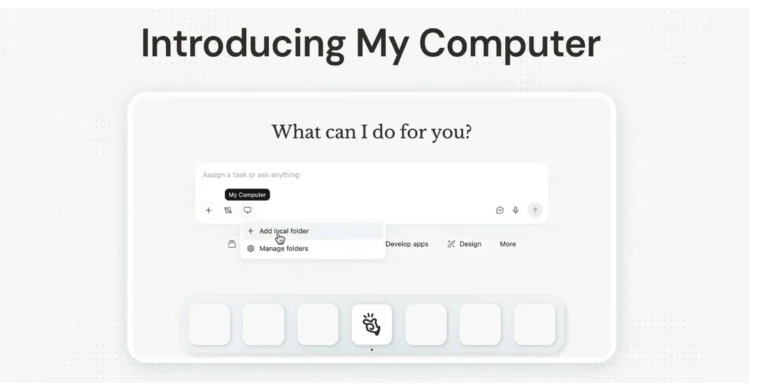
In a move that blurs the line between assistant and operator, Meta's AI platform Manus has launched a desktop application featuring its groundbreaking "My Computer" functionality. This isn't just another chatbot - it's an AI that can actually roll up its digital sleeves and work directly with your operating system.
Image

What Can It Actually Do?

The numbers speak for themselves: during testing, Manus built a meeting translation app in just 20 minutes using terminal commands alone - no Xcode or other development tools required. For office workers drowning in digital paperwork, it can automatically organize thousands of photos or reformat hundreds of invoices with consistent naming conventions.

"This represents a fundamental shift in how AI interacts with our devices," explains tech analyst Mark Chen. "We're moving beyond simple question-and-answer interactions into true system-level collaboration."

Security First Approach

Understanding the risks of giving AI direct system access, Manus has implemented strict safeguards:

  • Every terminal command requires explicit human approval
  • All system changes are logged and reversible
  • The AI operates within clearly defined permission boundaries

The Bigger Picture

This launch follows Meta's acquisition of Manus last year after the startup secured $75 million in funding at a $500 million valuation. The deep integration with Windows and macOS (Apple Silicon) suggests Meta sees this as more than just another productivity tool - it's potentially the foundation for transforming their entire social ecosystem.

Could this be the beginning of AI evolving from helpful tool to full-fledged digital employee? The answer might be sitting on your desktop right now.

Key Points:

  • Direct System Control: Manus now interacts directly with macOS and Windows at the system level
  • Rapid Development: Can create functional apps in 20 minutes using terminal commands
  • Enterprise-Ready: Handles large-scale file management tasks automatically
  • Security Focused: Requires human approval for every system change
  • Meta's Play: Part of broader strategy to integrate AI deeply into productivity ecosystems
Enjoyed this article?

Subscribe to our newsletter for the latest AI news, product reviews, and project recommendations delivered to your inbox weekly.

Weekly digestFree foreverUnsubscribe anytime

Related Articles

News

MiniMax and Tencent Cloud Revolutionize AI Training with Million-Agent Sandbox

In a groundbreaking collaboration, AI innovator MiniMax and tech giant Tencent Cloud have successfully deployed a massive reinforcement learning sandbox capable of handling millions of AI agents simultaneously. This infrastructure breakthrough dramatically reduces training costs while improving efficiency, potentially accelerating the development of smarter AI systems. The partnership marks a significant step toward making large-scale agent training more accessible and cost-effective for the industry.

March 18, 2026
Artificial IntelligenceMachine LearningCloud Computing
NVIDIA's NemoClaw Brings One-Click AI to OpenClaw Ecosystem
News

NVIDIA's NemoClaw Brings One-Click AI to OpenClaw Ecosystem

NVIDIA has unveiled NemoClaw, a game-changing toolkit that simplifies AI agent deployment for the OpenClaw platform. With just one command, users can now install powerful AI models like Nemotron and OpenShell runtime. The solution addresses critical privacy concerns with isolated sandboxes and hybrid model strategies while supporting everything from consumer devices to enterprise supercomputers. NVIDIA CEO Jensen Huang calls it the 'AI operating system' of our era.

March 17, 2026
AINVIDIAOpenClaw
Zhipu's GLM-5-Turbo: The AI Assistant That Won't Quit on You
News

Zhipu's GLM-5-Turbo: The AI Assistant That Won't Quit on You

Zhipu AI has unveiled GLM-5-Turbo, a powerful new model designed to tackle complex tasks without stalling. Unlike standard AI tools that might falter with lengthy processes, this upgrade focuses on four key improvements: reliable tool usage, breaking down complicated requests, understanding time-sensitive tasks, and handling heavy workloads efficiently. Early tests show it outperforms competitors in real-world business scenarios, with major tech companies already praising its accuracy and reliability.

March 17, 2026
AIZhipuProductivity
News

Meta Hits Pause on Llama4 Launch as Engineers Fine-Tune AI Model

Meta has pushed back the release of its next-generation Llama4 AI model to May, citing the need for additional technical refinements. While CEO Mark Zuckerberg remains bullish on the project, developers are wrestling with performance optimization and logical reasoning challenges. The delay highlights the growing complexity of cutting-edge AI development, though Meta promises the extra time will yield a more robust open-source offering. The company continues expanding its computing infrastructure to support what could be a game-changing release in the competitive AI landscape.

March 13, 2026
MetaLlama4AI Development
Meta Takes on NVIDIA With Powerful New AI Chip
News

Meta Takes on NVIDIA With Powerful New AI Chip

Meta has unveiled its latest custom AI chip, the MTIA3, marking a bold challenge to NVIDIA's dominance. Designed specifically for Meta's recommendation systems and AI models, the chip boasts superior energy efficiency and compute density compared to general-purpose GPUs. This strategic move aims to reduce costs, optimize hardware-software integration, and secure Meta's AI future amid global chip supply uncertainties.

March 12, 2026
AI chipsMetaNVIDIA
News

Meta Bets Big on Homegrown AI Chips Through 2027

Meta is making a massive push into custom AI chip development, planning to roll out four generations of its own processors by late 2027. The social media giant aims to reduce reliance on Nvidia while maintaining its position as one of the world's biggest GPU buyers. Their chip roadmap includes specialized processors for content recommendations and generative AI, signaling a strategic shift toward hardware-software integration.

March 12, 2026
MetaAI HardwareSemiconductors