LTX-2 Opens New Era for AI Video Creation

AI Video Generation Just Got a Major Upgrade

The digital creation landscape shifted dramatically this week with Lightricks' release of LTX-2, the first complete open-source audio-visual foundation model. This isn't just another incremental improvement—it's a game-changer that puts Hollywood-quality video generation within reach of everyday creators.

The Open-Source Revolution

Imagine having access to:

  • Full model weights
  • Complete training code
  • Benchmark tests
  • Ready-to-use toolkits

All hosted on GitHub and Hugging Face for anyone to explore. The DiT hybrid architecture powers features like text-to-video conversion, multi-keyframe control, and even 3D camera logic. What really excites developers? ComfyUI offered native support from day one, slashing the learning curve.
Image

Seeing and Hearing Perfection Simultaneously

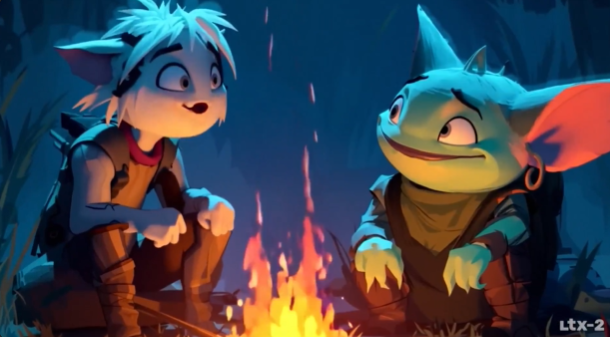
Traditional models force creators to stitch audio and video separately—a tedious process that often results in awkward mismatches. LTX-2 breaks this mold by generating synchronized visuals and sound in a single pass. The results? Natural lip movements, perfectly timed sound effects, and seamless music integration at native 4K resolution.

Early testers report remarkably lifelike dialogue scenes where every eyebrow raise matches the voice inflection. Skin textures show pores rather than plastic-looking surfaces, while motion flows smoothly at up to 50fps.

Performance That Surprises

The engineering team squeezed impressive efficiency from LTX-2:

  • 50% lower computational costs than previous versions
  • Multi-GPU support for longer sequences
  • Quantized versions that run on RTX 40 series cards

The kicker? Generating a 20-second clip takes just minutes—fast enough for real-time previews during creative sessions.

Creative Possibilities Unleashed

From indie filmmakers crafting storyboards to marketers producing quick-turnaround ads, LTX-2 opens doors previously reserved for big studios. Its video-to-video controls (Canny, Depth, Pose) combine with keyframe precision to maintain consistent styles across scenes.

The community anticipates an explosion of plugins and LoRA extensions that could transform LTX-2 into the backbone of open-source video generation.

Key Points:

  • Complete package: Weights, code, benchmarks all open-sourced
  • Seamless sync: Audio and video generated together eliminates post-production headaches
  • Accessible power: Runs efficiently on consumer GPUs without enterprise hardware
  • Creative control: Multiple input methods (text/images/sketches) suit various workflows
  • Future-ready: Architecture designed for community extensions and improvements
Enjoyed this article?

Subscribe to our newsletter for the latest AI news, product reviews, and project recommendations delivered to your inbox weekly.

Weekly digestFree foreverUnsubscribe anytime

Related Articles

Gaode's ABot-M0 Gives Robots a Universal Brain
News

Gaode's ABot-M0 Gives Robots a Universal Brain

In a major leap for robotics, Gaode has open-sourced ABot-M0, the world's first unified architecture for robot intelligence. This 'universal brain' outperforms previous models by 30% on key benchmarks, while its complete open-source package—including algorithms and training data—could revolutionize how we develop smart robots for homes and industries.

April 1, 2026
roboticsAIopen-source
Microsoft's VibeVoice AI Brings Human-Like Speech to Open Source
News

Microsoft's VibeVoice AI Brings Human-Like Speech to Open Source

Microsoft has released VibeVoice, a powerful open-source speech AI family that's turning heads in the developer community. These models can handle marathon audio sessions - up to 90 minutes of multi-speaker dialogue in one go - while maintaining natural flow and emotion. The project, which racked up 27,000 GitHub stars in no time, offers everything from accurate transcription to expressive voice generation. What makes it special? Local deployment without cloud fees, support for multiple speakers, and real-time capabilities that could revolutionize how we interact with voice technology.

March 30, 2026
speech-recognitionmicrosoftopen-source
News

Game Developer Hails Chinese AI Video Tech as Industry Game-Changer

Feng Ji, the visionary behind 'Black Myth: Wukong,' has sparked excitement by praising ByteDance's new Seedance 2.0 video generation model. He believes this Chinese-developed AI could revolutionize film production, slashing costs while raising quality. While acknowledging potential challenges like deepfake concerns, Feng expresses national pride in China's AI advancements. The technology promises to blur creative boundaries, potentially flooding the market with high-quality content at unprecedented speed.

February 10, 2026
AI-videoSeedance2.0BlackMythWukong
Ant Group's Robotics Leap: Open-Source AI Model Boosts Robot Intelligence
News

Ant Group's Robotics Leap: Open-Source AI Model Boosts Robot Intelligence

Ant Group's Lingbo Technology has made its embodied intelligence model LingBot-VLA fully open-source, marking a significant advancement in robotics. The model demonstrates remarkable cross-platform adaptability and training efficiency, outperforming existing frameworks. Alongside this release, their new LingBot-Depth spatial perception model enhances 3D environmental understanding for robots and autonomous vehicles. These developments could accelerate smart robotics adoption across industries.

January 28, 2026
roboticsAI innovationAnt Group
Tencent's Hunyuan Image 3.0 Goes Open-Source: A Game-Changer for AI Creativity
News

Tencent's Hunyuan Image 3.0 Goes Open-Source: A Game-Changer for AI Creativity

Tencent has made waves in the AI community by open-sourcing its powerful Hunyuan Image 3.0 model. With an impressive 80 billion parameters, this image-to-image tool ranks among the world's best, offering everything from meme creation to professional design enhancements. The company is putting its full weight behind the open-source movement, making both standard and lightweight versions available to developers worldwide.

January 28, 2026
AI creativityopen-sourceimage editing
Curl pulls plug on bug bounty program amid AI-generated report flood
News

Curl pulls plug on bug bounty program amid AI-generated report flood

The widely-used command line tool curl is shutting down its vulnerability reward program after being overwhelmed by low-quality AI-generated reports. Founder Daniel Stenberg says these 'AI slop' submissions sound professional but offer no real value, instead draining developers' time. Starting February 2026, curl will no longer pay for bug reports and warns that spam submitters may face public shaming.

January 23, 2026
open-sourceAI-challengescybersecurity