Llama.cpp Advances Local AI with Multimodal Capabilities
Llama.cpp Transforms Local AI with Major Update
The open-source AI inference engine llama.cpp has unveiled a historic update, redefining the capabilities of local large language models (LLMs). Known for its minimalist C++ implementation, the project now introduces a modern web interface and three revolutionary features: multimodal input, structured output, and parallel interaction.
Multimodal Capabilities Now Native
The most significant advancement is the native integration of multimodal processing. Users can now:
- Drag and drop images, audio files, or PDF documents
- Combine media with text prompts for cross-modal understanding
- Avoid formatting errors common in traditional OCR extraction
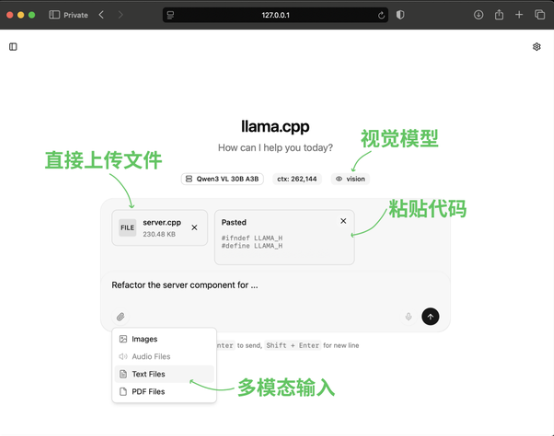
Video support is reportedly in development, expanding llama.cpp from a text-only tool to a comprehensive local multimedia AI hub.
Enhanced User Experience
The new SvelteKit-based web interface offers:
- Mobile responsiveness
- Parallel chat windows for multitasking
- Editable prompt history with branch exploration
- Efficient resource allocation via
--parallel Nparameter - One-click session import/export functionality
Productivity-Boosting Features
Two standout innovations demonstrate developer ingenuity:
- URL Parameter Injection - Users can append queries directly to browser addresses (e.g.,
?prompt=explain quantum computing) for instant conversations. - Custom JSON Schema Output - Predefined templates ensure structured responses without repetitive formatting requests.
Performance and Privacy Advantages
The update includes several technical improvements:
- LaTeX formula rendering
- HTML/JS code previews
- Fine-tuned sampling parameters (Top-K, Temperature)
- Optimized context management for models like Mamba Crucially, all processing occurs 100% locally, addressing growing concerns about cloud-based AI privacy.
Key Points:
- Llama.cpp now supports native multimodal processing including images, audio, and PDFs
- New web interface enables parallel interactions and mobile use
- URL injection and JSON templates streamline workflows
- Complete local execution ensures data privacy
- Open-source ecosystem challenges proprietary alternatives like Ollama