Gucci and Google Join Forces to Redefine Smart Glasses by 2027

When Luxury Meets Tech: Gucci and Google's Fashionable Smart Glasses

Picture this: the sleek sophistication of Gucci frames housing Google's latest AI technology. That's exactly what fashion-forward tech enthusiasts can expect by 2027, as these two industry giants join forces to create smart glasses that people might actually want to wear every day.

The Tech Behind the Style

Google isn't new to the smart glasses game, but their upcoming "Project Aura" represents a strategic pivot. These Android XR glasses, set to debut before the Gucci collaboration, feature thick black frames reminiscent of Meta's Ray-Ban smart glasses. It's Google's second serious attempt at cracking this market since their Google Glass experiment fizzled out.

What makes this new partnership different? Brand power. While Google has previously worked with Warby Parker and Gentle Monster, teaming up with a luxury heavyweight like Gucci brings unprecedented fashion credibility. As Snap CEO Evan Spiegel has observed, tech products often struggle to fit naturally into users' lifestyles - a gap this collaboration aims to bridge.

Why Fashion Matters in Tech

Smart glasses face an unusual challenge: they need to be as stylish as they are functional. Most consumers won't wear clunky, overtly technical frames no matter how advanced the features. That's where Gucci's design expertise becomes invaluable.

Imagine walking into a high-end boutique and seeing smart glasses displayed alongside handbags and watches - that's the future this partnership envisions. By wrapping Google's technology in Gucci's signature aesthetic, these glasses could become status symbols rather than nerdy novelties.

The Competitive Landscape

The smart glasses market is heating up, with Meta's Ray-Ban series currently leading the fashion-tech charge. Google and Gucci's offering aims to one-up the competition by combining:

  • Luxury brand appeal that resonates with fashion-conscious consumers
  • Cutting-edge AI features that make the glasses genuinely useful
  • Design credibility that ensures they look as good as they function

What to Expect in 2027

While details remain scarce, these AI-powered glasses will likely focus on:

  • Discreet notifications that don't disrupt your social interactions
  • Advanced voice controls for hands-free operation
  • Customizable fashion elements to match personal style
  • Enhanced augmented reality that blends seamlessly with real-world environments

Key Points:

🕶️ Fashion-forward tech: Gucci's design meets Google's AI in 2027

👓 First comes Project Aura: Google's Android XR glasses pave the way

💼 Brand power play: Luxury appeal could be the missing piece for smart glasses adoption

📱 Market competition: A direct challenge to Meta's Ray-Ban smart glasses

Enjoyed this article?

Subscribe to our newsletter for the latest AI news, product reviews, and project recommendations delivered to your inbox weekly.

Weekly digestFree foreverUnsubscribe anytime

Related Articles

News

iFLYTEK Unveils Smarter AstronClaw: AI That Works Beyond the Screen

Chinese tech firm iFLYTEK has taken AI assistants to the next level with its upgraded AstronClaw system. The company introduced nine new products and a groundbreaking hardware-software integration that transforms AI from conversational partners into real-world problem solvers. Highlights include office productivity enhancements and GlassClaw - lightweight smart glasses that weigh just 40 grams but pack powerful voice and visual recognition capabilities.

April 17, 2026
AI innovationwearable techproductivity tools
News

AI Glasses Race Heats Up as Qwen's S1 Launches and Apple Prepares 2027 Entry

The AI glasses market is accelerating at breakneck speed, with Qwen's new S1 model hitting shelves just weeks after their G1 dominated online sales. These smart devices now handle everything from bike rentals to food orders with voice commands. While Meta leads in unit sales, all eyes are on Apple's rumored 2027 entry that could redefine the category. The technology's growth outpaces traditional smart glasses eightfold, signaling a major shift in how we interact with wearable tech.

April 15, 2026
wearable technologyAI assistantssmart glasses
News

Stanford's AI can predict your health future from a single night's sleep

Stanford researchers have developed an AI model called SleepFM that analyzes one night of sleep data to predict health risks with 84% accuracy. Trained on 25 years of clinical data from 65,000 participants, the model detects subtle abnormalities in EEG, ECG and breathing patterns. While currently requiring professional equipment, the technology may soon be adapted for consumer devices, potentially revolutionizing preventive healthcare.

April 9, 2026
AI healthcaresleep technologypredictive medicine
Ant's Smart Glasses Now Let You Ride Bikes with Just Your Voice
News

Ant's Smart Glasses Now Let You Ride Bikes with Just Your Voice

Ant Group's GPASS technology is transforming how we interact with everyday services. Their latest integration with Qwen AI glasses allows users to unlock shared bikes, pay for parking, and more - all through simple voice commands. No more fumbling for your phone while cycling; just speak naturally and let the glasses handle the rest. This innovation combines voiceprint security with seamless connectivity, making urban mobility smoother than ever.

April 3, 2026
smart glassesvoice technologyurban mobility
Qwen AI Glasses Get Smarter: New Update Brings Real-Time Translation and Shopping Features
News

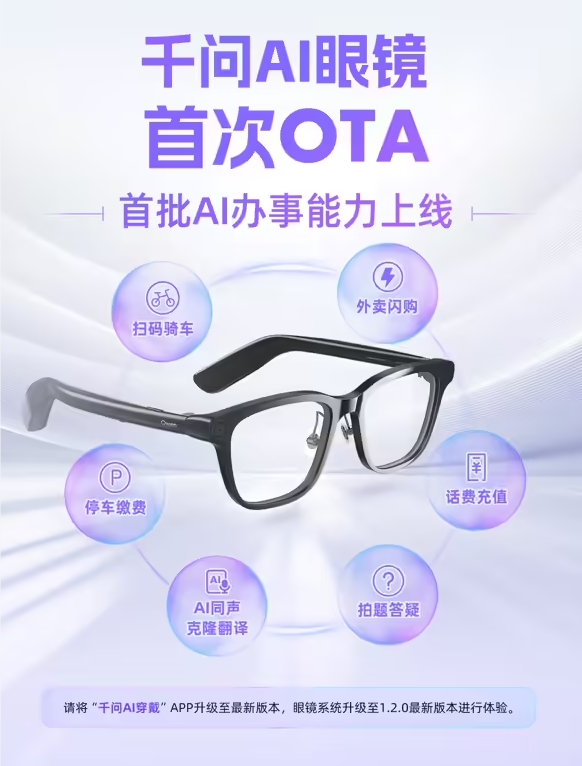
Qwen AI Glasses Get Smarter: New Update Brings Real-Time Translation and Shopping Features

Qwen's AI glasses just got their first major update, and it's a game-changer. The smart wearables now offer seamless multi-person translation that clones speakers' voices, making cross-language conversations feel natural. They've also integrated with Alipay and Taobao, letting users pay and shop with just a voice command. This update shows how AI hardware is evolving from simple assistants to full-fledged life companions.

April 2, 2026
AI wearablessmart glassesvoice technology
News

Swimming with Jay Chou? These AR Goggles Make It Possible

Hangzhou-based tech companies are revolutionizing aquatic workouts with AI-powered AR goggles that let swimmers enjoy music and fitness data underwater. Two local firms recently secured significant funding, signaling growing investor confidence in specialized AR applications. From solving the 'information island' problem in swimming to developing cutting-edge Micro LED displays, these innovations mark a shift from general-purpose AR glasses to scenario-specific solutions.

March 27, 2026
AR technologywearable techfitness innovation