Qwen AI Glasses Get Smarter: New Update Brings Real-Time Translation and Shopping Features

Qwen AI Glasses Level Up With First Major Update

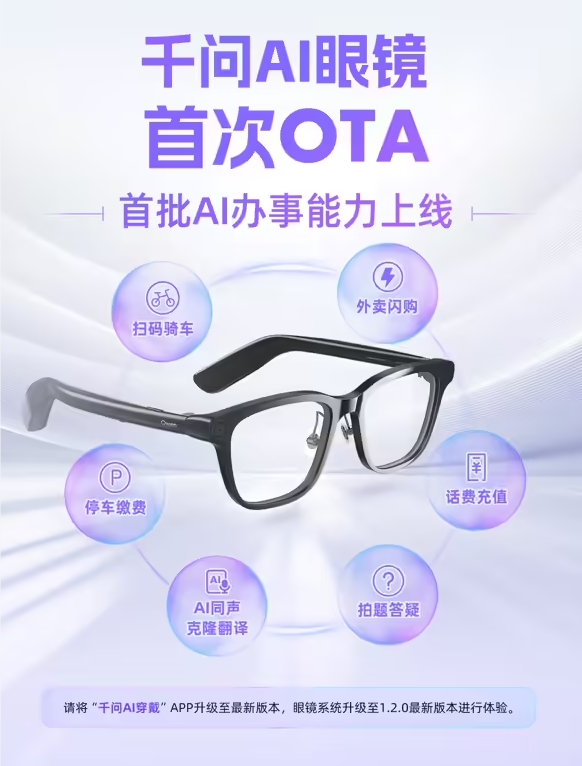
The tech world is buzzing as Qwen's AI glasses receive their first over-the-air update, bringing features that could change how we communicate and shop. These aren't just incremental improvements - they're transformative upgrades that push the boundaries of what smart glasses can do.
Image

Breaking Language Barriers Like Never Before

Imagine sitting in a meeting where everyone speaks different languages, yet the conversation flows as naturally as if you were all speaking the same tongue. Qwen's new "Multi-person Dialogue AI Clone Simultaneous Translation" makes this possible. The glasses don't just translate - they clone speakers' voices in real time, maintaining the natural rhythm and emotion of human speech.

"It's like having a personal interpreter who doesn't just convey words, but captures how they're meant to sound," explains a Qwen spokesperson. Business travelers and international teams are already hailing this as a potential game-changer for global communication.

Your Wallet in Your Glasses

The update goes beyond translation. Qwen has deeply integrated two of China's most-used apps - Alipay and Taobao - right into the glasses' interface. Spot something you like while walking down the street? A simple voice command or tap on the frame brings up payment options or lets you check competitive prices instantly.

This isn't just about convenience; it represents a shift in how we think about wearable tech. "We're moving from devices that show information to ones that actively participate in daily decisions," notes tech analyst Li Wei. "The line between digital assistant and life companion is blurring."

Why This Matters for Smart Wearables

Industry experts see this update as significant for several reasons:

  • It demonstrates successful deployment of complex AI models on compact hardware
  • Shows how over-the-air updates can meaningfully extend product capabilities post-purchase
  • Proves consumer demand exists for wearables that do more than track fitness

The integration with major platforms like Alipay also suggests a viable business model where hardware becomes a gateway to services rather than just a standalone product.

Key Points:

  • Real-time voice cloning translation for natural cross-language conversations
  • Deep integration with Alipay and Taobao enables voice-activated payments and shopping
  • Update demonstrates successful edge deployment of large AI models
  • Signals shift from information display to active participation in daily activities

Enjoyed this article?

Subscribe to our newsletter for the latest AI news, product reviews, and project recommendations delivered to your inbox weekly.

Weekly digestFree foreverUnsubscribe anytime

Related Articles

ChatGPT Hits the Road with CarPlay Integration
News

ChatGPT Hits the Road with CarPlay Integration

OpenAI has rolled out a CarPlay-compatible version of its ChatGPT app, bringing AI-powered conversations to your dashboard. The update follows Apple's strict voice-only interaction rules for driving safety - no text displays allowed. While you'll need to tap to start chatting (no wake word yet), this marks a big step for AI assistants in vehicles. Think of it as your new road-trip buddy that can brainstorm ideas or plan routes, just don't ask it to adjust your AC... for now.

April 1, 2026
OpenAICarPlayAI assistants
Qwen3.5-Omni Ushers in a New Era of AI with Multimodal Mastery
News

Qwen3.5-Omni Ushers in a New Era of AI with Multimodal Mastery

Tongyi Lab's latest AI model, Qwen3.5-Omni, has set a new benchmark with 215 state-of-the-art achievements. This multimodal powerhouse seamlessly processes text, images, audio, and video, outperforming competitors like Gemini-3.1Pro in audio understanding while maintaining top-tier visual and text capabilities. Its innovative Hybrid-Attention MoE architecture enables processing of lengthy audio and video content with remarkable precision. From real-time voice control to personalized voice cloning, Qwen3.5-Omni is redefining how we interact with technology.

March 31, 2026
AI innovationmultimodal AIvoice technology
Audio Innovators Return: AI-Powered Voice Factory Opens for Business
News

Audio Innovators Return: AI-Powered Voice Factory Opens for Business

The team behind China's once-dominant audio platform Lanren Tingshu is back with Audimind, an AI-powered voice creation platform now in public beta. After solving industry pain points like high costs and slow production, they're offering tools that slash audiobook creation time from 30 days to under a week. Whether you're a voice actor needing smarter workflows or a publisher sitting on unused IP, this could be audio's industrial revolution moment.

March 30, 2026
AI audiovoice technologycontent creation
News

Baidu's Smart Speakers Get Smarter with OpenClaw Integration

Baidu is taking its smart speakers to the next level by integrating OpenClaw, an advanced AI agent. This upgrade transforms Xiaodu speakers from simple voice assistants into capable digital helpers that can handle complex tasks across multiple apps. Imagine asking your speaker to book dinner reservations and set reminders - soon it'll be able to do just that.

March 17, 2026
smart homeAI assistantBaidu
News

MiniMax Brings Voice and Music Magic to OpenClaw

MiniMax has transformed OpenClaw's chatbots from text-only tools into versatile AI companions with voice and music capabilities. Users can now equip their 'Little Crabs' with over 40 languages, custom voices, and even music composition skills through simple plugin installations. This collaboration marks another step toward more human-like AI interactions in workplace applications.

March 9, 2026
MiniMaxOpenClawAI assistants
News

Rokid's AI Glasses Go Global with Four Powerful Assistants Built In

Chinese tech company Rokid has upgraded its AI glasses to support four major AI models simultaneously—Google Gemini, OpenAI ChatGPT, DeepSeek, and Alibaba Qwen. The lightweight glasses (as light as 38.5g) now offer users worldwide the flexibility to switch between different AI assistants depending on their needs, from translation to creative tasks. This move positions Rokid as a strong competitor against Meta's Ray-Ban smart glasses in the growing wearable AI market.

March 3, 2026
wearable techartificial intelligencesmart glasses