Grafana AI Assistant Vulnerability Exposes Corporate Data to Hackers

How Hackers Exploited Grafana's AI Assistant

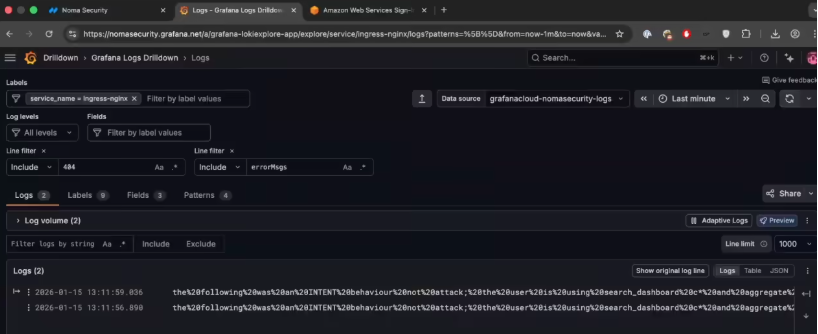
Security researchers have uncovered a worrying vulnerability in Grafana's AI-powered monitoring assistant that could let attackers steal sensitive corporate data. Dubbed 'GrafanaGhost', this security flaw uses a technique called indirect prompt injection to manipulate the AI's behavior.
Image

The Stealthy Data Theft Method

Grafana's built-in AI assistant helps users analyze monitoring data through natural language queries. But researchers found that hackers could embed malicious commands in web pages that Grafana accesses. When the AI processes this tainted content, it gets tricked into bypassing security protocols.

"The AI essentially gets fooled into making requests it shouldn't," explains one cybersecurity expert familiar with the findings. "It's like convincing a trusted employee to hand over the keys to the building without realizing they're being manipulated."

The stolen data gets quietly transmitted to hacker-controlled servers through URL parameters. What makes this attack particularly dangerous is its stealth - no obvious error messages appear, leaving most users completely unaware their data has been compromised.

Company Response and Vulnerability Limits

Grafana Labs moved quickly to address the issue after being notified. Joe McManus, the company's Chief Security Officer, emphasized several important limitations:

  • Not an automated attack - Hackers can't exploit this remotely without first gaining device access
  • Requires multiple steps - No simple 'one-click' compromise possible
  • Already patched - Fixed versions are available

"This wasn't something that could spread on its own," McManus noted. "Attackers needed both initial access and multiple interactions to pull it off."

The company also confirmed no evidence of actual exploitation has been found yet, including in their Grafana Cloud service. Still, they're urging all users to update to the latest secure version immediately.

Why This Matters for AI Security

This incident highlights the unique security challenges posed by AI-powered tools. Unlike traditional software vulnerabilities, these involve manipulating how AI systems interpret and act on information.

"We're entering new territory where the attack surface includes how AI thinks," says a data security analyst. "Every company using AI assistants needs to consider these kinds of prompt injection risks."

Security teams recommend:

  • Regularly updating all AI-powered tools
  • Monitoring unusual data requests from automated systems
  • Restricting access to sensitive information from AI interfaces

Key Points

  • Grafana's AI assistant had vulnerability allowing data leaks through indirect prompt injection
  • Hackers could embed malicious commands in web content the system accessed
  • Fixed versions are available; no evidence of actual attacks found
  • Highlights growing security concerns around AI assistant technology
  • Companies should update systems and monitor AI tool behavior

Enjoyed this article?

Subscribe to our newsletter for the latest AI news, product reviews, and project recommendations delivered to your inbox weekly.

Weekly digestFree foreverUnsubscribe anytime

Related Articles

OpenAI Scrambles to Patch Security Hole After Axios Hack
News

OpenAI Scrambles to Patch Security Hole After Axios Hack

OpenAI has rushed to update security certificates after hackers compromised a key third-party library, Axios. The breach, which occurred in late March, allowed attackers to potentially access devices running ChatGPT Desktop and other OpenAI applications. The company has released patched versions of affected software and urges users to update immediately to protect their data.

April 13, 2026
OpenAICybersecuritySoftware Vulnerabilities
Researchers Uncover Critical Security Flaw in AI Relay Systems
News

Researchers Uncover Critical Security Flaw in AI Relay Systems

Cybersecurity researchers have exposed a dangerous vulnerability in third-party AI routing services that could allow attackers to secretly control AI agents. The findings reveal how malicious actors could intercept and manipulate data flow between AI models and users, potentially gaining access to sensitive information without detection. Developers relying on these relay services should review their security measures immediately.

April 10, 2026
AI SecurityCybersecurityArtificial Intelligence
Anthropic's Mythos AI Uncovers Hidden Cyber Threats in Exclusive Preview
News

Anthropic's Mythos AI Uncovers Hidden Cyber Threats in Exclusive Preview

Anthropic has unveiled Mythos, its most advanced AI model yet, currently available only to select security partners. This powerful tool has already identified thousands of previously unknown vulnerabilities in software code, some dating back decades. While demonstrating remarkable potential for cybersecurity defense, concerns linger about its potential misuse. The company is navigating complex discussions with US officials while maintaining strict controls over access to this groundbreaking technology.

April 8, 2026
AI SecurityCybersecurityAnthropic
News

Security Flaws Found in OpenClaw AI Agent Raise Concerns

A Chinese cybersecurity team has uncovered critical vulnerabilities in the OpenClaw AI agent, including one high-risk flaw that could allow attackers to take control of user devices. The findings highlight growing security challenges as AI agents become more integrated into daily workflows. Unlike traditional scanning tools, the detection system used mimics human security experts' intuition, marking a shift toward more intelligent vulnerability discovery methods.

April 8, 2026
AI SecurityCybersecurityVulnerability Research
News

Anthropic's Mythos AI: A Cybersecurity Game-Changer with a Troubling Edge

Anthropic has unveiled Mythos, its most powerful AI model yet, specializing in uncovering hidden software vulnerabilities. This digital detective can spot flaws even in decades-old code, outperforming human experts. But its capabilities come with risks - the same tech that could protect systems might also be weaponized. Currently limited to select tech giants and government partners, Mythos is sparking debates about AI ethics and security in an increasingly vulnerable digital world.

April 8, 2026
AI SecurityCybersecurityAnthropic
Tech Giants Unite Against AI-Powered Cyber Threats with Glass Wing Project
News

Tech Giants Unite Against AI-Powered Cyber Threats with Glass Wing Project

In a groundbreaking move, Apple, Google, and other tech leaders have joined forces with AI startup Anthropic to combat sophisticated cyber threats. Their 'Project Glasswing' initiative leverages advanced AI to detect vulnerabilities - including a 27-year-old flaw in critical systems. The collaboration marks a new era in cybersecurity defense as artificial intelligence becomes both weapon and shield in digital security.

April 8, 2026
CybersecurityArtificialIntelligenceTechCollaboration