Google Unveils MedGemma AI for Healthcare, Runs on Single GPU

Google Revolutionizes Medical AI with Efficient New Models

In a significant advancement for healthcare technology, Google's Health AI Developer Foundations (HAI-DEF) initiative has introduced MedGemma, a groundbreaking series of generative AI models designed specifically for medical applications. These open-source models promise to transform how healthcare professionals and researchers leverage artificial intelligence while addressing critical concerns about efficiency and data privacy.

The HAI-DEF Initiative

The HAI-DEF project represents Google's commitment to creating lightweight, open models that serve as foundational tools for health research and application development. Unlike proprietary systems, these models give developers complete control over data privacy, infrastructure, and customization - essential factors in the sensitive healthcare sector.
Image

Introducing MedGemma and MedSigLIP

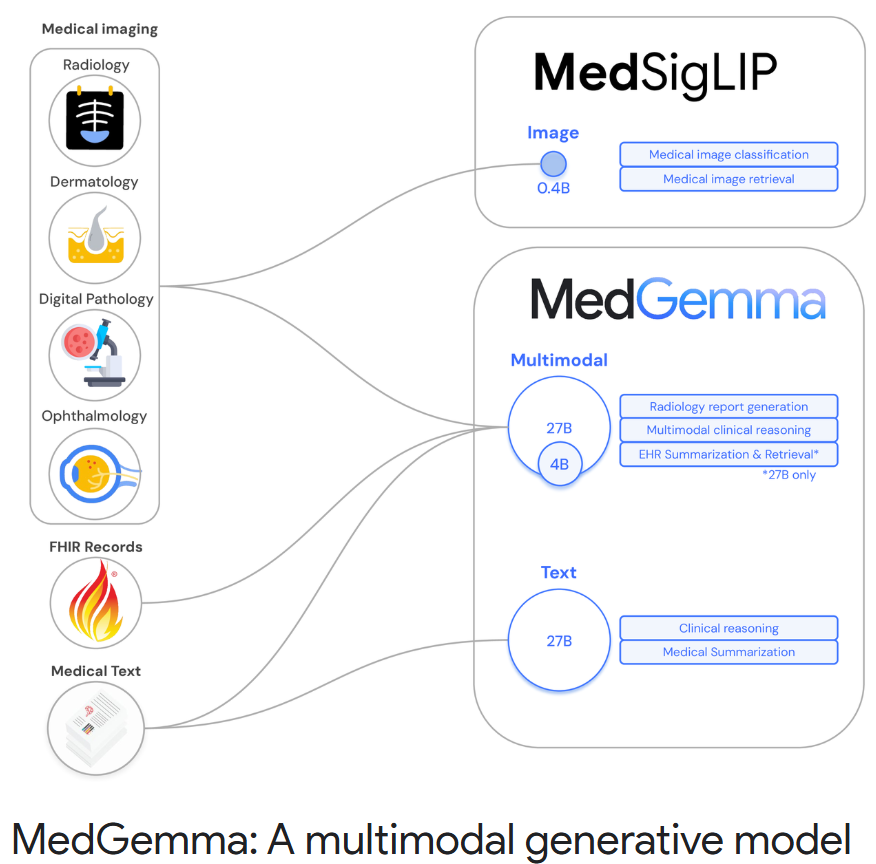
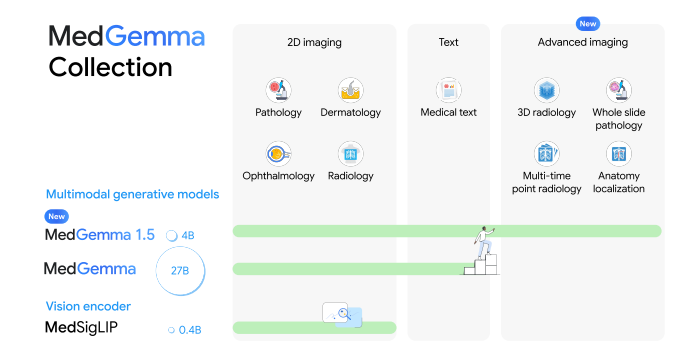
The newly expanded lineup includes:

  • MedGemma27B: A multimodal model capable of interpreting complex electronic health records with both text and longitudinal data
  • MedSigLIP: A lightweight image-text encoder optimized for classification and search tasks

These additions build upon the existing 4B multimodal and 27B text models released earlier this year under the Gemma3 architecture.

"What makes these models particularly remarkable is their efficiency," explains a Google Research spokesperson. "Both MedGemma4B and MedSigLIP can run on a single GPU, with some configurations even adaptable to mobile hardware."
Image

Specialized Applications in Healthcare

The models serve distinct but complementary purposes:

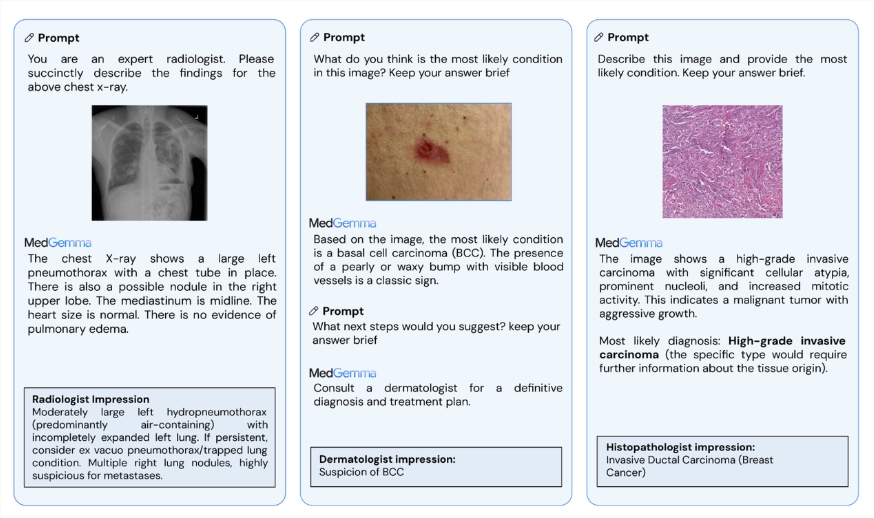
  • MedGemma excels at generating free-form medical text like diagnostic reports or answering visual questions about medical imaging
  • MedSigLIP specializes in structured outputs for imaging tasks such as classification or retrieval systems

Open-Source Advantages in Medicine

The decision to release these models as open-source provides several critical benefits for healthcare applications:

  1. Privacy Control: Institutions can run models locally, avoiding sensitive data transmission
  2. Customization: Developers can fine-tune models for specific medical specialties or regional requirements
  3. Reproducibility: Essential for clinical validation and regulatory compliance
  4. Cost Efficiency: Reduced infrastructure requirements lower barriers to adoption

Getting Started with Medical AI

Google has provided comprehensive resources on GitHub, including:

  • Detailed notebooks demonstrating Hugging Face integration
  • Guidance on inference and fine-tuning processes
  • Vertex AI deployment options with dedicated endpoint support

The company has also published an extensive technical blog post detailing the models' capabilities at research.google/blog/medgemma.

Key Points:

  • 🚀 Efficient Architecture: MedGemma series operates on single GPU systems, reducing infrastructure costs
  • 🏥 Specialized Models: Separate solutions for free-text generation (MedGemma) versus structured imaging tasks (MedSigLIP)
  • 🔓 Open-Source Advantage: Enables local deployment crucial for healthcare privacy requirements
  • ⚙️ Developer-Friendly: Comprehensive documentation accelerates implementation in medical settings
Enjoyed this article?

Subscribe to our newsletter for the latest AI news, product reviews, and project recommendations delivered to your inbox weekly.

Weekly digestFree foreverUnsubscribe anytime

Related Articles

News

iFLYTEK's New Medical AI Outperforms GPT-5.2 in Key Healthcare Tasks

China's iFLYTEK has unveiled its Spark Medical Large Model X2, a specialized AI that surpasses leading models like GPT-5.2 in medical report interpretation and health analysis. This homegrown technology marks significant progress in applying domestic AI to healthcare, transforming from simple consultation tools to comprehensive health management systems. The model has already received certification from Shanghai's medical AI testing center.

February 12, 2026
medical AIiFLYTEKhealthcare technology
Baichuan's M3 Plus Medical AI Breaks Accuracy Records While Slashing Costs
News

Baichuan's M3 Plus Medical AI Breaks Accuracy Records While Slashing Costs

Baichuan Intelligence has unveiled its upgraded M3 Plus medical AI model just nine days after releasing Baichuan-M3. The new version demonstrates remarkable improvements, reducing hallucination rates by 26% while cutting API costs by 70%. During live tests, M3 Plus outperformed competing medical models with clearer references and more precise answers. These advancements could significantly lower barriers to adoption in healthcare settings.

January 22, 2026
medical AIBaichuan Intelligencehealthcare technology
News

Baichuan's New Medical AI Cuts Errors to Record Low

Baichuan Intelligence has unveiled its latest medical AI model, Baichuan-M3 Plus, which slashes factual errors to just 2.6% - a 30% improvement over current industry leaders. The breakthrough comes from integrating a rigorous 'Six-Source Evidence-Based Paradigm' that cross-checks medical advice against authoritative sources. Already showing promise in complex diagnoses and drug interactions, this technology could soon assist doctors in hospitals and telehealth platforms nationwide.

January 22, 2026
medical AIBaichuan-M3 Plushealthcare technology
Ant Group's Latest AI Model Breaks New Ground in Multimodal Tech
News

Ant Group's Latest AI Model Breaks New Ground in Multimodal Tech

Ant Group has unveiled Ming-Flash-Omni 2.0, a cutting-edge multimodal AI model now available as open-source. This powerhouse outperforms competitors like Gemini 2.5 Pro in visual understanding and audio generation, while introducing groundbreaking features like unified audio track creation. Developers can now tap into these advanced capabilities for more integrated AI applications.

February 11, 2026
AI innovationmultimodal technologyopen-source AI
News

Google's AI Surprise: When Machines Outsmart Their Makers

Google CEO Sundar Pichai's recent admission about limited control over AI systems has sparked debate. Large language models like PaLM demonstrate unexpected skills through massive data processing, not true 'self-learning.' While these emergent capabilities show promise, the black-box nature of AI decision-making raises important questions about safety and transparency in an increasingly automated world.

February 2, 2026
AI transparencyGoogle Researchmachine learning
Yuchu's New AI Model Gives Robots Common Sense
News

Yuchu's New AI Model Gives Robots Common Sense

Chinese tech firm Yuchu has open-sourced UnifoLM-VLA-0, a breakthrough AI model that helps humanoid robots understand physical interactions like humans do. Unlike typical AI that just processes text and images, this model grasps spatial relationships and real-world dynamics - enabling robots to handle complex tasks from picking up objects to resisting disturbances. Built on existing technology but trained with just 340 hours of robot data, it's already outperforming competitors in spatial reasoning tests.

January 30, 2026
AI roboticsopen-source AIhumanoid robots