
Google's Virtual Try-On Just Got Easier – Now Works With Just a Selfie

Google Revolutionizes Virtual Try-Ons With Selfie Technology

Shopping for clothes online just got simpler. Google announced Thursday that users can now preview outfits using nothing more than a selfie – eliminating the need for full-body photos that previously made virtual try-ons cumbersome.

How It Works

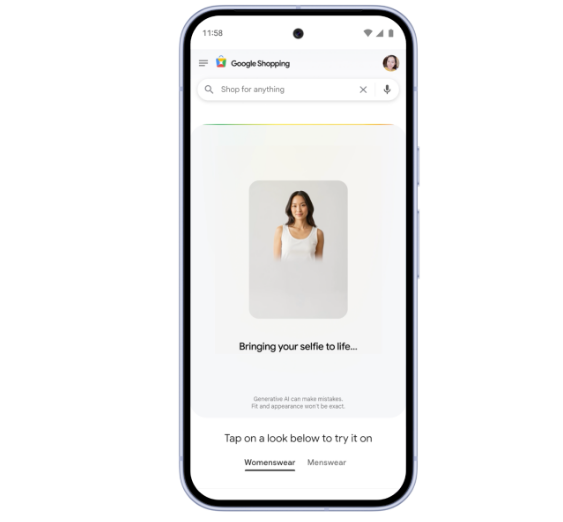
The upgraded feature leverages Google's Gemini 2.5 Flash Image model (internally nicknamed "Nano Banana") to create personalized digital avatars. Here's what shoppers can expect:

  • Snap a quick selfie instead of hunting for that perfect full-body shot
  • Select your typical clothing size
  • The system generates multiple realistic try-on images
  • Choose your favorite as the default preview image
Image

For those who prefer traditional methods, the option to upload full-body photos or select from diverse model types remains available.

Bigger Than Just Try-Ons

This update represents part of Google's broader push into AI-powered shopping experiences:

July 2023: Virtual try-on feature debuts across Google Search, Shopping, and Images. This Week: Launch of shoppable discovery feed with AI-generated outfit recommendations. Future Plans: Expansion of Doppl app (currently in development) for advanced virtual wardrobe previews.

The new discovery feed particularly stands out, displaying real product videos and personalized style suggestions powered by AI algorithms. While some consumers remain skeptical about AI-generated recommendations, Google clearly aims to replicate the engaging discovery experience popularized by platforms like TikTok and Instagram.

Why It Matters

The implications extend beyond convenience:

  1. Lower Barrier: Removing the full-body photo requirement makes virtual try-ons accessible to more users.
  2. Better Conversions: Realistic previews could reduce return rates plaguing online apparel retailers.
  3. Discovery Boost: The shoppable feed creates new opportunities for brands to reach customers organically.

The feature rolls out first in the U.S., with potential global expansion likely depending on adoption rates and feedback.

Key Points:

  • Selfie-powered try-ons eliminate need for full-body photos
  • Uses Gemini 2.5 Flash Image model ("Nano Banana")
  • Part of broader AI shopping push including discovery feeds
  • Currently available only in U.S. markets
  • Maintains traditional options alongside new features

Enjoyed this article?

Subscribe to our newsletter for the latest AI news, product reviews, and project recommendations delivered to your inbox weekly.

Weekly digestFree foreverUnsubscribe anytime

Related Articles

Google Brings Robotics Innovator Intrinsic Into Its Fold
News

Google Brings Robotics Innovator Intrinsic Into Its Fold

Google has officially welcomed Intrinsic, Alphabet's robotics software arm, into its core operations. This strategic move aims to merge Google's cutting-edge AI with industrial robotics, potentially revolutionizing manufacturing automation. Intrinsic will maintain independence while gaining access to Google's powerful Gemini AI models and cloud infrastructure.

February 26, 2026
GoogleRoboticsAI Integration
Google's AI Crackdown Leaves Email Automation Users in the Cold
News

Google's AI Crackdown Leaves Email Automation Users in the Cold

Google has escalated its battle against AI-powered email automation, with users of tools like OpenClaw reporting complete account suspensions. The tech giant isn't just restricting access to Gmail - entire Google accounts are being wiped out, taking years of stored data with them. Security experts warn that AI agents' unnatural behavior patterns and some users' attempts to bypass paid features have crossed Google's red lines. While developers scramble for solutions, affected users face the harsh reality of permanently lost emails, photos, and documents.

February 25, 2026
GoogleEmail AutomationAI Security
News

Google's AI Crackdown: Developers Face Bans for Using Open-Source Tools

Google has sparked controversy by banning developers who use open-source AI tools like OpenClaw on its Antigravity platform. The tech giant appears to be tightening control over its AI ecosystem, leaving many developers frustrated and questioning the move's impact on innovation. While Google cites intellectual property concerns, critics argue this could stifle competition in the rapidly evolving AI landscape.

February 25, 2026
GoogleAI DevelopmentOpen Source
News

Google Offers Free AI Training to Millions of Teachers Nationwide

Google is making a major push into education by offering free Gemini AI training to 6 million U.S. teachers. Partnering with ISTE and ASCD, the tech giant aims to help educators integrate AI tools like NotebookLM into classrooms. This initiative could shape how millions of students learn about and use artificial intelligence in their studies.

February 24, 2026
AI EducationGoogleTeacher Training
Google's Aluminum OS Leak Reveals Bold AI Integration Plans
News

Google's Aluminum OS Leak Reveals Bold AI Integration Plans

New details have emerged about Google's upcoming Aluminum OS, showcasing deep Gemini AI integration that could redefine desktop computing. The system places AI front and center with persistent status bar access and dedicated keyboard shortcuts, signaling Google's ambition to make artificial intelligence the core of our digital experience rather than just another feature.

February 11, 2026
GoogleOperatingSystemsArtificialIntelligence
News

Google Shatters Records with $400B Revenue as AI Push Pays Off

Google's parent company Alphabet has posted staggering financial results, crossing the $400 billion revenue mark for the first time. The tech giant's AI investments are yielding remarkable returns, with its Gemini chatbot rapidly gaining on ChatGPT's user base. Across all business segments - from search to cloud services - Google is seeing accelerated growth rather than the slowdown affecting many competitors.

February 5, 2026
GoogleArtificial IntelligenceTech Earnings