
Google's Parent Company Bets Big on Clean Energy to Fuel AI Boom

Alphabet's $4.75 Billion Power Play for AI Future

Image

The insatiable energy demands of artificial intelligence have pushed Google's parent company to make its biggest clean energy bet yet. On Monday, Alphabet announced plans to acquire renewable energy developer Intersect in a deal worth $4.75 billion - cash and debt included.

This isn't just another corporate acquisition. It's a survival move in the high-stakes world of AI infrastructure, where computing power directly translates to competitive advantage. The explosive growth of generative AI has turned data centers into energy hogs, forcing tech giants to rethink their power strategies.

Why Intersect Matters

Intersect brings more than just solar panels and wind turbines to the table. The company boasts an impressive $15 billion portfolio of projects either under construction or in development. By 2028, these assets are expected to generate a staggering 10.8 gigawatts - enough clean electricity to power millions of homes and then some.

To put that in perspective, Intersect's future output would make the Hoover Dam look like a backyard generator. That kind of capacity could be game-changing for Alphabet as it races to keep its AI services running without blowing past carbon targets.

A Relationship That Was Meant To Be

The acquisition comes as no surprise to industry watchers. Alphabet and Intersect have been dance partners for over a year, collaborating on industrial parks designed specifically for massive data centers. These facilities sit cheek-by-jowl with clean energy plants, creating an efficient power pipeline.

Even after the deal closes, Intersect will keep doing what it does best - exploring cutting-edge energy technologies while operating independently. But now with Alphabet's deep pockets behind it, the company can accelerate its mission: keeping Google's servers humming with sustainable juice.

The Bigger Picture

This move reveals just how critical energy security has become in tech boardrooms. As nations wake up to AI's strategic importance, companies are scrambling to lock down reliable power sources that won't draw regulatory ire or public backlash.

For Alphabet, controlling its own clean energy supply chain offers more than environmental bragging rights. It provides something far more valuable in the long run - stability in an unpredictable market where electricity could become as precious as silicon chips.

Key Points:

  • Powering the AI revolution: Alphabet's $4.75 billion acquisition secures vital energy infrastructure for its growing AI operations
  • Massive capacity incoming: Intersect projects will generate 20x more power than Hoover Dam by 2028
  • Strategic independence: Acquired company maintains operational freedom while fueling Google's data center expansion
  • Clean computing edge: Move positions Alphabet ahead in sustainable AI infrastructure race
Enjoyed this article?

Subscribe to our newsletter for the latest AI news, product reviews, and project recommendations delivered to your inbox weekly.

Weekly digestFree foreverUnsubscribe anytime

Related Articles

News

NVIDIA Defies Skeptics with Stellar $120 Billion Profit Year

Silencing doubts about an AI slowdown, NVIDIA just posted financial results that crushed expectations. The chipmaker's quarterly revenue hit $68.13 billion, powered by a 75% surge in its data center business. With annual profits reaching $120 billion, NVIDIA continues to dominate as tech's most valuable company while reshaping global AI infrastructure.

February 26, 2026
NVIDIAAI chipstech earnings
Meta's New Tool Spots Sneaky GPU Failures Before They Crash AI Training
News

Meta's New Tool Spots Sneaky GPU Failures Before They Crash AI Training

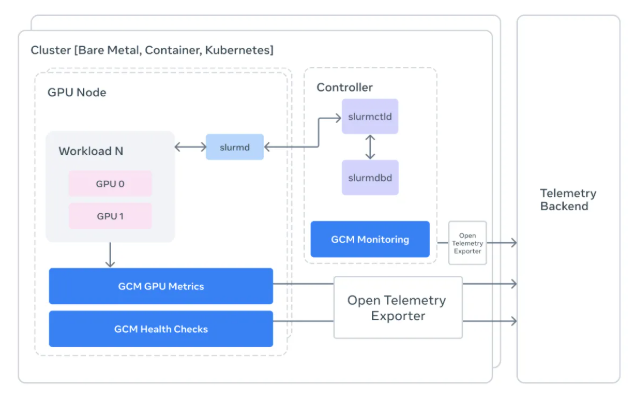
Meta has released an open-source toolkit called GCM that helps detect subtle hardware failures in massive GPU clusters used for AI training. Unlike traditional server monitoring, GCM can pinpoint performance drops in individual GPUs that might otherwise go unnoticed but could ruin weeks of computational work. The tool integrates with popular scheduling systems and provides detailed health reports, potentially saving companies millions in wasted computing resources.

February 25, 2026
AI infrastructureGPU monitoringMeta research
News

France's Mistral Bets Big on European AI Independence with $1.4B Swedish Data Center

French AI startup Mistral is making its boldest move yet for European tech sovereignty, investing €1.2 billion to build Sweden's largest AI data center. The facility, set to open in 2027, aims to reduce Europe's reliance on US cloud services while powering next-generation AI models with clean energy. Backed by investors like ASML and NVIDIA, Mistral's gamble could reshape Europe's position in the global AI race.

February 12, 2026
AI sovereigntyEuropean techdata centers
News

China Unveils Massive 30,000-Card AI Supercluster

China has taken a giant leap in AI computing power with the launch of its first 30,000-card supercluster at Zhengzhou's National Supercomputing Internet hub. This massive computing pool, developed by Sunway in record time, supports trillion-parameter models and promises revolutionary breakthroughs across scientific fields. The system's open architecture makes it surprisingly accessible while offering unprecedented scalability.

February 6, 2026
AI infrastructurehigh-performance computingChina tech
News

a16z Bets Big on AI's Backbone With $1.7 Billion Infrastructure Fund

Silicon Valley heavyweight Andreessen Horowitz is doubling down on AI's foundational technologies, earmarking $1.7 billion from its latest fundraise specifically for infrastructure plays. The move signals a strategic shift toward powering the next wave of artificial intelligence innovation rather than just chasing applications. With past investments in OpenAI and ElevenLabs, a16z aims to control the 'pipes' of AI development - from computing power to talent pipelines.

February 5, 2026
venture capitalAI infrastructureSilicon Valley
News

AI Traffic Gets Smarter: How Large Model Gateways Are Streamlining Enterprise Tech

As businesses adopt multiple AI tools, managing different models has become chaotic. Enter the Large Model Gateway - a traffic cop for AI systems that simplifies access while cutting costs. One company slashed expenses by creating a centralized 'model marketplace' with unified APIs. This innovation could reshape how enterprises deploy AI across departments.

February 3, 2026
AI infrastructureEnterprise technologyMachine learning ops