Google's Gemini 3 Flash Now Sees Like a Human Detective

Google's AI Learns to Examine Images Like Human Experts
Image

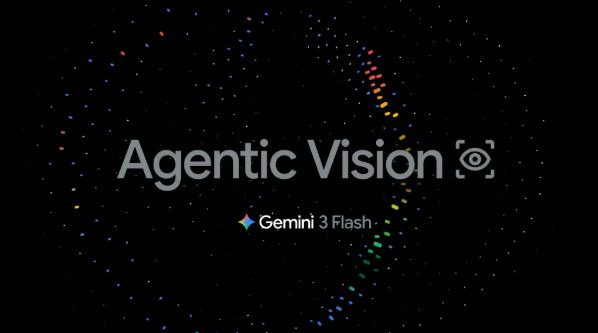
Imagine an AI that doesn't just look at pictures but actually studies them - zooming in on important details, circling relevant sections, and piecing together clues like a detective. That's exactly what Google's new Agentic Vision technology brings to its lightweight Gemini 3 Flash model.

From Glancing to Investigating

Traditional AI vision systems had a fundamental limitation: they processed entire images at once, often missing crucial details in complex scenes. Road signs became blurry smudges in the distance, intricate diagrams turned into indecipherable patterns, and small text simply disappeared.

"It was like trying to read a book by holding it at arm's length," explains Dr. Elena Rodriguez, Google's computer vision lead. "Now we've given our AI the ability to pick up that book, turn the pages, and even use a magnifying glass when needed."

The breakthrough comes from mimicking how humans examine complex visuals. When presented with a challenging image, Gemini 3 Flash:

  1. Creates an analysis plan
  2. Uses Python code to manipulate the image (cropping, rotating, annotating)
  3. Studies these enhanced views
  4. Delivers its final assessment

Practical Benefits Emerging

Early tests show 5-10% accuracy improvements on difficult visual tasks:

  • Reading distant street signs
  • Analyzing complex technical diagrams
  • Identifying subtle patterns in medical imagery

The technology isn't just smarter - it's more transparent too. Developers can watch as the AI "shows its work" through each investigative step.

Coming Soon to Your Phone

Currently available through Google's developer platforms (Gemini AI Studio and Vertex AI), Agentic Vision will soon reach general users via:

  • Thinking Mode in Gemini apps
  • Mobile AI assistants
  • Potentially integrated into Google Lens

The implications are vast - from helping visually impaired users navigate spaces to assisting scientists analyzing microscopic images.

Key Points:

  • 🔍 Active investigation: No more passive image scanning - Gemini now explores visuals methodically
  • 🛠️ Code-powered analysis: Automatically generates Python scripts to manipulate images
  • 📱 Coming to consumers: Will debut in mobile assistants soon
  • 🎯 Accuracy boost: Delivers measurable improvements on tough visual tasks
Enjoyed this article?

Subscribe to our newsletter for the latest AI news, product reviews, and project recommendations delivered to your inbox weekly.

Weekly digestFree foreverUnsubscribe anytime

Related Articles

Google's NotebookLM Now Turns Your Notes Into Mini Movies
News

Google's NotebookLM Now Turns Your Notes Into Mini Movies

Google's AI-powered NotebookLM just got a Hollywood makeover. The tool can now transform your research notes into cinematic video summaries, complete with smooth animations and rich visuals. Powered by Gemini 3 and Veo 3 AI models, this premium feature helps visual learners grasp complex topics through immersive storytelling. Currently English-only and available to Ultra subscribers, it signals Google's push into creative productivity tools.

March 5, 2026
NotebookLMAIvideoGoogleAI
News

Google's Gemini Hits 750 Million Users as AI Race Heats Up

Google's AI chatbot Gemini has crossed 750 million monthly active users, marking a 100 million jump in just three months. The rapid growth puts it within striking distance of ChatGPT's estimated 810 million users. Alphabet's latest earnings reveal how its AI push - including new chips and affordable subscriptions - is reshaping the company's future.

February 5, 2026
GoogleAITechTrendsArtificialIntelligence
DeepSeek's New OCR Tech Mimics Human Vision, Slashes Costs
News

DeepSeek's New OCR Tech Mimics Human Vision, Slashes Costs

Chinese AI firm DeepSeek has unveiled OCR2, a breakthrough visual encoder that processes documents like human eyes scan pages. By ditching rigid grid processing for flexible 'causal flow tokens,' the system cuts visual token usage by 80% while outperforming Gemini3Pro in benchmarks. The open-sourced technology could pave the way for truly unified multimodal AI.

February 2, 2026
ComputerVisionAIBreakthroughsDocumentAI
Robots Can Now Grasp Glassware Thanks to Breakthrough Depth Perception Tech
News

Robots Can Now Grasp Glassware Thanks to Breakthrough Depth Perception Tech

Ant Group's Lingbo Technology has open-sourced LingBot-Depth, a revolutionary spatial perception model that helps robots handle transparent and reflective objects with unprecedented accuracy. Using advanced 'Masked Depth Modeling' technology, the system fills in missing depth data from stereo cameras, solving a longstanding challenge in robotics. Early tests show it outperforms existing solutions by up to 70% in accuracy.

January 27, 2026
RoboticsComputerVisionOpenSource
Kimi K2.5 Sneaks In with Major Visual and Tool Upgrades
News

Kimi K2.5 Sneaks In with Major Visual and Tool Upgrades

Moonshot AI has quietly rolled out Kimi K2.5, bringing significant improvements in visual analysis and tool integration. Users report impressive performance in tasks like converting images to 3D models and solving complex problems step-by-step. The tech community is buzzing with excitement, especially about potential open-source possibilities.

January 27, 2026
AIupdatesComputerVisionMoonshotAI
Meta's Pixio Rewrites the Rules: Simple Approach Beats Complex AI in 3D Vision
News

Meta's Pixio Rewrites the Rules: Simple Approach Beats Complex AI in 3D Vision

Meta AI's new Pixio model proves simplicity can outperform complexity in computer vision. By enhancing an older masking technique and training on diverse web images, Pixio achieves better 3D reconstruction than larger models—all while avoiding benchmark 'cheating.' The breakthrough suggests we might have overcomplicated visual AI.

December 29, 2025
ComputerVisionMetaAI3DReconstruction