
Google's AI-Powered Virtual Try-On Feature Expands Across U.S.

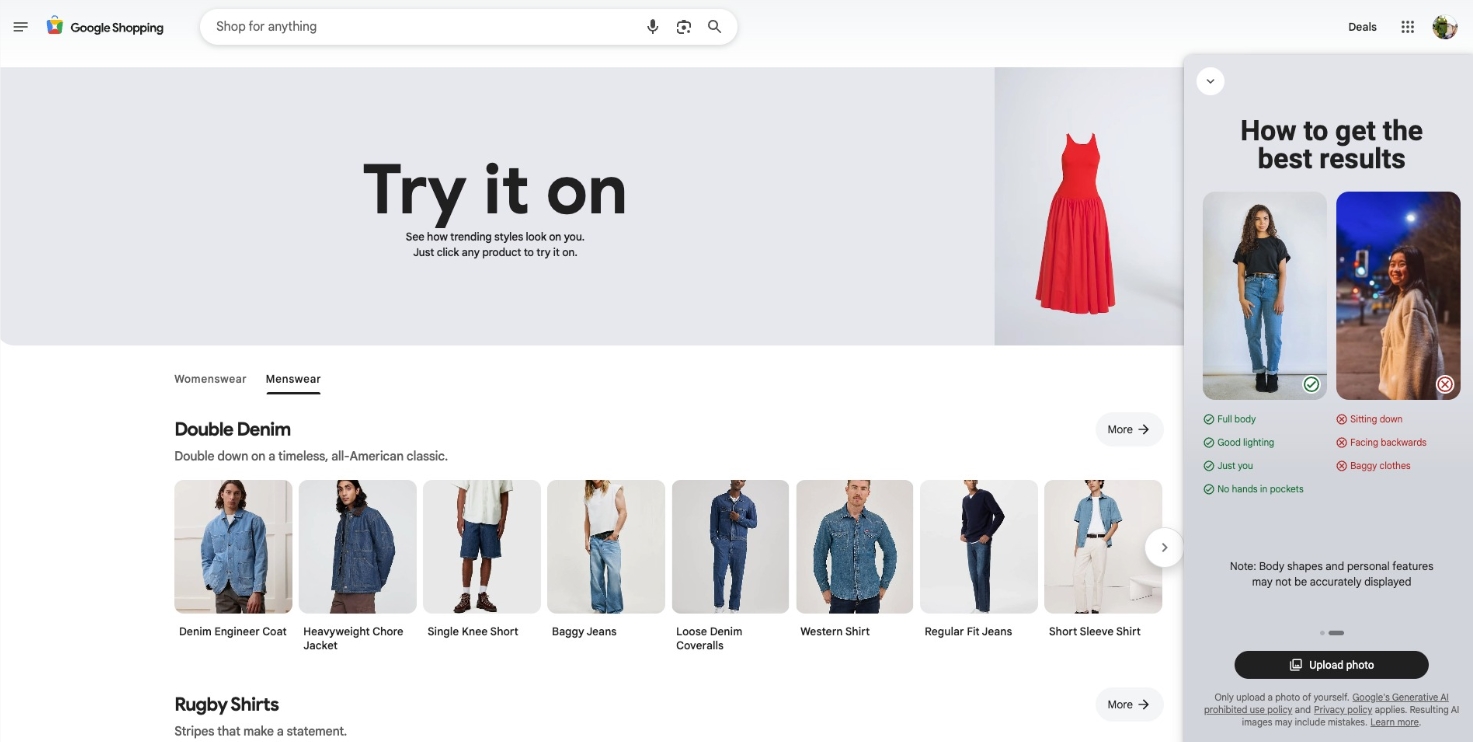
At the Google I/O 2025 conference, the tech giant unveiled its groundbreaking "Try On" experiment, now rolling out to more users across the United States. This innovative feature leverages generative AI to transform how consumers shop for clothing online, offering near-instant virtual fitting capabilities.
Image

Revolutionizing the Shopping Experience

The system utilizes Google's advanced image generation model tailored specifically for fashion applications. Users simply select garments on Google Shopping, upload a full-body photo, and receive photorealistic try-on results within seconds. The technology accurately renders fabric textures, draping effects, and fit - drawing from Google's database of 50 billion global products to ensure accuracy.

Currently supporting skirts and pants, the platform plans to expand to tops and outerwear soon. This represents a significant upgrade from traditional e-commerce displays where customers rely on static images or standardized model photos.

Smart Shopping Features

The platform goes beyond virtual fittings with its natural language search capabilities. Shoppers can input complex queries like "Find a professional blue dress under $100" and receive curated results with price comparisons. The integrated checkout system allows purchases without leaving the interface - potentially reducing cart abandonment rates.

For retailers, the technology offers valuable insights into consumer preferences through try-on data analysis. The system can suggest complementary items or identify trending styles to optimize inventory management.

Technical Innovation Behind the Scenes

Powered by Gemini2.0 architecture, the platform processes multimodal inputs including text, images, and voice commands. Google has implemented rigorous privacy safeguards - user photos are processed temporarily for try-on generation but neither stored nor repurposed.

The customized image model accounts for diverse body types and skin tones when rendering clothing simulations. Real-time data processing ensures product availability and pricing information remains current throughout the shopping journey.

Industry Impact and Future Developments

Since its May 20th debut, early adopters have praised the feature's speed and realism. Google plans international expansion and additional product categories, with potential AR integrations like virtual makeup testing in development.

This innovation could establish new standards for online apparel retail by shifting from passive browsing to interactive experiences. As adoption grows, it may fundamentally alter how consumers evaluate fit and style when shopping digitally.

Key Points

  1. Google's "Try On" uses generative AI for realistic clothing simulations
  2. Supports natural language searches and automated checkouts
  3. Currently available for skirts/pants in U.S., with expansion planned
  4. Processes user photos temporarily with strict privacy protections
  5. Potential to transform online apparel shopping behaviors

Enjoyed this article?

Subscribe to our newsletter for the latest AI news, product reviews, and project recommendations delivered to your inbox weekly.

Weekly digestFree foreverUnsubscribe anytime

Related Articles

Google's Upcoming Smart Glasses Pack Surprising Features
News

Google's Upcoming Smart Glasses Pack Surprising Features

A leaked Google companion app reveals intriguing details about upcoming Android XR glasses. The device will support crisp 3K video recording and smart conversation detection powered by Gemini AI - all while keeping your data private with on-device processing. As Google quietly prepares to challenge Meta's Ray-Bans, these glasses might just become your next favorite wearable.

January 13, 2026
GoogleSmartGlassesAndroidXR
Mugen3D Turns Single Photos Into Stunning 3D Worlds
News

Mugen3D Turns Single Photos Into Stunning 3D Worlds

A groundbreaking AI tool called Mugen3D is transforming how we create 3D content. Using advanced 3D Gaussian Splatting technology, it can generate remarkably realistic models from just one image - capturing textures, lighting, and materials with astonishing accuracy. This innovation promises to democratize 3D creation across industries from gaming to e-commerce.

January 12, 2026
AIComputerGraphicsDigitalCreation
Gmail Gets Smarter: Google's Gemini AI Transforms Email Search
News

Gmail Gets Smarter: Google's Gemini AI Transforms Email Search

Google has supercharged Gmail with its Gemini3 AI, bringing natural language search to your inbox. Now you can ask questions like 'What was the plumber's quote?' and get instant answers. The update also includes free writing assistance, smarter replies, and an upcoming 'AI Inbox' that prioritizes important messages while respecting your privacy.

January 9, 2026
GoogleGmailGeminiAI
News

Qualcomm and Google Join Forces to Revolutionize Car Tech with AI

Qualcomm and Google are teaming up to tackle one of the automotive industry's biggest headaches: fragmented in-car systems. Their new 'Automotive AI Agent' combines Qualcomm's Snapdragon Digital Chassis with Google's Android Automotive OS, promising smoother development and smarter features like facial recognition. The partnership also introduces cloud-based development tools that could cut R&D time significantly. This collaboration marks a major step toward more unified, intelligent vehicle systems.

January 9, 2026
automotive-techAIsmart-cars
News

Bosch Bets Big on AI with €2.5 Billion Push Into Smart Cars

At CES 2026, automotive giant Bosch unveiled plans to invest over €2.5 billion in AI development by 2027, targeting smarter cockpits and safer autonomous driving systems. The German supplier aims to transform from hardware specialist to software leader, projecting its tech division could hit €10 billion in sales by the mid-2030s.

January 7, 2026
BoschAIautonomous vehicles
News

Google and Qualcomm Bring AI Assistants to Your Car's Dashboard

Qualcomm and Google are taking their automotive partnership to the next level by embedding Google's AI assistant directly into vehicle systems. The upgraded Snapdragon Digital Chassis will power smarter, more intuitive cars that can anticipate your needs - from adjusting cabin settings to planning your commute. Chinese EV makers like Leapmotor will be first to roll out these AI-powered features, signaling a major shift in how we interact with our vehicles.

January 6, 2026
automotive technologyAI assistantssmart cars