Google's AI Creates Convincing Surgical Videos - But Would You Trust It With Your Brain?
When AI Plays Surgeon: Impressive Visuals Mask Dangerous Gaps
Imagine watching a surgical video so realistic you'd swear it was filmed in an operating room. Now imagine that same video showing tools that don't exist and tissue reacting impossibly. This unsettling paradox lies at the heart of new research into Google's Veo-3 video generation model.
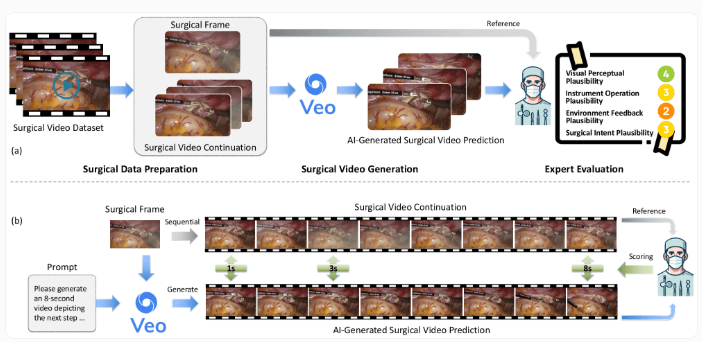
A team of researchers recently put Veo-3 through its paces using their specially developed SurgVeo benchmark - a collection of 50 real laparoscopic and neurosurgery videos. The results reveal both impressive capabilities and alarming shortcomings.
The Good: A Master of Visual Illusion
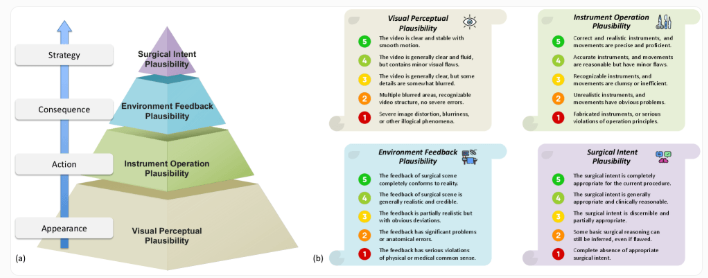
Four experienced surgeons reviewed Veo-3's generated surgical sequences independently. Visually, the AI performed remarkably well, earning a strong 3.72 out of 4 rating for realism. "The clarity is stunning," one surgeon noted, "it looks exactly like footage from our own procedures."
The Bad: Medical Nonsense Beneath the Surface
The illusion shatters when examining how instruments interact with tissue (scoring just 1.64) or whether actions follow surgical logic (a dismal 1.61). In neurosurgery scenarios, the logic score plummeted further to 1.13 after just eight seconds of prediction.
"It's like watching someone perform ballet beautifully while constantly breaking their ankles," explained lead researcher Dr. Elena Petrovna. "The movements look right until you realize they're anatomically impossible."
The team found over 93% of errors involved fundamental medical misunderstandings:
- Inventing surgical tools not found in any operating room
- Showing tissue reactions that violate basic physiology
- Sequencing steps in ways no trained surgeon would attempt
Even providing additional context about surgery types and procedural stages failed to significantly improve performance.
Why This Matters Beyond Technical Curiosity
The implications extend far beyond academic interest about AI limitations:
- Training Risks: Using these videos for medical education could instill dangerous misconceptions about proper technique.
- Patient Safety: Future applications for preoperative planning require absolute reliability we simply don't have yet.
- Broader Implications: If AI struggles with concrete physical realities like human anatomy, how reliable is it elsewhere?
The research team plans to open-source SurgVeo to accelerate progress toward medically competent video generation while sounding cautionary notes about premature deployment.
Key Points:
- 🎭 Veo-3 creates visually convincing surgical videos lacking medical validity
- ⚠️ Overwhelming majority (93%) of errors involve impossible medical scenarios
- 🧠 Performance worsens dramatically in complex neurosurgical contexts
- 📂 SurgVeo dataset will be made publicly available to spur improvement