Google Clarifies Stance on LLMs.txt File Amid Developer Confusion

Google Sets Record Straight on Controversial LLMs.txt Files

Tech giant Google finds itself once again addressing questions about its position on LLMs.txt files - a topic that keeps sparking debate among developers. The confusion began when these files mysteriously appeared across multiple Google developer documentation pages.

What Sparked the Confusion?

The situation unfolded rapidly:

  • Unexpected Appearance: Google's content management system automatically added LLMs.txt references
  • Swift Removal: The search team acted quickly to eliminate most mentions
  • Mixed Signals: Some references remained visible in less obvious locations
Image

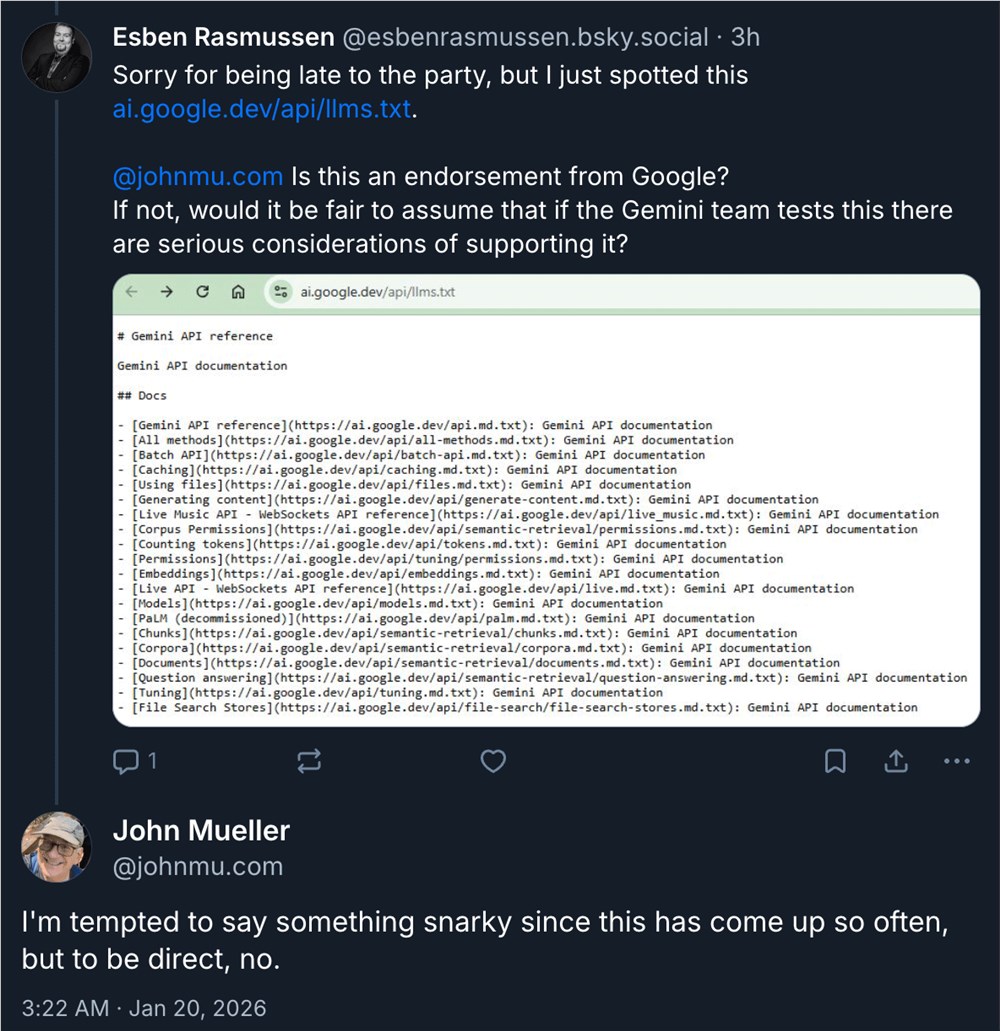
John Mueller, a prominent voice from Google's search team, took to Bluesky to clarify: "This wasn't some secret endorsement. We don't use these files ourselves and frankly question their usefulness."

Why Does This Matter?

The tech community watches Google's every move closely when it comes to web standards. Many developers initially interpreted the appearance of LLMs.txt documentation as tacit approval from the search leader.

Mueller offered practical advice: "If you're determined to use LLMs.txt despite our reservations, at least set it to noindex." This suggestion reveals Google's pragmatic approach - they won't block innovation but want developers making informed choices.

Looking Ahead

The incident highlights growing pains as AI technologies evolve rapidly. While companies experiment with new approaches like LLMs.txt, established players like Google remain cautious about endorsing unproven methods.

The takeaway? Developers should:

  • Treat unofficial standards with healthy skepticism
  • Prioritize official documentation over experimental features
  • Stay alert for updates from trusted sources

Key Points:

  • No Official Support: Google doesn't endorse or use LLMs.txt files internally
  • Transparency Push: The company moved quickly to correct mistaken impressions
  • Practical Advice: Developers using these files should prevent indexing
  • Ongoing Evolution: Web standards continue developing alongside AI advances

Enjoyed this article?

Subscribe to our newsletter for the latest AI news, product reviews, and project recommendations delivered to your inbox weekly.

Weekly digestFree foreverUnsubscribe anytime

Related Articles

Google Trends Gets Smarter: AI-Powered Comparisons Now Available
News

Google Trends Gets Smarter: AI-Powered Comparisons Now Available

Google Trends just leveled up with Gemini AI integration, transforming how we explore search trends. The update introduces smart sidebars that automatically suggest related searches and visual improvements making data easier to digest. Now comparing up to eight topics at once, journalists and researchers can uncover hidden connections faster than ever.

January 15, 2026
GoogleData AnalysisAI Tools
Google's Upcoming Smart Glasses Pack Surprising Features
News

Google's Upcoming Smart Glasses Pack Surprising Features

A leaked Google companion app reveals intriguing details about upcoming Android XR glasses. The device will support crisp 3K video recording and smart conversation detection powered by Gemini AI - all while keeping your data private with on-device processing. As Google quietly prepares to challenge Meta's Ray-Bans, these glasses might just become your next favorite wearable.

January 13, 2026
GoogleSmartGlassesAndroidXR
Gmail Gets Smarter: Google's Gemini AI Transforms Email Search
News

Gmail Gets Smarter: Google's Gemini AI Transforms Email Search

Google has supercharged Gmail with its Gemini3 AI, bringing natural language search to your inbox. Now you can ask questions like 'What was the plumber's quote?' and get instant answers. The update also includes free writing assistance, smarter replies, and an upcoming 'AI Inbox' that prioritizes important messages while respecting your privacy.

January 9, 2026
GoogleGmailGeminiAI
News

Google and Qualcomm Bring AI Assistants to Your Car's Dashboard

Qualcomm and Google are taking their automotive partnership to the next level by embedding Google's AI assistant directly into vehicle systems. The upgraded Snapdragon Digital Chassis will power smarter, more intuitive cars that can anticipate your needs - from adjusting cabin settings to planning your commute. Chinese EV makers like Leapmotor will be first to roll out these AI-powered features, signaling a major shift in how we interact with our vehicles.

January 6, 2026
automotive technologyAI assistantssmart cars
Google's A2UI Standard Turns AI Into Instant Interface Designers
News

Google's A2UI Standard Turns AI Into Instant Interface Designers

Google has introduced A2UI, an open standard that enables AI agents to create graphical interfaces on the fly. Moving beyond text responses, AI can now generate interactive elements like forms and buttons tailored to each conversation. This breakthrough promises more natural interactions - imagine booking restaurants through visual forms instead of endless text exchanges. Already adopted by multiple partners, A2UI could redefine how we interact with AI assistants.

December 22, 2025
A2UIAI InterfacesGoogle
Google's Gemini 3 Flash: Faster, Cheaper, and Surprisingly Smarter
News

Google's Gemini 3 Flash: Faster, Cheaper, and Surprisingly Smarter

Google has unveiled Gemini 3 Flash, a lightweight AI model that's turning heads with its performance and affordability. Clocking in at three times the speed of its predecessor while slashing costs by up to 80%, this model isn't just about efficiency—it's outperforming Google's own premium offering in coding tasks. With innovative features like adjustable 'thinking levels,' developers can now balance speed against depth of analysis. This release marks a significant step toward making powerful AI tools accessible for everyday use.

December 18, 2025
AIGoogleMachineLearning