FLUX.2 Unleashed: Stable Diffusion's Powerful New Open-Source Cousin
FLUX.2: The Developer's Dream Machine for AI Art
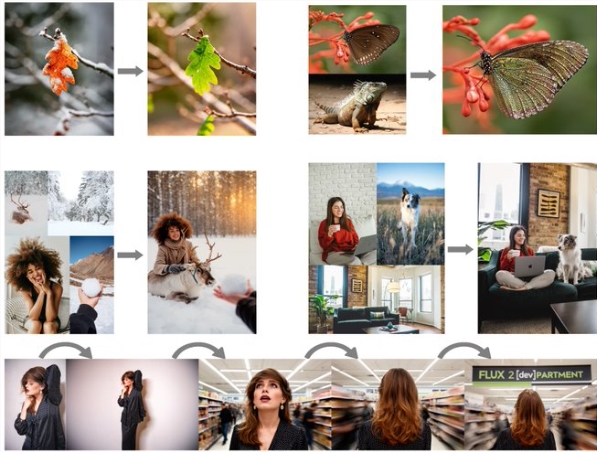
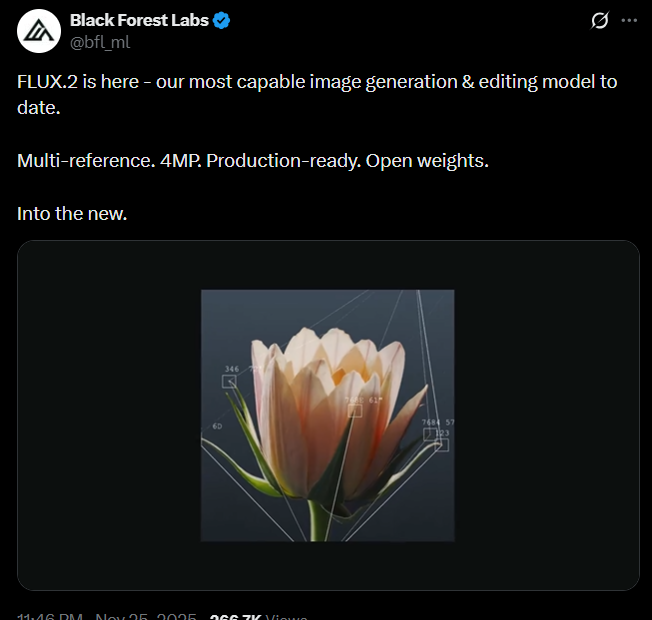
Black Forest Labs just dropped a bombshell in the AI art world with their FLUX.2 series release. What makes this different from other Stable Diffusion variants? For starters, they've open-sourced their 32B parameter [dev] model weights - a rare treat in an industry increasingly moving toward closed ecosystems.
What's New Under the Hood?
The team didn't just tweak the formula; they rebuilt it from the ground up:
- Multi-Image Mastery: Feed it up to 10 reference images simultaneously while maintaining over 95% consistency - perfect for locking down specific poses, lighting setups, or color palettes.
- Precision Editing: Local edits now support 4MP resolution (that's four times sharper than standard HD), with PSD layer exports coming soon.
- Text That Actually Makes Sense: Complex layouts and UI elements render correctly 92% of the time - about 10% better than DALL·E3.
- Common Sense Upgrade: Spatial relationships and lighting physics errors dropped by 37%, meaning fewer "why would anyone pose like that?" moments.
Choose Your Fighter
The FLUX.2 lineup offers something for every use case:
- Pro: The commercial workhorse - twice as fast and 30% cheaper to run than previous versions.
- Flex: Developer's playground with adjustable parameters for fine-tuning.
- Dev: The fully open-source option combining text-to-image and multi-image editing under Apache 2.0 license.
- Klein (coming soon): A lean, mean version packing full performance into half the parameters for edge devices.
Built For Coders, By Coders
The team clearly had developers in mind:
- Their new VAE autoencoder squeezes out an extra 18% compression efficiency, saving precious GPU memory.
- Ready-to-use plugins for PyTorch, Diffusers, and ComfyUI are already on GitHub.
- No-code curious? Try the live demo at huggingface.co/spaces/BlackForestLabs/FLUX-2-dev.
This release could significantly lower barriers for indie developers and small studios looking to compete with big players' proprietary models. While commercial alternatives remain closed-source, FLUX.2's open approach might just spark a new wave of innovation in AI-generated art tools.
Key Points:
- Open-source alternative to commercial AI art models
- Handles multiple reference images simultaneously
- Significant improvements in text rendering accuracy
- Four specialized versions catering to different needs
- Developer-friendly implementation lowers entry barrier