Finding the Perfect Fit: Why Integrated Lenses Are Winning Over Nearsighted AI Glasses Users

The Clear Choice for Nearsighted Tech Enthusiasts

November saw a flood of new AI glasses hitting the market, leaving many vision-corrected users wondering: how do you choose smart eyewear that doesn't compromise on clarity or comfort? Industry experts point to integrated conformal lenses as the emerging gold standard.

Beyond Basic Smart Features

Today's AI glasses pack impressive capabilities - from instant Q&A to mobile payments - typically priced between ¥2000-6000. But for the estimated 600 million nearsighted Chinese consumers, the real challenge lies in finding models that deliver both cutting-edge tech and crisp vision.

"It's like wearing two pairs of glasses simultaneously," explains Zhu Dianrong, an optical engineer. "The waveguide lens handles digital displays while the corrective lens addresses vision needs."

Three Approaches Compared

The industry currently offers three solutions:

  1. External attachments - Bulky additions that create light leakage
  2. Magnetic attachments - Prone to dust accumulation in gaps
  3. Integrated conformal lenses - Seamless single-unit designs

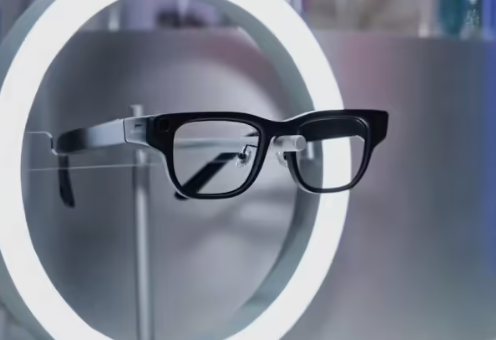
Image (Smart glasses expert He Wancheng demonstrates lens differences)

"Integrated designs win on multiple fronts," says He Wancheng. "They're lighter, prevent glare issues, and maintain better optical clarity since there's no air gap disrupting light transmission."

Medical Perspective Matters

Dr. Shao Yuyu from Zhejiang University Hospital confirms what early adopters report: "Patients notice immediate comfort differences. The unified lens system provides more natural vision correction without added weight or distortion."

The medical community particularly recommends integrated models for commuters and active users who need all-day wearability without strain.

Industry Shift Underway

The trend is clear - major players like Meta and domestic brand Kuaizhi now exclusively offer factory-customized integrated lenses. Users simply submit their prescription during ordering, receiving ready-to-wear smart glasses without complicated adjustments.

The days of compromising between tech features and visual comfort appear numbered as this elegant solution gains dominance.

Enjoyed this article?

Subscribe to our newsletter for the latest AI news, product reviews, and project recommendations delivered to your inbox weekly.

Weekly digestFree foreverUnsubscribe anytime

Related Articles

OpenAI's 'Sweetpea': Jony Ive-Designed AI Audio Device Targets Mass Market
News

OpenAI's 'Sweetpea': Jony Ive-Designed AI Audio Device Targets Mass Market

OpenAI is secretly developing an AI-powered audio device codenamed 'Sweetpea' with Apple's former design chief Jony Ive. The oval-shaped wearable combines cutting-edge tech with sleek design, featuring a 2nm AI chip and innovative interaction methods. Foxconn will manufacture the device, which aims to ship 40-50 million units in its first year, potentially transforming OpenAI from software to hardware powerhouse.

January 14, 2026
AI hardwarewearable techJony Ive
Tsinghua's Smart Glasses Detect and Stop Facial Twitches Instantly
News

Tsinghua's Smart Glasses Detect and Stop Facial Twitches Instantly

Researchers at Tsinghua University have created revolutionary smart glasses that monitor facial muscle movements and automatically deliver relief when spasms occur. The lightweight wearable device, featured in Nature Communications, uses advanced sensors to detect subtle twitches before triggering gentle electrical stimulation. Early trials show the system significantly improves quality of life for people with hemifacial spasm, offering a convenient alternative to invasive treatments.

January 14, 2026
wearable techmedical innovationneurological disorders
News

CES 2026 Unveils Comfort Standards Transforming Wearable Tech

The smart wearable industry took a major leap forward at CES 2026 with the release of groundbreaking comfort standards. Major players like iFlytek and Huawei collaborated with SGS to establish measurable criteria for what makes devices comfortable to wear - solving a long-standing consumer pain point. iFlytek's AI earphones became the first product to earn SGS's highest comfort certification, setting a new benchmark.

January 12, 2026
wearable techCES innovationshuman-centered design
ASUS ROG and XREAL Unveil Game-Changing AR Glasses at CES
News

ASUS ROG and XREAL Unveil Game-Changing AR Glasses at CES

ASUS ROG and XREAL have teamed up to create the ROG XREAL R1 AR gaming glasses, featuring a groundbreaking 240Hz refresh rate for ultra-smooth gameplay. These lightweight glasses project a massive virtual screen equivalent to a 171-inch display, revolutionizing how gamers experience their favorite titles. With innovative features like electrochromic lenses and Bose-tuned audio, they promise immersive gaming anywhere.

January 6, 2026
AR gamingwearable techCES innovations
News

ByteDance's DouBao AI Glasses Set for Limited Release

ByteDance is gearing up to ship its highly anticipated DouBao AI glasses, but with a twist - the first batch of 100,000 units will be exclusively available to existing DouBao App users. Powered by Qualcomm's Snapdragon AR1 chip, these lightweight glasses focus on audio functionality without a display screen. While the company remains tight-lipped about broader sales plans, industry insiders reveal development is already underway for a second-generation model.

January 6, 2026
wearable techartificial intelligenceByteDance
Pickle1 AI Glasses Promise to Be Your Perfect Memory Companion
News

Pickle1 AI Glasses Promise to Be Your Perfect Memory Companion

US startup Pickle has unveiled Pickle1, groundbreaking AI glasses that aim to become your 'second brain.' These lightweight smart glasses continuously record and organize your daily experiences, offering features like infinite memory recall and proactive assistance. While raising privacy questions, they represent an ambitious leap toward truly personalized wearable AI.

January 4, 2026
wearable techartificial intelligenceaugmented reality