Ex-Qwen Engineer Reveals: AI Models Are Becoming Doers, Not Just Thinkers

The Action-Oriented Future of AI

Lin Junyang, who spearheaded Alibaba's Qwen large language model development before his recent departure, broke his silence with a thought-provoking analysis of AI's next evolutionary leap. His revelations challenge how we think about artificial intelligence's capabilities and limitations.

From Contemplation to Action

"We've been obsessed with making models think longer," Lin observed during his March 26 address, "but that's like praising a chef for how long they can chop vegetables rather than the quality of their dishes." His analogy captures the industry's pivotal shift from "reasoning-based thinking" to what he calls "agent-based thinking" - where AI doesn't just ponder problems but actively works to solve them.

The Qwen Experiment: When Thinking and Doing Collide

Lin pulled back the curtain on Qwen's early growing pains in 2025. The team ambitiously tried creating a unified system that could toggle between deep reasoning and quick execution based on task complexity. "We thought we could build the AI equivalent of an Olympic decathlete," he admitted. "Turns out, even AIs need specialization."

The hybrid approach produced mediocre results - models that hesitated too much when thinking and acted too hastily when executing. This painful lesson led to Qwen's strategic pivot: separate "Instruct" and "Thinking" versions that each excelled at their specific functions.

Rethinking Intelligence Metrics

Lin challenges conventional wisdom about what makes an AI model "smart":

  • Longer reasoning ≠ smarter AI: Complex thought chains often waste computational resources without improving outcomes
  • Actionability is key: A model's value lies in its ability to translate thoughts into effective real-world actions
  • Environment matters: Future breakthroughs will come from training complete agent systems (model + environment) rather than isolated models

"Imagine judging a basketball player solely on their vertical leap," Lin suggested. "That measurement means nothing without considering how it translates to actual gameplay."

Key Points:

  • AI is evolving from passive reasoning engines to active problem-solving agents
  • Early attempts to combine thinking and action functions proved ineffective
  • Future development will focus on complete agent systems rather than standalone models
  • Performance metrics must prioritize actionable results over theoretical capabilities
Enjoyed this article?

Subscribe to our newsletter for the latest AI news, product reviews, and project recommendations delivered to your inbox weekly.

Weekly digestFree foreverUnsubscribe anytime

Related Articles

News

Leaked: Claude's Next-Gen AI Model Shows Stunning Capabilities

Anthropic's upcoming Claude Mythos AI model has reportedly surpassed its flagship Opus system in testing, according to leaked documents. The new 'Capybara' tier represents a quantum leap in reasoning abilities, though insiders warn of unprecedented security risks. This development could reshape the competitive landscape of advanced AI systems.

March 27, 2026
AI DevelopmentAnthropicMachine Learning
News

Robots Get a Dose of Common Sense with New AI Model

DeepMind Intelligence has unveiled PhysBrain 1.0, a groundbreaking AI model that gives robots human-like understanding of physical laws. Unlike previous systems that simply mimic actions, this technology enables machines to predict and adapt to real-world environments. Developed by Beijing Zhongguancun College researchers, it could revolutionize how robots operate in unpredictable settings.

March 27, 2026
Artificial IntelligenceRoboticsMachine Learning
Anthropic's Claude Code Goes Mobile: Control AI Development from Your Phone
News

Anthropic's Claude Code Goes Mobile: Control AI Development from Your Phone

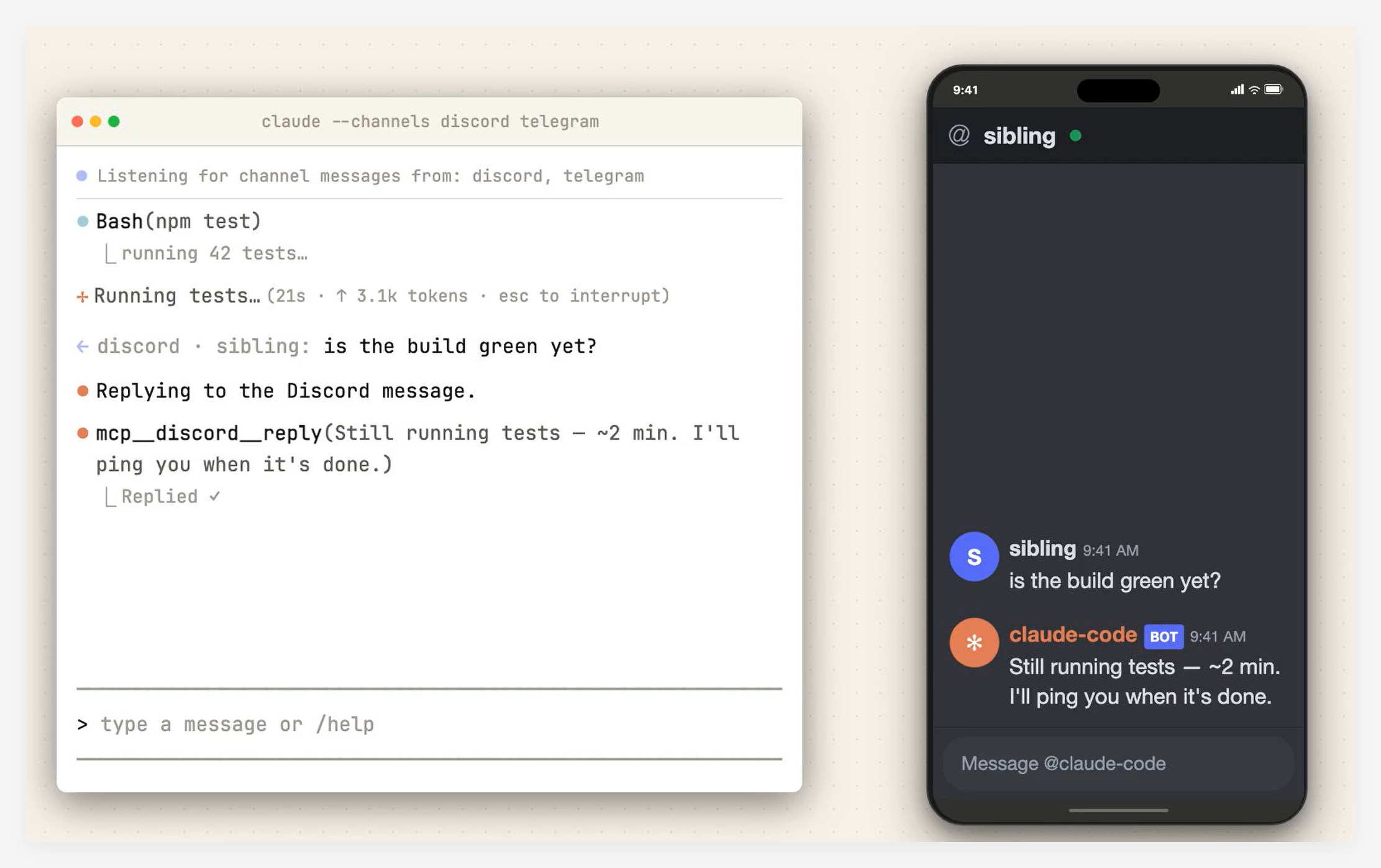
Anthropic has quietly rolled out a game-changing feature for developers - Claude Code Channels. Now you can manage your local AI coding sessions remotely via Telegram or Discord, receiving updates and sending commands from anywhere. The feature transforms Claude Code into a truly asynchronous development assistant, letting you step away from your desk while it keeps working. Early adopters are already comparing it to collaborating with a human engineer.

March 20, 2026
AI DevelopmentAnthropicRemote Coding
OpenAI Bolsters Codex with Astral Acquisition in Strategic Play
News

OpenAI Bolsters Codex with Astral Acquisition in Strategic Play

OpenAI has made another strategic move by acquiring developer tool startup Astral, known for its popular Python tools Ruff and uv. The acquisition aims to strengthen Codex, OpenAI's programming assistant that's seen user numbers triple this year. This comes as part of OpenAI's broader expansion strategy that's included several high-profile acquisitions across different tech sectors.

March 20, 2026
OpenAIAI DevelopmentTech Acquisitions
News

Anthropic's New AI Model Faces Backlash Amid OpenClaw Controversy

Anthropic has launched Claude 3.6 Sonnet, its latest enterprise-focused AI model with enhanced programming capabilities and massive context windows. But the release comes at a difficult time - the company is embroiled in a public relations crisis over its handling of the open-source OpenClaw project. While the technical upgrades are impressive, analysts say Anthropic's heavy-handed trademark enforcement may have damaged its reputation with developers at a crucial moment.

March 19, 2026
AI DevelopmentEnterprise TechnologyOpen Source Controversy
Google's Gemini API Gets Smarter with New Multi-Tool Features
News

Google's Gemini API Gets Smarter with New Multi-Tool Features

Google DeepMind has supercharged its Gemini API with two game-changing features that make AI development smoother. The new multi-tool chaining lets developers combine Google services like Search and Maps with custom functions in one go, while the context circulation feature automatically passes data between tools. These upgrades tackle common frustrations like clunky workflows and slow responses, giving developers more power to build sophisticated AI applications.

March 19, 2026
AI DevelopmentGoogle DeepMindAPI Updates