Cursor's Composer 2 Challenges AI Giants with Budget-Friendly Power

Cursor Takes on AI Titans with New Programming Model

The AI programming tools landscape just got more interesting. Cursor, the popular AI code editor, has unveiled Composer 2 - its second-generation programming model that's turning heads for both its capabilities and surprisingly affordable pricing.
Image

Performance That Stands Tall

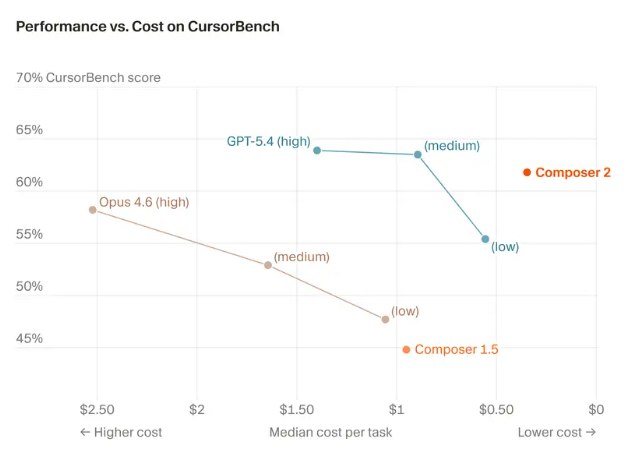
Internal benchmarks tell an impressive story. Composer 2 scored 61.3 on Cursor's evaluation scale, a significant jump from its predecessor's 44.2. This puts it ahead of Anthropic's Claude Opus4.6 (58.2) and within striking distance of OpenAI's GPT-5.4Thinking (63.9).

"We took a radically focused approach," explains Cursor co-founder Aman Sanger. "Composer 2 trains exclusively on code data - no poetry, no tax calculations. This specialization pays off when tackling complex, multi-step programming challenges."
Image

The Price Revolution

What really sets Composer 2 apart is its wallet-friendly pricing strategy:

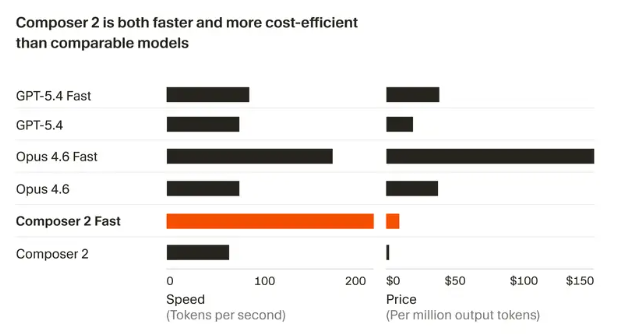
  • Standard version: $0.50 per million tokens
  • High-speed version: Still significantly cheaper than competitors

Compare this to Claude Opus4.6's $5.00 per million tokens, and it's clear why developers are taking notice. This aggressive pricing gives Cursor substantial flexibility in courting both individual coders and enterprise clients.

Breaking Free from Dependence

The launch represents more than just technical achievement for Cursor. Previously reliant on APIs from OpenAI and Anthropic, the company found itself in an uncomfortable position - essentially funding competitors while those same rivals launched competing products with heavy subsidies.

"Developing our own model became existential," a company insider shared. "We needed control over our technological destiny."

What This Means for Developers

The emergence of Composer 2 signals a shift in the AI programming tools market:

  1. More Choices: Developers now have another high-quality option beyond the usual suspects
  2. Cost Savings: Significant reduction in operational costs for coding projects
  3. Specialization Benefits: Models focused solely on coding may outperform general-purpose AIs for specific tasks
  4. Market Competition: Increased rivalry could drive further innovation and better pricing across the board

The battle for dominance in AI-assisted programming is heating up, and with Composer 2, Cursor has firmly planted its flag in the ground.
Enjoyed this article?

Subscribe to our newsletter for the latest AI news, product reviews, and project recommendations delivered to your inbox weekly.

Weekly digestFree foreverUnsubscribe anytime

Related Articles

HKU's CLI-Anything Turns Any Software into AI-Friendly Tools with One Command
News

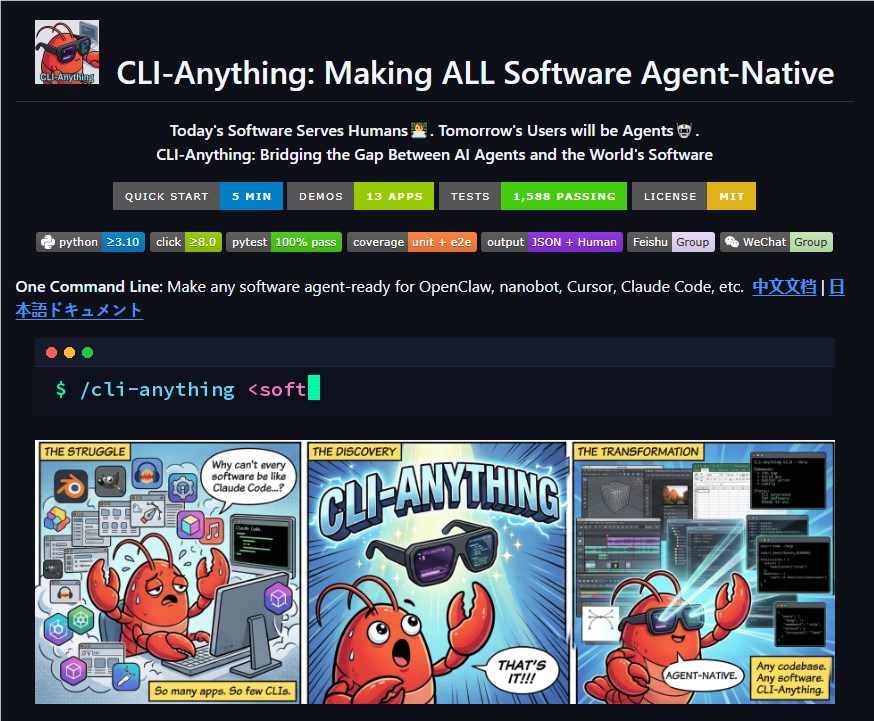
HKU's CLI-Anything Turns Any Software into AI-Friendly Tools with One Command

The University of Hong Kong's Data Intelligence Lab has released CLI-Anything, an open-source tool that transforms any software into an AI agent-friendly command-line interface. This breakthrough eliminates the frustrations of unreliable UI automation, offering developers a robust way to integrate professional tools like GIMP, Blender, and LibreOffice with AI systems. The project has already gained significant traction, surpassing 17,000 GitHub stars shortly after launch.

March 17, 2026
AI developmentsoftware automationopen source
News

Mistral AI's Small4: A Triple-Threat Open Source Model Arrives

Mistral AI has unveiled its latest open-source marvel - the Small4 model. This isn't just another incremental update; it combines three powerful capabilities into one package: logical reasoning, multimodal processing, and coding assistance. With its efficient 128-expert architecture and configurable performance modes, developers now have a versatile tool that adapts to different needs while cutting computational costs.

March 17, 2026
AI modelsopen sourceMistral AI
NVIDIA's Nemotron 3 Series: AI Gets a Fivefold Speed Boost
News

NVIDIA's Nemotron 3 Series: AI Gets a Fivefold Speed Boost

At the 2026 GTC conference, NVIDIA unveiled its Nemotron 3 series of open-source AI models, with the flagship Ultra version delivering five times faster processing. The release also includes innovative multimodal tools for audio-visual integration and real-time conversation, plus breakthroughs in robotics and medical research. Major industry players are already adopting these cutting-edge technologies.

March 17, 2026
AI innovationNVIDIAmachine learning
News

Google's AI Turns News Reports into Flood Warnings for Vulnerable Regions

Google has developed an innovative flood prediction system by analyzing millions of news articles with its Gemini AI. The technology transforms qualitative reports into quantitative data, creating early warnings for areas lacking traditional weather monitoring. Already implemented in 150 countries, this approach marks a breakthrough in using language models for disaster prevention while addressing global inequality in weather forecasting capabilities.

March 13, 2026
AI innovationdisaster preventionclimate technology
AI Coding Benchmarks May Paint Rosier Picture Than Reality
News

AI Coding Benchmarks May Paint Rosier Picture Than Reality

A new study reveals that AI coding benchmarks could be vastly overestimating real-world performance. When human developers reviewed AI-generated code that passed automated tests, nearly half failed to meet actual project standards. The gap suggests current evaluation methods might inflate capabilities by up to seven times.

March 12, 2026
AI programmingsoftware developmentbenchmark accuracy
Tencent's WorldCompass Helps AI Models Navigate Complex Commands
News

Tencent's WorldCompass Helps AI Models Navigate Complex Commands

Tencent has open-sourced WorldCompass, a reinforcement learning framework that dramatically improves how AI world models understand and execute complex instructions. This breakthrough solves persistent accuracy issues, boosting performance by over 35% in challenging scenarios. The technology marks a shift from pure pre-training to sophisticated fine-tuning approaches.

March 11, 2026
AI developmentTencentmachine learning