China's 'Kanhai' AI Model Brings Ocean Forecasting to New Depths
China Dives Deep With AI Ocean Forecasting
Imagine knowing exactly what's happening beneath the ocean's surface - not just today, but for the next ten days. That's the promise of 'Kanhai', China's groundbreaking artificial intelligence system that's transforming how we understand our planet's blue heart.
A Digital Mirror for the Oceans
Launched on November 6 by the National Satellite Ocean Application Center, Kanhai represents a quantum leap in marine science. Unlike traditional forecasting methods that rely on physical models and human interpretation, this system creates what researchers call a "digital ocean mirror" - a real-time reconstruction of current conditions paired with remarkably precise predictions.
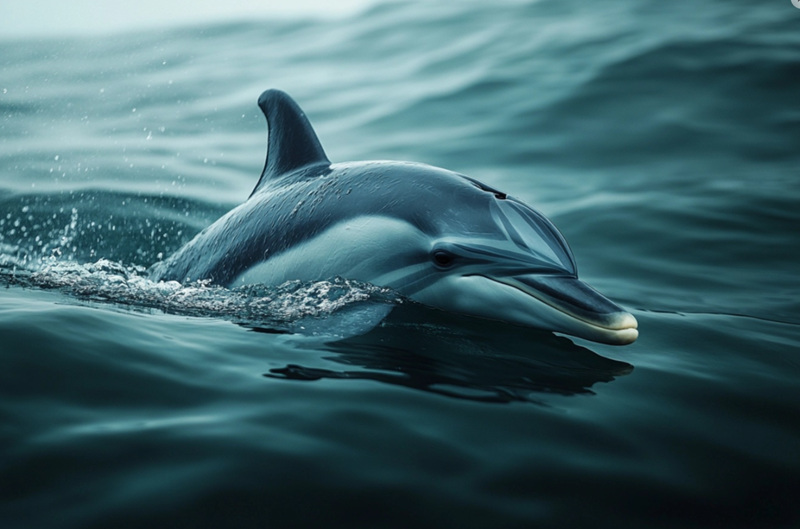
Image source note: The image is generated by AI, and the image licensing service provider is Midjourney.
How Kanhai Works Its Magic
The secret lies in its end-to-end AI architecture. While conventional systems struggle with time-consuming calculations and limited accuracy, Kanhai devours satellite data - much of it from China's own Haiyang satellite series - and uses deep learning to spot patterns humans might miss. The result? When a satellite passes over the South China Sea, Kanhai can produce detailed 3D forecasts for the area within hours.
"It's like teaching the AI to speak the ocean's language," explains one researcher involved in the project. "Instead of painstakingly programming every possible scenario, we're letting the system discover how currents, temperatures and salinity interact on its own."
More Than Just Science
The implications stretch far beyond academic curiosity:
- Fisheries can avoid dangerous conditions and locate optimal fishing zones
- Offshore wind farms get advance warning of turbulent waters
- Shipping companies can plot safer, more fuel-efficient routes
- Climate scientists gain unprecedented data for studying ocean carbon cycles
Led by Academician Jiang Xingwei since 2022, the project builds on China's two-decade investment in ocean observation satellites. Today, Chinese satellites contribute over 70% of global ocean remote sensing data - a fact that gives Kanhai its remarkable edge.
The Future Flows Here
As Kanhai comes online, marine biologists are particularly excited about its potential to predict harmful algal blooms (red tides) days before they form. Coastal communities could receive earlier warnings about abnormal sea temperatures that might signal approaching storms or ecological disruptions.
The system also marks an important shift in how we apply artificial intelligence. After transforming industries from healthcare to manufacturing, AI is now helping us decode Earth's most complex natural systems. And in this new frontier of climate science and marine prediction, China has clearly taken the lead.
Key Points:
- World-first achievement: Kanhai is the first end-to-end AI system for ocean forecasting
- Unprecedented depth: Provides accurate predictions down to 600 meters
- Speed advantage: Generates 10-day forecasts in hours rather than days
- Practical applications: From safer fishing to better climate models
- Data powerhouse: Leverages China's extensive satellite observation network