China's HYPIR Model Restores Old Photos to 8K in Seconds

China's HYPIR Model Revolutionizes Image Restoration

The Shenzhen Institute of Advanced Technology, under the Chinese Academy of Sciences, has introduced a groundbreaking innovation: the HYPIR Image Restoration Large Model. This advanced technology can restore old photographs to 8K ultra-high-definition quality in a mere 1.7 seconds, marking a significant leap forward in image processing capabilities.

A Leap Beyond Traditional Methods

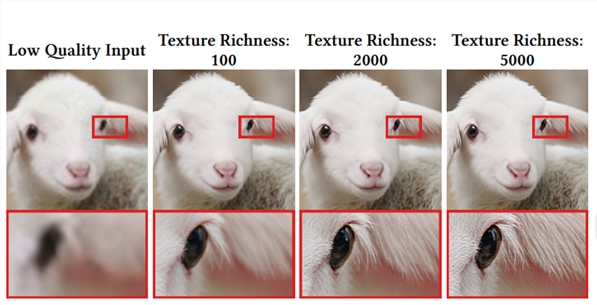
Traditional image restoration techniques often require painstaking manual adjustments, with each detail processed individually—a time-consuming and labor-intensive process. The HYPIR model, however, leverages intelligent algorithms and extensive data learning to deliver rapid, high-fidelity results. Unlike conventional software, HYPIR excels in preserving intricate details, producing stunning 4K and 8K outputs with remarkable accuracy.

Image

Superior Text Preservation

One of HYPIR's standout features is its ability to accurately restore text within images. Traditional diffusion models frequently distort or blur text, rendering it illegible. In contrast, HYPIR maintains high fidelity, ensuring that text—whether from signs or documents—remains clear and readable. This capability addresses a long-standing challenge in image restoration, making the technology invaluable for archival and research purposes.
Image

Broad Applications Across Industries

The implications of HYPIR extend far beyond photography. Its applications span:

  • Cultural heritage preservation: Restoring historical photographs and artifacts.
  • Film restoration: Enhancing the quality of aging film reels.
  • Medical research: Improving the clarity of medical imaging data.

The model's efficiency and precision position it as a transformative tool for professionals in these fields.

A New Era for Image Processing

The launch of HYPIR underscores China's leadership in AI innovation. By combining speed with unparalleled accuracy, this model sets a new standard for image restoration technologies. Its development reflects significant progress in artificial intelligence and machine learning, offering promising solutions for both historical preservation and modern research.

Key Points:

  • Speed: Restores images to 8K quality in 1.7 seconds.
  • Accuracy: Preserves text and fine details with high fidelity.
  • Versatility: Applicable across cultural, cinematic, and scientific domains.
  • Innovation: Demonstrates China's advancements in AI-driven technologies.
Enjoyed this article?

Subscribe to our newsletter for the latest AI news, product reviews, and project recommendations delivered to your inbox weekly.

Weekly digestFree foreverUnsubscribe anytime

Related Articles

News

AI's Learning Gap: Why Machines Can't Grow from Failure Like Humans

A former OpenAI researcher reveals a critical flaw in today's AI systems - they can't learn from mistakes. Jerry Tworek, who helped develop key models at OpenAI, explains why this inability to adapt threatens progress toward human-like artificial intelligence. Unlike humans who evolve through trial and error, current AI hits walls when facing unfamiliar problems.

February 3, 2026
Artificial IntelligenceMachine LearningAGI Research
News

DeepMind Pioneer Bets on AI That Learns Like Humans

David Silver, the visionary behind DeepMind's AlphaGo, has left Google to pursue his bold new vision for artificial intelligence. His startup Ineffable Intelligence champions reinforcement learning - AI that learns through experience rather than just absorbing human knowledge. This departure signals a growing divide in AI research approaches as top talent explores alternatives to today's dominant large language models.

February 2, 2026
Artificial IntelligenceMachine LearningTech Startups
Google's Project Genie Turns Sketches Into Playable Worlds
News

Google's Project Genie Turns Sketches Into Playable Worlds

Google DeepMind has unveiled Project Genie, an AI tool that transforms text prompts or simple drawings into interactive virtual environments. Combining multiple advanced AI models, it lets users instantly generate and explore personalized digital worlds—from alien landscapes to jungle adventures—with real-time responsiveness. Currently in early testing with strict time limits, this technology hints at revolutionary applications for gaming, filmmaking, and education.

February 2, 2026
AIVirtualRealityGoogleDeepMind
UBTech's Thinker Model: A Game-Changer for Smarter Robots
News

UBTech's Thinker Model: A Game-Changer for Smarter Robots

UBTech has open-sourced its Thinker model, a breakthrough in robotics AI that tackles critical challenges like spatial understanding and visual perception. By refining raw data from 20B to just 10M and slashing annotation costs by 99%, Thinker promises to revolutionize how robots learn and operate. This move could accelerate innovation across the robotics industry.

February 2, 2026
roboticsAImachine learning
Apple Faces Talent Drain as Key Researchers Join Meta and Google
News

Apple Faces Talent Drain as Key Researchers Join Meta and Google

As global competition in artificial intelligence intensifies, tech giant Apple is facing a severe talent retention challenge. After previously losing a senior Siri executive, at least four experienced AI researchers have recently left, joining major competitors such as AIbase Base

February 2, 2026
AIAppleMeta
News

Robotics Innovator LimX Dynamics Lands $200M Boost for Smart Machines

LimX Dynamics, a rising star in robotics intelligence, just secured a massive $200 million Series B funding round backed by global investors and industry leaders. The company is making waves with its groundbreaking TRON2 modular robot system and LimX COSA operating platform, which promise to revolutionize how robots interact with the physical world. Major players like JD.com and NIO Capital are betting big on this vision.

February 2, 2026
roboticsAIventure capital