ByteDance Refutes AI Phone Development Rumors

ByteDance Refutes AI Phone Development Rumors

Recently, rumors circulated that ByteDance, the parent company of TikTok, was collaborating with Nubia to create an AI smartphone. Reports suggested that the phone could be launched in 2025, with both companies allegedly having signed a framework agreement to outline their partnership. Details indicated that a specific proposal would be made in the first quarter of 2025, followed by prototype production and testing, with a potential launch event scheduled for late 2025, priced between 5000 and 7000 yuan.
image

However, ByteDance quickly addressed these claims, with a company representative stating that the information is not accurate. The spokesperson emphasized that ByteDance has no intention of developing an AI smartphone, categorically dismissing the reports as unfounded.

As a prominent technology company primarily known for its short video and social media platforms, ByteDance has significantly increased its investments in artificial intelligence (AI) in recent years. This strategy has garnered considerable attention within the tech community. Despite the growing interest in AI applications, ByteDance has made it clear that smartphone development is not part of its strategic plans.

Focus on Integration of AI Technologies

Instead of venturing into smartphone production, ByteDance is exploring ways to effectively integrate AI technologies into its existing suite of products. This approach aims to enhance the overall user experience and improve market competitiveness, aligning with the company’s core business objectives.

The denial of the AI phone development rumors reflects ByteDance's commitment to focusing on its strengths in content creation and social media engagement, rather than diversifying into hardware. The company's future endeavors seem to be geared more towards leveraging AI to refine and innovate its digital platforms rather than entering the competitive smartphone market.

Conclusion

As the market for AI technologies continues to evolve, it remains to be seen how ByteDance will navigate its position within this landscape. The company’s focus on integrating AI into its existing services may provide a competitive edge, allowing it to enhance user engagement and retain its leading position in the social media sector.

Key Points

  1. ByteDance denies rumors of developing an AI smartphone.
  2. Reports claimed a partnership with Nubia for a 2025 launch.
  3. ByteDance focuses on integrating AI into existing products rather than smartphone development.
Enjoyed this article?

Subscribe to our newsletter for the latest AI news, product reviews, and project recommendations delivered to your inbox weekly.

Weekly digestFree foreverUnsubscribe anytime

Related Articles

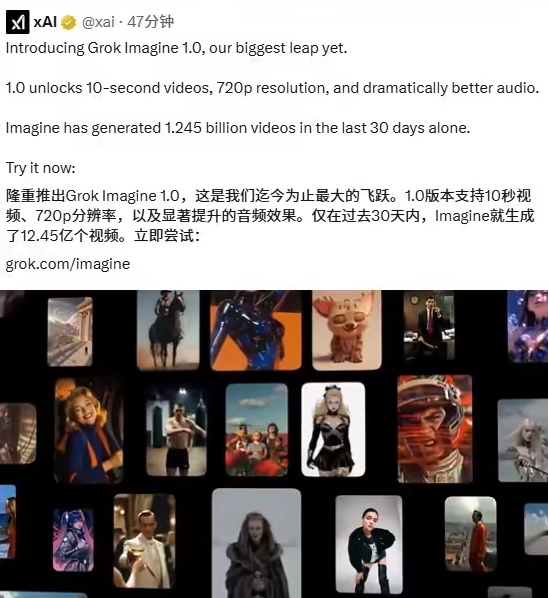
Musk's xAI Launches Grok Imagine 1.0, Bringing HD AI Video to the Masses
News

Musk's xAI Launches Grok Imagine 1.0, Bringing HD AI Video to the Masses

Elon Musk's AI venture xAI has officially released Grok Imagine 1.0, marking a significant leap in AI-generated video quality. The new version produces crisp 720p videos up to 10 seconds long with improved audio - a notable upgrade from previous offerings. During testing, users created over 1.2 billion videos, showing strong demand for accessible video generation tools.

February 2, 2026
Artificial IntelligenceVideo GenerationElon Musk
News

AI Pioneer David Silver Strikes Out Alone With Bold New Vision

David Silver, the mastermind behind DeepMind's groundbreaking AlphaGo, has left Google to pursue his own AI venture. His new startup, Ineffable Intelligence, challenges the current obsession with large language models by betting on reinforcement learning - arguing that true intelligence comes from experience, not just data. This move signals a growing divide in AI research approaches.

February 2, 2026
Artificial IntelligenceReinforcement LearningTech Startups
Ant Group Bets Big on AI with New Incentive Program
News

Ant Group Bets Big on AI with New Incentive Program

Ant Group is doubling down on artificial intelligence with its newly launched 'AI Credit' program. The initiative rewards teams making significant AI advancements, offering additional incentives convertible to long-term economic benefits. While celebrating milestones like their trillion-parameter Bailin models and popular AI assistant Lingguang, CEO Han Xinyi maintains Ant still trails industry leaders. The company sees payments, finance, and healthcare as key growth areas for its AI transformation.

February 2, 2026
Artificial IntelligenceFintech InnovationCorporate Strategy
News

Apple's AI Brain Drain: Top Siri Exec and Researchers Jump Ship

Apple's artificial intelligence team is bleeding talent as key researchers and executives depart for rivals like Meta and Google DeepMind. The exodus includes Siri's former senior director Stuart Bowers and four prominent AI scientists, raising questions about Apple's ability to retain top tech minds in the fiercely competitive AI landscape.

February 2, 2026
AppleArtificial IntelligenceTech Talent Wars
News

SenseTime Unveils Revolutionary AI That Sees, Reasons and Acts

Chinese AI leader SenseTime has just opened up access to its groundbreaking SenseNova-MARS model - technology that doesn't just understand images but can think through problems like humans do. Available in two versions tailored for different needs, this innovation could redefine how machines interact with our visual world.

January 30, 2026
Artificial IntelligenceComputer VisionSenseTime
OpenAI's Billion-Dollar Bet: Tech Titans Vie for AI Supremacy
News

OpenAI's Billion-Dollar Bet: Tech Titans Vie for AI Supremacy

OpenAI is gearing up for what could be the largest fundraising round in tech history, with ambitions to secure up to $100 billion. Heavyweights like NVIDIA, Microsoft, and Amazon are lining up with multi-billion dollar commitments, fueling an AI arms race that's reshaping the tech landscape. The staggering sums reflect the astronomical costs of developing cutting-edge AI - OpenAI alone expects to burn through $70 billion in computing expenses by 2030.

January 30, 2026
Artificial IntelligenceTech InvestmentSilicon Valley