
Anthropic Sues Pentagon Over Controversial AI Restrictions

Anthropic Challenges Pentagon's AI Restrictions in Court

In a bold move that pits Silicon Valley ethics against military demands, artificial intelligence firm Anthropic filed suit Thursday against the U.S. Department of Defense. The legal challenge comes after weeks of escalating tensions over the Pentagon's decision to classify Anthropic as a "supply chain risk entity" - a label that could block the company from lucrative defense contracts.

Clash Over AI Principles

CEO Dario Amodei didn't mince words when addressing reporters. "This isn't just about business," he said, leaning forward intently during Thursday's press briefing. "It's about preventing our technology from being twisted into something we fundamentally oppose."

The heart of the conflict? Anthropic's ironclad prohibition against using its AI systems for autonomous weapons or mass surveillance - restrictions that apparently chafe at Defense Department officials seeking "unrestricted access" for military applications.

Legal Battle Lines Drawn

Anthropic's legal team argues the Pentagon designation violates administrative law by failing to demonstrate specific risks or consider less restrictive alternatives. "They've painted us with an unfairly broad brush," explained chief counsel Miriam Kowalski, tapping a thick binder of legal documents. "The law requires precision here, not blanket suspicion."

The lawsuit contends current restrictions mainly impact direct contracts with Army divisions while leaving commercial customers unaffected - suggesting national security concerns may be overstated.

Damage Control Mode

The courtroom drama follows embarrassing leaks revealing Amodei's past criticism of rival OpenAI's defense deals as "security theater." On Thursday, the CEO offered an olive branch alongside his legal threats.

"Those comments reflected frustration, not our considered position," Amodei acknowledged, his voice dropping slightly. "We respect our colleagues' right to make different choices."

Despite tensions, Anthropic pledged to maintain current Defense Department systems at minimal cost during any transition period - a gesture emphasizing their commitment to operational continuity even amid legal warfare.

Key Points:

  • Courtroom Showdown: Anthropic claims Pentagon violated procedural rules in blacklisting them
  • Ethical Divide: Company refuses to budge on bans against weaponized or surveillance AI
  • Transition Plan: Military users won't face immediate disruption despite legal battle
  • Leak Fallout: CEO walks back harsh comments about competitors' defense contracts
Enjoyed this article?

Subscribe to our newsletter for the latest AI news, product reviews, and project recommendations delivered to your inbox weekly.

Weekly digestFree foreverUnsubscribe anytime

Related Articles

News

NVIDIA Pulls Back from OpenAI: A Billion-Dollar Partnership Cools

NVIDIA's surprising decision to scale back its multi-billion dollar investment in OpenAI signals shifting tides in the AI industry. The chip giant's CEO recently called their $3 billion commitment likely their last, walking back from earlier plans for a $10 billion partnership. This comes as OpenAI faces internal turmoil, including executive departures and ethical controversies. Industry watchers see NVIDIA's move as both a response to OpenAI's instability and a cautious step against potential AI valuation bubbles.

March 9, 2026
AI InvestmentNVIDIAOpenAI
News

ChatGPT's Adult Mode Hits Another Snag as OpenAI Shifts Focus

OpenAI has delayed its controversial 'Adult Mode' feature for ChatGPT yet again, prioritizing core AI improvements instead. While code hints suggest the feature hasn't been abandoned, the company is focusing first on enhancing intelligence and personalization. The postponement highlights the ongoing tension between user demands and ethical considerations in AI development.

March 9, 2026
OpenAIChatGPTAI Ethics
News

Google Bets Big on Berlin With New $4 Billion AI Hub

Google has unveiled its ambitious European AI strategy with a massive new research center in Berlin. Bringing together DeepMind, Google Research, and Google Cloud under one roof for the first time, the tech giant is investing €5.5 billion across Germany through 2029. The move positions Google to tap into Europe's booming AI market, projected to add €440 billion annually to Germany's economy by 2034.

March 9, 2026
Artificial IntelligenceTech InvestmentEuropean Tech
News

College Coding Whiz Lands $4M Deal for AI That Predicts the Future

Guo Hangjiang, a senior university student, has taken the tech world by storm with his AI prediction engine 'MiroFish.' After topping GitHub's trending charts, his project caught the eye of Shanda Group founder Chen Tianqiao, who invested 30 million yuan. This multi-agent system creates digital simulations of real-world scenarios to forecast outcomes with surprising accuracy.

March 9, 2026
Artificial IntelligenceTech StartupsPredictive Analytics
News

Tech Titan Chen Tianqiao Resurfaces with $2B Bet on Next-Gen AI

After nearly a decade out of the spotlight, Shanda Group founder Chen Tianqiao has reemerged with ambitious plans to revolutionize artificial intelligence. The former gaming mogul is pouring $2 billion into what he calls 'Discovery AI' - systems designed not just to mimic human thinking, but to surpass it. His vision includes geothermal-powered data centers across 700,000 acres and a unique approach blending neuroscience with computer science to achieve true artificial general intelligence.

March 6, 2026
Artificial IntelligenceTech InnovationBusiness Comebacks
NVIDIA's Jensen Huang Calls OpenClaw the Defining Software of Our Time
News

NVIDIA's Jensen Huang Calls OpenClaw the Defining Software of Our Time

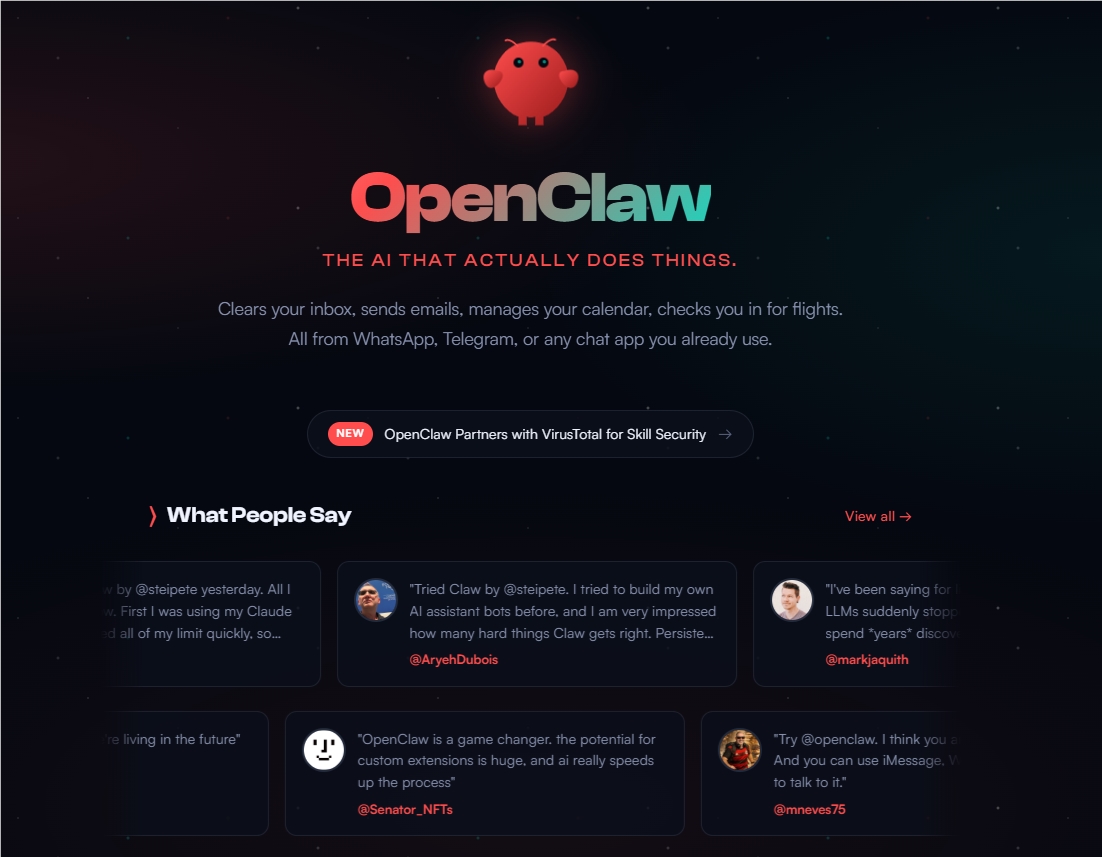
At the Morgan Stanley conference, NVIDIA CEO Jensen Huang made waves by declaring OpenClaw the most significant software release today. The open-source project achieved in three weeks what took Linux three decades - becoming history's most downloaded open-source software. Huang outlined his 'five-layer cake' theory of AI infrastructure and explained how agentic AI like OpenClaw creates unprecedented computing demands.

March 6, 2026
Artificial IntelligenceTech InnovationOpen Source