NVIDIA's Jensen Huang Calls OpenClaw the Defining Software of Our Time
NVIDIA CEO Hails OpenClaw as Historic Breakthrough
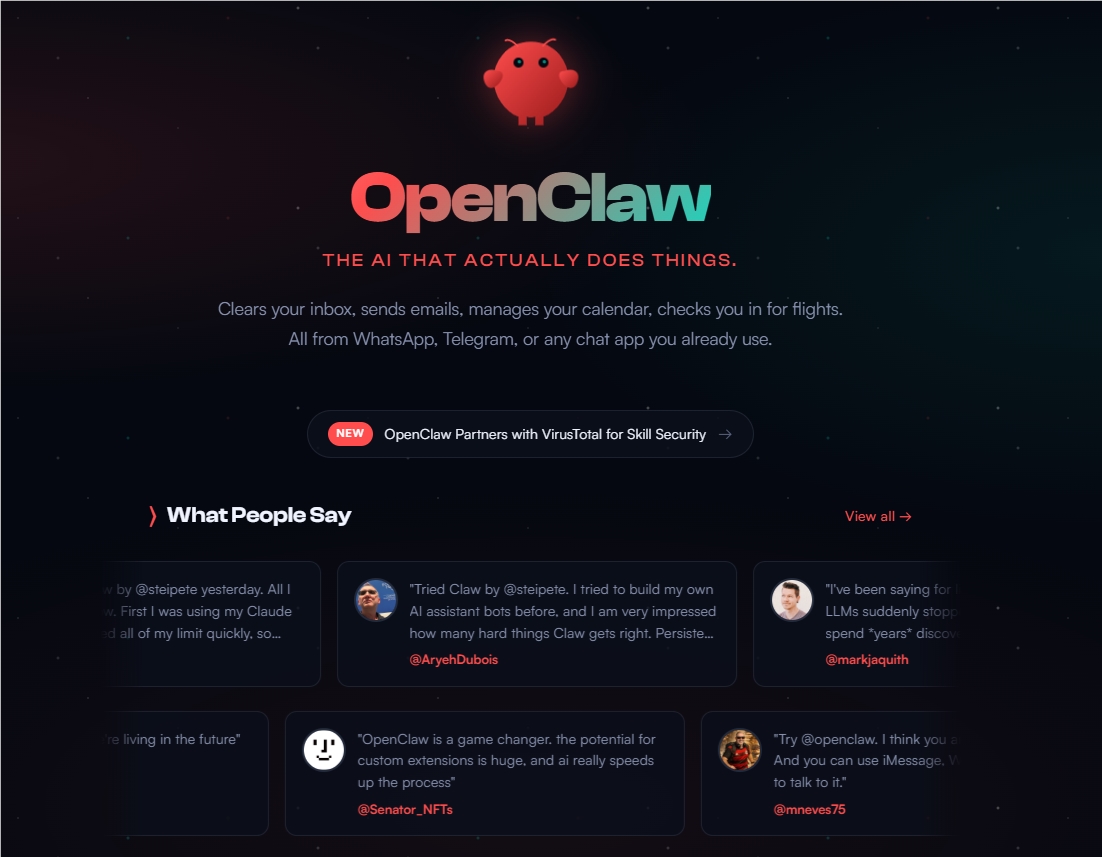
In a keynote that sent ripples through the tech world, NVIDIA's visionary leader Jensen Huang didn't mince words when discussing OpenClaw at the recent Morgan Stanley conference. "This isn't just another software release," Huang asserted. "OpenClaw represents a fundamental shift in how we think about artificial intelligence."
The comparison Huang drew was striking: while Linux needed thirty years to reach its current ubiquity, OpenClaw shattered records by becoming the most downloaded open-source project ever - in just three weeks. That's not merely fast adoption; it's rewriting the rulebook for how transformative technologies spread.
The Five-Layer Cake Theory
Huang used his platform to introduce what he calls the "five-layer cake" model of AI infrastructure:
- Energy layer: The power grid enabling everything else
- Chip and computing infrastructure: Hardware foundations
- Cloud data center layer: Distributed processing power
- AI model layer: The brains behind operations
- Application layer: Where users interact with AI capabilities
The NVIDIA chief emphasized that while all layers matter, it's applications like OpenClaw that drive real value - and unprecedented computing demands. These agentic AI systems don't just assist humans; they replicate complete workflows with frightening accuracy.
Computing at Scale Meets Its Match
The implications are staggering. According to Huang, processing long contextual sequences means today's agentic AI consumes roughly 1,000 times more computational resources than previous generations. That voracious appetite creates what Huang colorfully described as a "compute vacuum" - sucking up processing power faster than traditional architectures can provide.
NVIDIA isn't sitting idle. The company is retooling its roadmap to meet these challenges head-on. Their upcoming Vera Rubin architecture promises specialized optimizations for handling extended contexts efficiently, leveraging enhanced onboard memory and their proprietary ICMS platform.
The message was clear: we're not just witnessing incremental progress in AI development, but rather crossing a threshold where intelligent systems begin reshaping entire industries overnight.
Key Points:
- OpenClaw achieved historic adoption rates unseen in open-source history
- Agentic AI creates exponentially higher computing demands than previous generations
- NVIDIA is developing specialized hardware (Vera Rubin) optimized for these workloads
- The "five-layer cake" model explains how value flows through AI ecosystems
- Application layer innovations drive disproportionate returns across tech stacks