Ant Lingbo's New AI Model Brings Virtual Worlds to Life

Ant Lingbo Breaks New Ground With Interactive World Model

In a move that could reshape how we develop virtual environments, Ant Lingbo Technology has released LingBot-World as open-source software. This cutting-edge AI model creates remarkably lifelike digital spaces where objects maintain their form even during extended interactions - solving one of the biggest headaches in virtual world design.
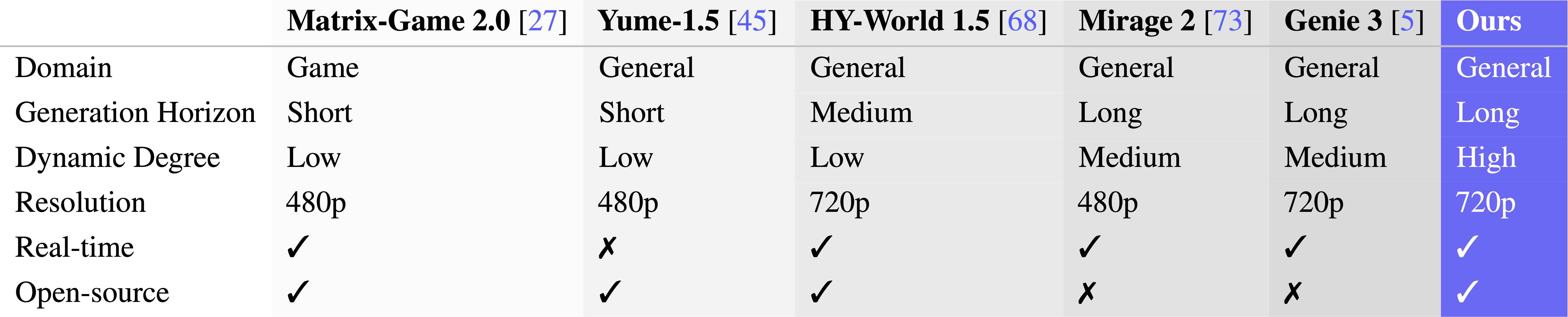
Image (Caption: LingBot-World sets new standards for scene duration, dynamism and resolution)

Solving the Disappearing Act Problem

Ever noticed how objects in some virtual worlds gradually warp or vanish? Developers call this "long-term drift," and LingBot-World tackles it head-on. Through innovative multi-stage training, the model maintains stable environments for up to 10 minutes - a game-changer for complex simulations.

"Imagine training a self-driving car AI where street signs melt away after two minutes," explains Dr. Wei Zhang, lead researcher on the project. "With our model, every detail stays crisp through extended sessions."
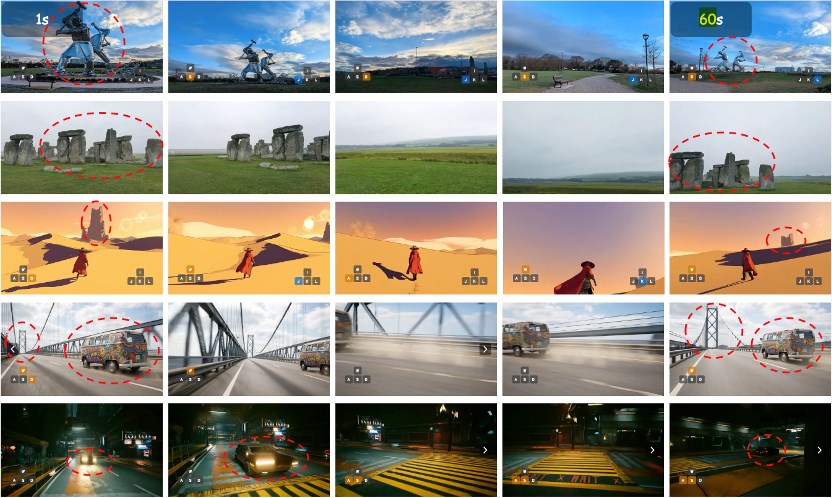
Image (Caption: Even after 60 seconds away, objects retain their structure when the camera returns)

Instant Response Meets Creative Control

The model responds to commands with impressive speed - generating visuals at about 16 frames per second while keeping total delay under one second. Users can:

  • Navigate scenes using keyboard/mouse controls
  • Alter weather conditions through simple text prompts
  • Trigger specific events while maintaining environmental consistency

Image (Caption: Vehicles keep their shape perfectly despite camera movements)

Training Tomorrow's AI Today

The technology shines brightest in training scenarios. "Real-world testing for robotics and autonomous systems is expensive and sometimes dangerous," notes Zhang. "Our model creates safe, cost-effective digital proving grounds."

The system learns from two data streams:

  1. Carefully filtered internet videos covering diverse scenarios
  2. Game engine recordings that capture pure visual data without interface clutter

This hybrid approach teaches the AI how actions affect environments - crucial knowledge for developing practical machine intelligence.

Image (Caption: Architectural structures remain intact over time)

Open Access Accelerates Innovation

By making LingBot-World freely available, Ant Lingbo hopes to spur development across multiple industries. The model weights and inference code are now accessible to all researchers and developers.

The release marks another step in Ant's ambitious AGI roadmap, bridging digital models with physical world applications.
Enjoyed this article?

Subscribe to our newsletter for the latest AI news, product reviews, and project recommendations delivered to your inbox weekly.

Weekly digestFree foreverUnsubscribe anytime

Related Articles

Ant Group's Robotics Leap: Open-Source AI Model Boosts Robot Intelligence
News

Ant Group's Robotics Leap: Open-Source AI Model Boosts Robot Intelligence

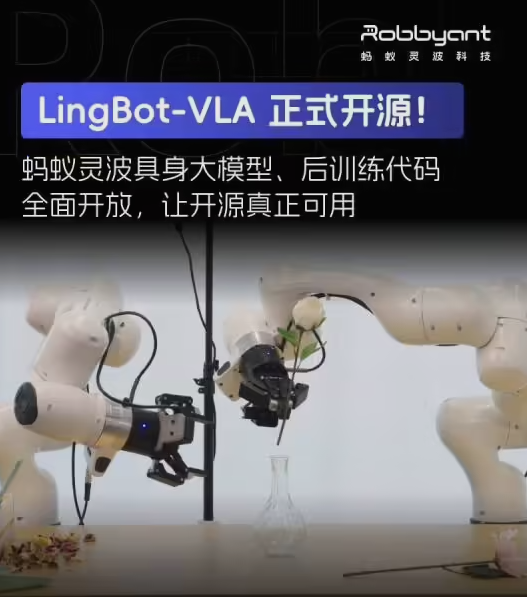
Ant Group's Lingbo Technology has made its embodied intelligence model LingBot-VLA fully open-source, marking a significant advancement in robotics. The model demonstrates remarkable cross-platform adaptability and training efficiency, outperforming existing frameworks. Alongside this release, their new LingBot-Depth spatial perception model enhances 3D environmental understanding for robots and autonomous vehicles. These developments could accelerate smart robotics adoption across industries.

January 28, 2026
roboticsAI innovationAnt Group
Allen AI's SERA: Open-source coding assistant starts at $400
News

Allen AI's SERA: Open-source coding assistant starts at $400

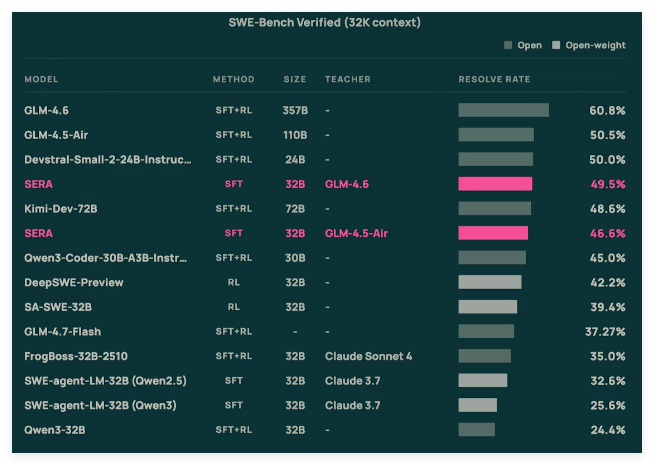
Allen AI has unveiled SERA, a groundbreaking open-source programming agent family that makes AI-assisted coding accessible to businesses of all sizes. With training costs starting at just $400, SERA delivers performance rivaling commercial models while offering unprecedented affordability. The system's innovative 'Soft-verified Generation' technology allows adaptation to private codebases with incomplete data, potentially revolutionizing how companies integrate AI into their development workflows.

January 28, 2026
AI programmingopen-source toolssoftware development
News

Robots Get a Sense of Touch with Groundbreaking New Dataset

A major leap forward in robotics arrived this week with the release of Baihu-VTouch, the world's first cross-body visual-tactile dataset. Developed collaboratively by China's National-Local Co-built Humanoid Robot Innovation Center and multiple research teams, this treasure trove contains over 60,000 minutes of real robot interaction data. What makes it special? The dataset captures not just what robots see, but how objects feel - enabling machines to develop human-like tactile sensitivity across different hardware platforms.

January 27, 2026
roboticsAI researchtactile sensing
Robots Get a Sense of Touch: Groundbreaking Dataset Bridges Vision and Feeling
News

Robots Get a Sense of Touch: Groundbreaking Dataset Bridges Vision and Feeling

Scientists have unveiled Baihu-VTouch, the world's most comprehensive dataset combining robotic vision and touch. This collection spans over 60,000 minutes of interactions across various robot types, capturing delicate contact details with remarkable precision. The breakthrough could revolutionize how robots handle delicate tasks - imagine machines that can actually 'feel' what they're doing.

January 26, 2026
roboticsAI researchtactile sensors
News

AI's Surprising Struggle: Why Six-Year-Olds Outsmart Top Models

A groundbreaking study reveals that even advanced AI models like Gemini 3 Pro Preview fall short of a six-year-old's visual reasoning skills. Researchers identified four key areas where silicon brains stumble, from missing fine details to struggling with spatial imagination. This challenges our assumptions about AI superiority and raises questions about the future of embodied intelligence.

January 23, 2026
AI limitationsvisual reasoningcognitive development
Small AI Model Packs Big Punch: Step3-VL-10B Challenges Giants
News

Small AI Model Packs Big Punch: Step3-VL-10B Challenges Giants

StepZen's new open-source vision-language model Step3-VL-10B is turning heads in AI circles. Despite its compact 10 billion parameters, it's outperforming models twenty times its size in visual reasoning and math competitions. The secret? Innovative training techniques that could revolutionize how we deploy AI on everyday devices.

January 20, 2026
AI innovationcomputer visionedge computing