

Alibaba's RynnBrain Gives Robots Human-Like Memory and Reasoning
Alibaba's RynnBrain Brings Human-Like Cognition to Robots
In a move that could redefine how robots interact with our world, Alibaba's DAMO Academy has open-sourced its revolutionary RynnBrain system - an "embodied intelligence" platform that gives machines something remarkably human: the ability to remember spaces and reason about them.
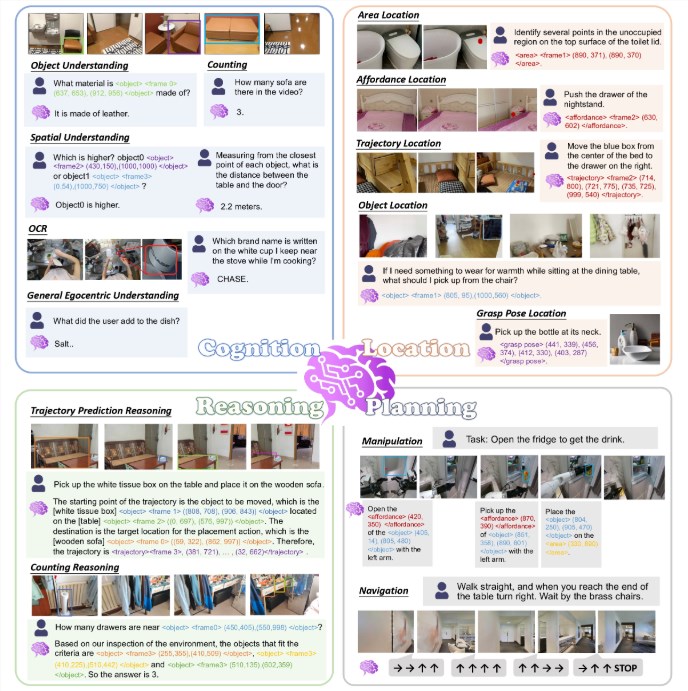
The Cognitive Leap Forward
What sets RynnBrain apart isn't just its technical specs (though they're impressive - we'll get to those). It's how the system fundamentally changes what robots can understand. Imagine a robot that doesn't just follow pre-programmed paths, but actually remembers where it's been and makes logical decisions about spatial relationships - much like humans do when navigating unfamiliar environments.
"This isn't just incremental improvement," explains Dr. Li Wei, lead researcher on the project. "We're seeing qualitative jumps in how robots interpret physical space and execute complex instructions."
The numbers back this up. In recent benchmarking against 16 leading embodied intelligence systems - including Google's Gemini Robotics ER1.5 - RynnBrain set new performance records across the board.
Open Source for Real-World Impact
DAMO Academy isn't keeping this breakthrough under wraps. They've released seven different model sizes to GitHub, from compact versions suitable for home assistants to the massive 30-billion parameter Mixture of Experts (MoE) model designed for industrial applications.
"We want to remove barriers," says project manager Zhang Lin. "Whether you're working on warehouse logistics bots or elder care assistants, there should be an accessible version of this technology."
The open-source approach reflects China's growing influence in AI development, where shared innovation often takes precedence over proprietary systems favored by Western tech giants.
What This Means for Tomorrow's Robots
The implications are profound:
- Warehouse robots that dynamically reorganize storage based on spatial memory rather than fixed algorithms
- Home assistants that learn room layouts and anticipate needs without constant reprogramming
- Search-and-rescue drones capable of reasoning about collapsed structures in real-time
While we're still years away from robots with truly human-like cognition, RynnBrain represents perhaps the most convincing step yet toward machines that understand our physical world on our terms.
The project is available now at GitHub, inviting developers worldwide to build upon this foundation.