Alibaba's Homegrown AI Chip Takes on NVIDIA with Zhenwu 810E Launch

Alibaba Flexes Chip Muscle with New AI Processor

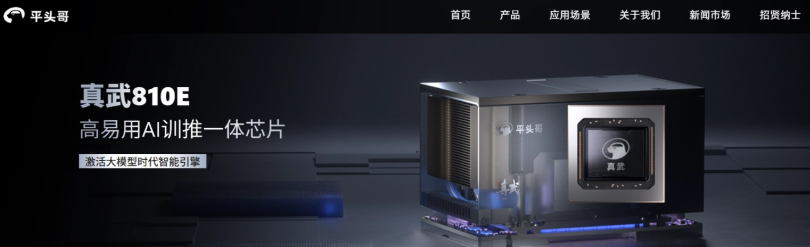
Alibaba's semiconductor division Tengtouge has stepped into the spotlight with its latest achievement - the Zhenwu 810E AI accelerator chip. This homegrown technology represents more than just another processor; it's a statement piece in China's push for technological self-reliance.
Image

The numbers tell an impressive story. Benchmarks show the Zhenwu 810E outpacing NVIDIA's A800 while matching the performance of NVIDIA's more advanced H20 model in critical workloads. What makes these results particularly noteworthy? The chip achieves this using Alibaba's entirely in-house developed architecture - from the parallel computing design to the innovative ICN inter-chip connection technology that delivers a blistering 700GB/s bandwidth.

Beyond Benchmarks: Real-World Deployment

Unlike many chips that languish in labs, Alibaba has already put its creation to work at scale. Thousands of these processors are humming away in Alibaba Cloud data centers, having successfully handled demanding production workloads. This real-world validation matters as much as any benchmark score.

"We designed Zhenwu specifically for cloud-scale AI," explains an Alibaba spokesperson. "It's not just about raw power - though we've got plenty of that - but about creating seamless integration from silicon to service."

The company emphasizes three key advantages:

  1. Developer-friendly design allowing easy migration of existing AI workloads
  2. Tight integration with Alibaba Cloud's AI framework and model applications
  3. A full-stack solution covering both hardware and supporting software ecosystem

The Bigger Picture: China's Chip Ambitions

The launch completes what Alibaba calls its "Golden Triangle" strategy - combining cloud infrastructure, AI models, and now custom silicon under one umbrella. In an industry increasingly shaped by geopolitical tensions, this vertical integration offers both technical and strategic advantages.

While NVIDIA still dominates global AI chip sales, products like Zhenwu show how Chinese tech giants are rapidly closing the gap. The inclusion of 96GB HBM2e memory per card and support for massive multi-chip configurations demonstrates serious ambitions beyond just domestic markets.

The real test will come as developers worldwide get their hands on these chips through Alibaba Cloud services. Will performance claims hold up across diverse workloads? Can the ecosystem support thrive beyond Alibaba's walled garden? These questions will determine whether Zhenwu becomes a footnote or a formidable player in the global AI hardware race.

Key Points:

  • 🚀 Full-stack innovation: Entirely self-developed architecture from silicon to software
  • Performance punch: Matches NVIDIA H20 while beating A800 benchmarks
  • 🔗 Connectivity king: 700GB/s inter-chip bandwidth enables massive scaling
  • ☁️ Cloud-proven: Already deployed across Alibaba Cloud infrastructure
  • 🌐 Ecosystem play: Designed for easy adoption within existing AI workflows
Enjoyed this article?

Subscribe to our newsletter for the latest AI news, product reviews, and project recommendations delivered to your inbox weekly.

Weekly digestFree foreverUnsubscribe anytime

Related Articles

News

AI Chip Startup Ricursive Hits $4B Valuation With Record $300M Funding

In a remarkable show of investor confidence, AI chip startup Ricursive has secured $300 million in Series A funding just two months after launch, catapulting its valuation to $4 billion. Founded by ex-Google researchers behind AlphaChip technology, the company uses AI to design better AI chips - potentially accelerating progress toward artificial general intelligence. The round was led by Lightspeed with participation from NVIDIA's venture arm and other top investors.

January 27, 2026
AI ChipsTech StartupsArtificial Intelligence
News

Sunlu Technology Goes Public Amid China's AI Chip Boom

Shanghai-based Sunlu Technology, a rising star in China's cloud AI chip sector, has officially filed for IPO on Shanghai's STAR Market. The company plans to raise 6 billion yuan to fuel development of its next-generation AI chips and computing platforms. Founded just eight years ago, Sunlu has already developed four generations of chips while competing against global tech giants.

January 23, 2026
SemiconductorsAI ChipsSTAR Market
News

Chinese AI Chip Startup Xiwang Secures Massive Funding to Challenge GPU Giants

In a bold move for China's semiconductor independence, AI inference chip maker Xiwang has raised nearly 3 billion yuan in just one year. Backed by an unusual alliance of state funds, tech giants and venture capital, the startup is racing to mass-produce GPUs optimized for AI applications. Their strategy? Focus squarely on inference chips rather than taking on established players in the training chip market - a calculated bet that could pay off as companies scramble for affordable AI computing power.

January 22, 2026
SemiconductorsAI ChipsChina Tech
News

China's AI Chip Breakthrough: Domestic GPU Runs Trillion-Parameter Model Efficiently

Moore Threads and Silicon Flow have achieved a significant milestone by successfully running the massive DeepSeek V3 671B AI model on China's MTT S5000 GPU. Through innovative FP8 low-precision technology, their solution delivers performance approaching international standards - processing over 4000 tokens per second in prefill and 1000 tokens in decode. This breakthrough reduces reliance on foreign chips for high-end AI workloads.

January 22, 2026
AI ChipsDomestic SemiconductorDeep Learning
Musk Revives Tesla's Dojo Project with Cosmic Ambitions
News

Musk Revives Tesla's Dojo Project with Cosmic Ambitions

Elon Musk has breathed new life into Tesla's previously shelved Dojo project, but with an interstellar twist. The revamped Dojo3 initiative aims to deploy AI computing centers in space, potentially solving Earth's growing power crisis. This bold move comes as competition heats up in autonomous driving technology, with NVIDIA recently releasing open-source models challenging Tesla's FSD system.

January 21, 2026
TeslaSpaceAISemiconductors
News

OpenAI Bets Big on Cerebras' Giant Chips to Challenge NVIDIA

OpenAI is partnering with Cerebras Systems to build what could become the world's most powerful AI inference platform. The $10 billion deal will deploy wafer-scale chips that promise 15x faster performance than traditional GPUs, marking a significant shift in AI infrastructure strategy. This collaboration reflects growing industry demand for alternatives to NVIDIA's dominance as AI models scale.

January 15, 2026
AI HardwareSemiconductorsTech Partnerships