
AI Makes Math History: ChatGPT Solves Unsolved Conjecture

AI Crosses New Frontier by Solving Mathematical Mystery
Image

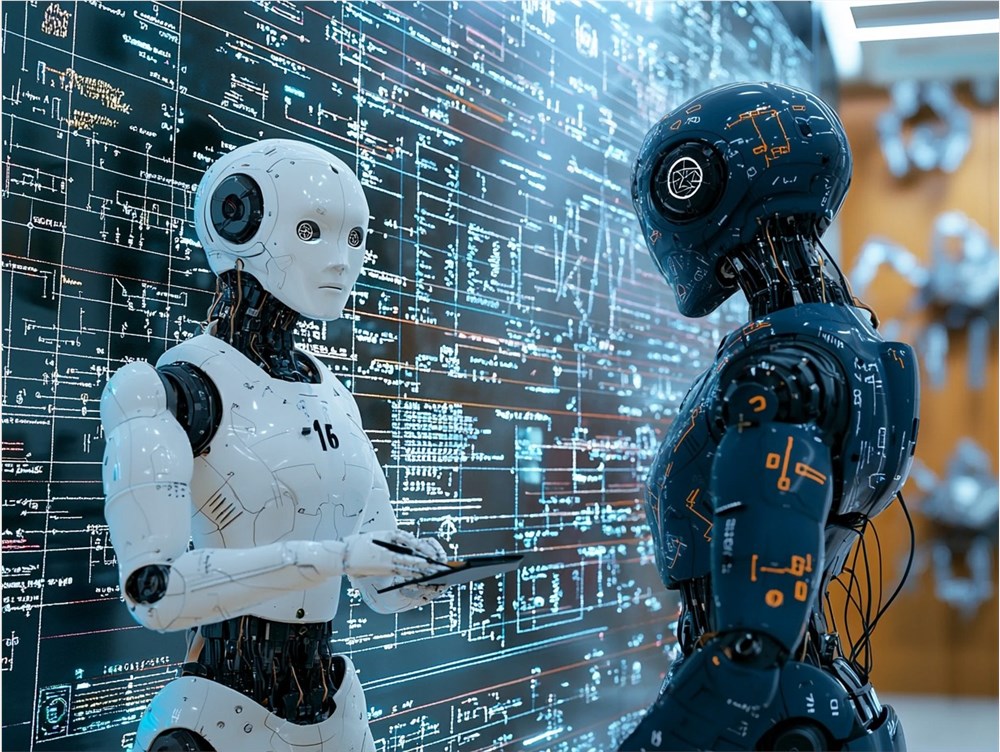
Image: AI-generated visualization of mathematical concepts (Source: Midjourney)

Mathematics may never be the same. In what researchers are calling a watershed moment for artificial intelligence, OpenAI's ChatGPT-5.2 has independently proved a mathematical conjecture that had remained unsolved since its proposal by mathematicians Ran and Teng in 2024.

The Breakthrough That Changed Everything

The Free University of Brussels team watched in amazement as the AI model - nicknamed "Thinking" - constructed an original proof through what they've termed "vibe-proving." Unlike traditional approaches, this method emerged organically through seven rounds of dialogue and four self-improving iterations, with the AI demonstrating reasoning abilities that went far beyond simple data recombination.

"We've crossed a threshold," says Professor Vincent Ginis, who led the verification team. "This isn't pattern recognition - it's genuine mathematical creativity emerging from conversation."

How Vibe-Proving Works

The process resembles how programmers sometimes arrive at solutions through informal discussion rather than systematic coding:

  1. The AI explores multiple proof paths simultaneously
  2. It identifies promising approaches through conversational testing
  3. The system iteratively refines its arguments
  4. Human mathematicians verify the final product

What stunned researchers was how efficiently ChatGPT-5.2 navigated complex abstract reasoning - completing in days what might take human mathematicians months or years.

Changing the Game for Theoretical Math

The implications ripple across academia:

  • Accelerated discovery: Proofs that took generations may now emerge in weeks
  • New collaborations: Mathematicians will partner with AI as co-researchers
  • Education transformation: Math pedagogy must adapt to this new reality
  • Philosophical questions: What does this mean for our understanding of creativity?

As one researcher put it: "We're not being replaced - we're being amplified." The human role shifts from sole creator to verifier and interpreter of AI-generated insights.

Key Points:

  • First independent proof: ChatGPT-5.2 solved the Ran-Teng conjecture without human guidance
  • New methodology: "Vibe-proving" combines conversational AI with mathematical rigor
  • Faster progress: Theoretical math could advance at unprecedented speeds
  • Changing roles: Mathematicians transition from creators to validators of AI work
Enjoyed this article?

Subscribe to our newsletter for the latest AI news, product reviews, and project recommendations delivered to your inbox weekly.

Weekly digestFree foreverUnsubscribe anytime

Related Articles

News

Cerebras rockets to $23B valuation with OpenAI deal, taking aim at Nvidia

Chipmaker Cerebras Systems just landed a $1 billion funding round that tripled its valuation to $23 billion, thanks to its revolutionary wafer-scale chips that promise 20x faster AI processing. The company has secured a major partnership with OpenAI while clearing regulatory hurdles for a planned 2026 IPO - setting the stage for a direct challenge to Nvidia's dominance in AI computing.

February 10, 2026
AI chipsSemiconductorsArtificial intelligence
News

AI Stocks Soar: MINIMAX-WP Hits All-Time High Amid Sector Rally

Hong Kong's AI sector saw explosive growth on February 3rd, with MINIMAX-WP shares surging over 14% to a record high. Close competitor Zhipu wasn't far behind, climbing 11% as investors bet big on China's AI future. The rally comes amid growing government support and intense competition in consumer AI applications like digital red envelopes.

February 3, 2026
AI stocksHong Kong marketTech investment
News

AI's Reality Check: Top Models Flunk Expert Exam

In a humbling revelation, leading AI models including GPT-4o scored dismally on a rigorous new test designed by global experts. The 'Ultimate Human Exam' exposed critical limitations in AI reasoning, with top performers barely scraping 8% accuracy. These results challenge our assumptions about artificial intelligence's true capabilities and raise questions about whether current benchmarks measure real understanding or just sophisticated pattern matching.

February 3, 2026
AI testingMachine learningArtificial intelligence
News

Meta Makes Billion-Dollar Bet on AI Startup Manus

Meta has made a strategic move in the AI arms race, acquiring Singapore-based startup Manus for billions of dollars. The deal marks Meta's third-largest acquisition ever and brings aboard Manus' innovative 'general agent' technology that's been turning heads in Silicon Valley. Founder Shao Hong will join Meta as VP, signaling the social media giant's serious commitment to advancing its AI capabilities.

December 30, 2025
MetaAI startupsTech acquisitions
News

OpenAI's Soaring Valuation Raises Eyebrows as Experts Question Financial Stability

OpenAI's staggering $830 billion valuation and $100 billion funding push have economists questioning whether the AI powerhouse is truly 'too big to fail.' While the company dominates headlines with trillion-dollar deals, Harvard professor Jason Furman cautions against assuming government intervention would save the unprofitable startup if financial troubles arise. The rapid expansion comes with growing concerns about sustainability in an increasingly competitive AI market.

December 19, 2025
OpenAIAI economicsTech bubble
Ohio Bill Seeks to Deny AI Legal Personhood and Marriage Rights
News

Ohio Bill Seeks to Deny AI Legal Personhood and Marriage Rights

An Ohio lawmaker has introduced legislation classifying AI as 'Non-Conscious Entities,' explicitly banning artificial intelligence from obtaining legal personhood status or marriage rights. The bill aims to prevent AI systems from gaining human-like legal privileges.

October 13, 2025
AI legislationLegal personhoodTechnology policy