AI Breakthrough Speeds Up Antiviral Drug Discovery

New AI Model Predicts Virus Behavior with Unprecedented Accuracy

Scientists in Shanghai have developed an artificial intelligence system that could dramatically accelerate the creation of antiviral drugs. The ViraHInter model, a collaboration between Shanghai AI Lab and several leading medical institutions, eliminates the need for time-consuming lab experiments by predicting how viruses "hijack" human proteins digitally.
Image

How ViraHInter Works Differently

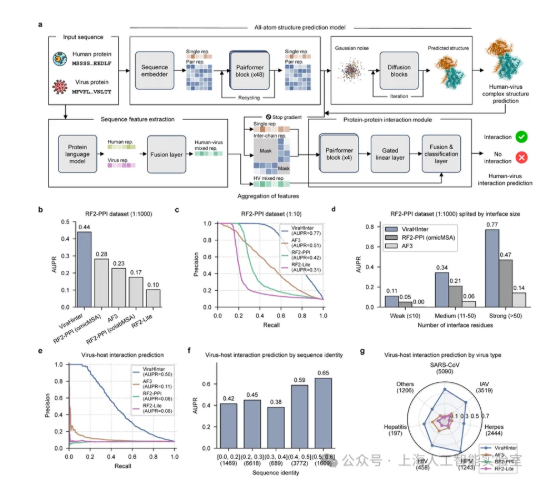
Traditional methods analyze either protein sequences or 3D structures separately, but ViraHInter's breakthrough comes from examining both simultaneously. Imagine trying to understand a lock-and-key mechanism by either just looking at the shapes or just reading the parts list - this AI does both at once.

The system generates detailed atomic-level models of virus-human protein interactions while also identifying patterns that remain consistent even as viruses mutate. This dual approach means researchers can:

  • Design drugs that target stable viral features less likely to change
  • Visualize exactly how potential treatments would interact with viruses
  • Respond faster to emerging viral threats

Performance That Turns Heads

Benchmark tests revealed staggering results. ViraHInter achieved a prediction accuracy of 0.50 for virus-human protein interactions - 4.5 times better than AlphaFold3, the previous gold standard. When analyzing three influenza subtypes, the model pinpointed 33 shared host factors that could serve as universal treatment targets.

"What's truly exciting," explains a researcher familiar with the project, "is how well it handles novel viruses. Even with limited sequence data, ViraHInter maintains high accuracy - crucial for responding to the next pandemic."

Implications for Future Treatments

The technology shines brightest where we need it most: combating rapidly evolving viruses. By identifying conserved viral patterns and predicting interactions for unknown pathogens, ViraHInter could:

  • Shorten development timelines for flu and coronavirus medications
  • Reveal treatment targets that work across multiple virus strains
  • Provide crucial early data when new diseases emerge

As one scientist put it: "This isn't just an incremental improvement - it's changing how we approach antiviral research altogether."

Key Points

  • Dual analysis: Examines both protein sequences and 3D structures concurrently
  • 4.5x improvement: Outperforms AlphaFold3 in prediction accuracy
  • Pandemic-ready: Effective even with limited data on new viruses
  • 33 targets identified: Found common factors across influenza strains
  • Atomic precision: Generates detailed interaction models for drug design

Enjoyed this article?

Subscribe to our newsletter for the latest AI news, product reviews, and project recommendations delivered to your inbox weekly.

Weekly digestFree foreverUnsubscribe anytime

Related Articles

AI Helps Save a Dog: How ChatGPT and AlphaFold Designed a Cancer Treatment
News

AI Helps Save a Dog: How ChatGPT and AlphaFold Designed a Cancer Treatment

When AI expert Paul Conyngham's dog Rosie was diagnosed with incurable mast cell cancer, he turned to an unlikely team of consultants: ChatGPT, AlphaFold, and Grok. Together, these AI systems helped design a personalized treatment that shrank Rosie's tumor by 75%. While experts caution that more research is needed, this heartwarming case shows how AI might revolutionize personalized medicine - even for our furry friends.

March 16, 2026
AI in medicineveterinary innovationpersonalized treatment
News

Amazon Takes Aim at Healthcare with $99 AI Assistant Platform

Amazon Web Services has thrown its hat into the digital healthcare ring with Amazon Connect Health, a new AI-powered platform priced at $99 per month. The service automates administrative tasks like appointment scheduling and medical documentation, freeing up doctors' time while complying with HIPAA standards. As tech giants like OpenAI and Anthropic also expand into medical AI, Amazon's move signals intensifying competition in transforming healthcare through artificial intelligence.

March 6, 2026
healthcare technologyAI in medicineAmazon AWS
News

OpenAI Eyes Pharma Breakthroughs With AI Drug Development Push

OpenAI CEO Sam Altman revealed plans to potentially invest in pharmaceutical companies using its AI technology for drug discovery. Speaking at a San Francisco tech conference, Altman outlined a revenue-sharing model where OpenAI could recoup costs through royalties on successful treatments. While no deals are finalized, this move signals OpenAI's ambition to monetize its AI expertise beyond traditional tech applications.

February 4, 2026
AI pharmaceuticalsOpenAI strategydrug discovery
AI Pharma Startup Chai Discovery Hits $1.3B Valuation After Major Funding Round
News

AI Pharma Startup Chai Discovery Hits $1.3B Valuation After Major Funding Round

Chai Discovery, an AI-powered drug development startup backed by OpenAI, has joined the unicorn club after securing $130 million in Series B funding. The company's innovative approach uses foundational models to design novel drug molecules from scratch, achieving breakthroughs with its Chai2 model that outperforms traditional methods. With strong investor support and rapid technological progress, Chai is positioning itself at the forefront of AI-driven pharmaceutical innovation.

December 16, 2025
AI pharmaceuticalsdrug discoverybiotech startups
Chai-2 AI Model Boosts Antibody Design with 16-20% Hit Rate
News

Chai-2 AI Model Boosts Antibody Design with 16-20% Hit Rate

Chai Discovery's Chai-2 AI model revolutionizes antibody design with a 16-20% experimental hit rate, far surpassing traditional methods. The zero-shot system integrates all-atom prediction and generative modeling, enabling rapid development of nanomolar-affinity antibodies without templates. While not open-sourced, its potential for accelerating drug discovery is generating significant industry excitement.

July 1, 2025
AI in biotechantibody designdrug discovery
News

Google Gives AI Power Users More Room to Create with Expanded Limits

Google is rolling out significantly higher usage limits for its AI Pro and Ultra subscribers in AI Studio, giving developers more flexibility to work with cutting-edge models. The move comes as competition heats up in the AI development space, with Google aiming to retain top talent by removing resource constraints. Developers can now push their projects further without hitting frustrating quota walls.

April 21, 2026
GoogleAIDeveloperToolsAISubscriptions