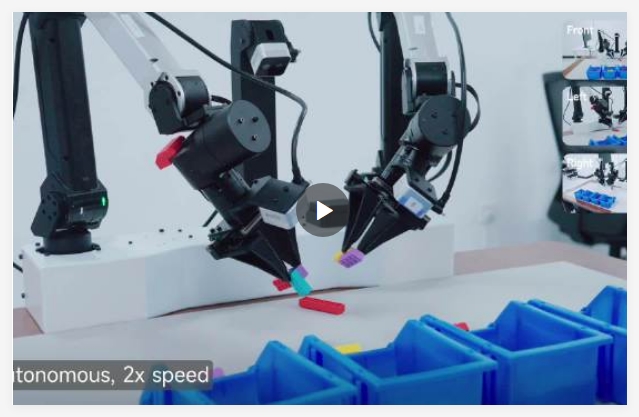
Xiaomi's New Bionic Hand Mimics Human Touch with Sweat-Cooling Tech

Xiaomi's Leap Forward in Robotic Dexterity

In a significant stride for industrial robotics, Xiaomi has unveiled its next-generation bionic hand that blurs the line between machine and human capability. What makes this development remarkable isn't just what the hand can do, but how it achieves these feats with such elegant biological mimicry.

Smaller Package, Greater Precision

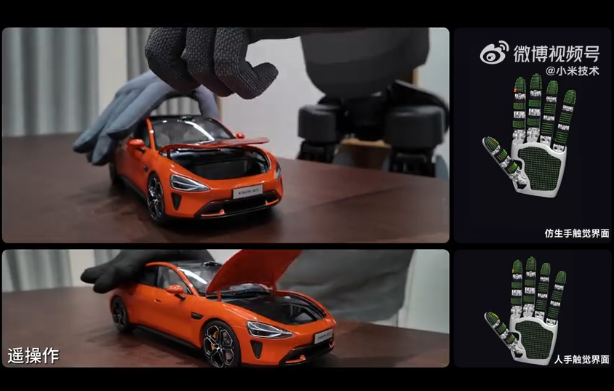
The most immediate improvement is right in your face - or rather, in the palm of your hand. Xiaomi's engineers have managed to shrink the device by 60% while actually increasing its capabilities. Now matching an average adult male's hand size, this compact design houses 64% more degrees of freedom than its predecessor.
Image

The Secret? Sweating Like Humans Do

Here's where things get clever. Packing all those motors into such a small space creates serious heat challenges. Xiaomi's solution? They've essentially taught the robotic hand to sweat. The "bionic sweat gland" system uses 3D-printed liquid channels and micro-pumps to evaporate water, cooling critical components with about 10 watts of dissipation power - just like human perspiration regulates body temperature.

Built for the Grind of Factory Life

This isn't some delicate lab prototype. Xiaomi has put their bionic hand through punishing real-world tests:

  • 150,000 grip cycles without failure
  • Three-hour continuous operation sessions
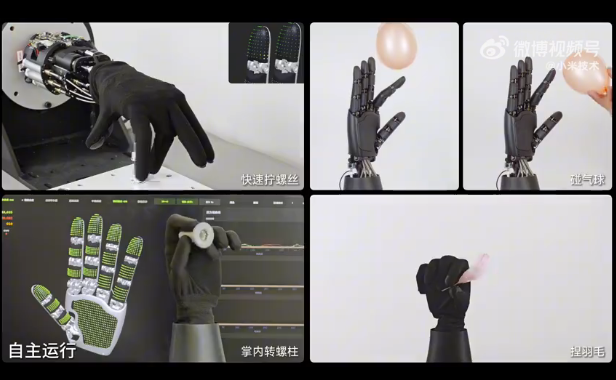
  • Achieved 100% success rate in car factory nut installation tests (up from 90.2%)

The full-hand tactile sensors now cover an impressive 8,200 square millimeters, giving the robot an unprecedented sense of touch for delicate operations.

Opening the Doors to Wider Innovation

Perhaps most exciting for the robotics community is Xiaomi's decision to open-source their TacRefineNet tactile perception model. This means other researchers can build upon their work in mapping high-dimensional touch data from gloves to robotic hands - potentially accelerating progress across the entire field.
Image

Key Points:

  • Compact design: 60% smaller than previous models while adding functionality
  • Biological cooling: Innovative "sweat gland" system prevents overheating
  • Industrial durability: Tested through 150,000+ operational cycles without failure
  • Open-source advantage: Tactile perception model available for community development
Enjoyed this article?

Subscribe to our newsletter for the latest AI news, product reviews, and project recommendations delivered to your inbox weekly.

Weekly digestFree foreverUnsubscribe anytime

Related Articles

News

Robot Rental Startup Qingtianzhu Lands Major Funding, Eyes Entertainment Expansion

Chinese robotic leasing platform Qingtianzhu has secured over 100 million yuan in fresh funding from notable investors including actor Huang Xiaoming's venture firm. The capital injection will fuel service network expansion and push robots into surprising new territory - live entertainment venues. With thousands of devices already deployed, the company is betting big on robots becoming stars of both industry and stage.

March 18, 2026
roboticsventure capitalentertainment tech
News

Sweet Potato Robot Raises $120M to Power Next-Gen Robotics

Di Gua Robot, a rising star in embodied intelligence, just secured $120 million in Series B1 funding. Backed by heavyweights like Synstellation Capital and Didi, the company is racing to develop full-stack robotics solutions. With its Horizon Robotics roots and partnerships with CloudMaid and Insta360, Di Gua aims to become the 'Wintel' of robotics - powering everything from humanoid helpers to logistics bots.

March 16, 2026
roboticsAI hardwareventure funding
Qualcomm and Arduino Unveil Ventuno Q: A Powerhouse for AI Robotics
News

Qualcomm and Arduino Unveil Ventuno Q: A Powerhouse for AI Robotics

Qualcomm makes its first major move since acquiring Arduino with the launch of Ventuno Q, a cutting-edge development board packing serious AI muscle. Designed for robotics enthusiasts and professionals alike, this hardware promises to bring cloud-level AI processing to your workbench. While pricing remains under wraps, its specs - including a dedicated NPU and industrial-grade processor - suggest Qualcomm means business in the maker market.

March 10, 2026
roboticsedge computingAI hardware
News

Lei Jun's Vision: Self-Driving Cars and Smart Robots Set to Transform Our Future

Xiaomi founder Lei Jun has unveiled ambitious tech proposals at China's Two Sessions, predicting 2026 will be a breakthrough year for autonomous vehicles and intelligent robots. His plans call for updated safety standards as cars become smarter, while humanoid robots could soon join factory workforces. These innovations promise to reshape industries and daily life, though challenges remain in bringing them to mass production.

March 9, 2026
autonomous vehiclesartificial intelligencerobotics
News

Google Bets Big on Robot Brains With Intrinsic Buy

Google's parent company Alphabet has acquired AI robotics firm Intrinsic, marking a major push into smart manufacturing. The deal gives Google key software tools to make industrial robots smarter and more adaptable. In partnership with Foxconn, the tech giant aims to revolutionize electronics assembly lines with AI-powered automation. This move signals Silicon Valley's growing interest in bringing artificial intelligence out of digital realms and into physical factories.

February 26, 2026
AI roboticssmart manufacturingindustrial automation
Xiaomi's Robot Brain Breakthrough Goes Open Source
News

Xiaomi's Robot Brain Breakthrough Goes Open Source

Xiaomi has taken a bold step forward in robotics by open-sourcing its groundbreaking VLA model. This 4.7 billion-parameter 'brain' solves the frustrating lag between robot vision and movement, enabling real-time responses on everyday hardware. The innovative architecture combines language understanding with precise motion control, setting new benchmarks in simulated and real-world tests.

February 12, 2026
roboticsAI innovationopen source technology