
Xiaomi's MiMo AI Models Go Premium with Affordable Token Plans

Xiaomi Launches Paid Subscription for MiMo AI Models

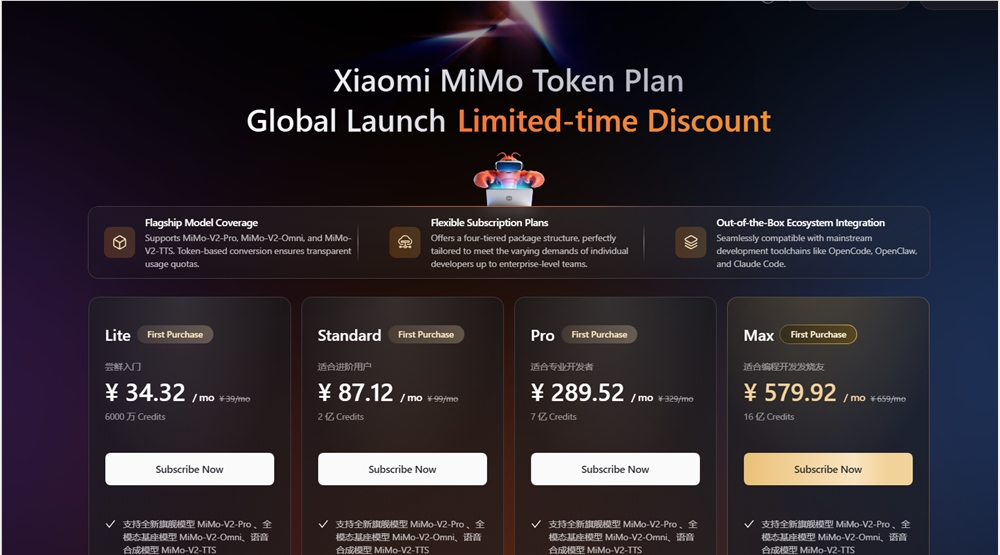
Tech giant Xiaomi has officially rolled out its first paid subscription plan for the MiMo family of large language models. Dubbed the "Token Plan," this new offering targets both professional developers and AI hobbyists - affectionately called "shrimp farmers" in Chinese tech circles.

Flexible Pricing for Different Needs

The MiMo Token Plan comes in four tiers designed to accommodate everything from casual experimentation to intensive development work:

  • Lite Version: 39 yuan/month - Perfect for curious beginners
  • Standard Version: 99 yuan/month - Balanced for regular users
  • Pro Version: 329 yuan/month - Designed for serious developers
  • Max Version: 699 yuan/month - For power users needing heavy access

What makes this particularly appealing is that any subscription level unlocks access to all three of Xiaomi's flagship AI models:

  1. MiMo-V2-Pro - The brainy specialist with enhanced logical reasoning
  2. MiMo-V2-Omni - The versatile all-rounder handling multiple tasks
  3. MiMo-V2-TTS - The voice wizard creating natural-sounding speech

Why Xiaomi is Charging Now

The shift from free access to paid plans isn't surprising to industry watchers. "Developing and maintaining these powerful AI models isn't cheap," explains tech analyst Li Wei. "The computing power alone costs millions. Subscription models help companies like Xiaomi recoup these expenses while keeping the technology accessible."

For users, the tiered approach means they only pay for what they need. A hobbyist might be perfectly happy with the Lite version, while an app developer could justify the Pro plan's higher cost through commercial use.

What This Means for AI Development

Xiaomi's move mirrors similar transitions by other tech companies as the AI gold rush matures. The initial phase of free access and beta testing gives way to sustainable business models that can support ongoing improvements.

The company appears focused on building a dedicated community around its AI tools rather than chasing mass adoption. By catering specifically to developers and tech enthusiasts through these targeted plans, Xiaomi hopes to foster deeper engagement with its technology.

Key Points:

  • Four subscription tiers available starting at 39 yuan/month
  • Single subscription grants access to all three MiMo AI models
  • Represents shift from free beta testing to monetization phase
  • Reflects industry-wide trend toward sustainable AI business models
  • Targets both professional developers and passionate amateurs
Enjoyed this article?

Subscribe to our newsletter for the latest AI news, product reviews, and project recommendations delivered to your inbox weekly.

Weekly digestFree foreverUnsubscribe anytime

Related Articles

Xiaomi's MiMo AI Model Goes Subscription: Affordable Plans for Developers
News

Xiaomi's MiMo AI Model Goes Subscription: Affordable Plans for Developers

Xiaomi has rolled out a subscription service for its MiMo large language model, offering four pricing tiers starting at just 39 yuan per month. The move signals Xiaomi's push into AI commercialization, with packages covering text, image, and audio capabilities. The MiMo-V2-Pro model currently ranks among the top five globally, processing over 4 trillion tokens weekly. Industry watchers see this as a game-changer for developers who can now budget their AI costs more predictably.

April 3, 2026
XiaomiAI subscriptionslarge language models
News

Tech Titans Back India's AI Rising Star in $350 Million Deal

Indian AI startup Sarvam is making waves with a massive funding round that could value the company at $1.5 billion. Tech heavyweights Amazon and NVIDIA are joining forces with venture capital firms to back this homegrown success story. What makes Sarvam special? Their focus on local Indian languages and voice-first AI solutions tailored for one of the world's most diverse markets.

April 3, 2026
Artificial IntelligenceTech InvestmentIndian Startups
News

China Backs Meta's AI Startup Deal With Clear Legal Conditions

China's commerce ministry has given cautious approval to Meta's acquisition of AI startup Manus, emphasizing that all tech deals must follow Chinese laws. The move signals Beijing's balancing act between encouraging innovation and maintaining regulatory oversight in the fast-growing AI sector. Analysts see this as Meta's strategic push to strengthen its position in general artificial intelligence.

April 3, 2026
MetaArtificial IntelligenceChina Tech Policy
News

ORCA Lab 1.0 Brings Physical AI Development to Your Laptop

Shanghai Songying Technology has unveiled ORCA Lab 1.0, China's first physical AI platform designed for individual developers. This groundbreaking tool eliminates the need for expensive hardware and complex coding, allowing anyone to create and train robots using just a standard laptop. The platform's no-code approach and full life cycle support could democratize embodied intelligence development, potentially accelerating innovation in this cutting-edge field.

April 3, 2026
Artificial IntelligenceRoboticsTech Innovation
News

Google's Gemma 4: A Powerhouse AI Model Set to Shake Up Open-Source Landscape

Google is gearing up to unveil Gemma 4, its next-generation open-source AI model that promises four times the parameters of its predecessor. With a rumored 120 billion parameters and innovative MoE architecture, this release marks Google's strategic move to reclaim influence in the open-source AI space. The tech world watches closely as this development could redefine the balance between commercial and open-source AI models.

April 2, 2026
AI DevelopmentOpen Source TechMachine Learning
News

Lenovo's AI Push: $10B Revenue Surge and a Bold New Direction

Lenovo Chairman Yang Yuanqing has set an ambitious $100 billion revenue target as the company pivots hard toward AI. With AI already accounting for a third of sales, Lenovo is rebranding itself as an 'AI-native' company while tackling margin pressures and mobile business challenges. The tech giant is betting big on innovative devices like its Kubit personal computing hub to drive future growth.

April 2, 2026
LenovoArtificial IntelligenceTech Industry