

Tsinghua's AI Classroom Breakthrough Brings Learning to Life
Tsinghua's Virtual Classroom Revolution
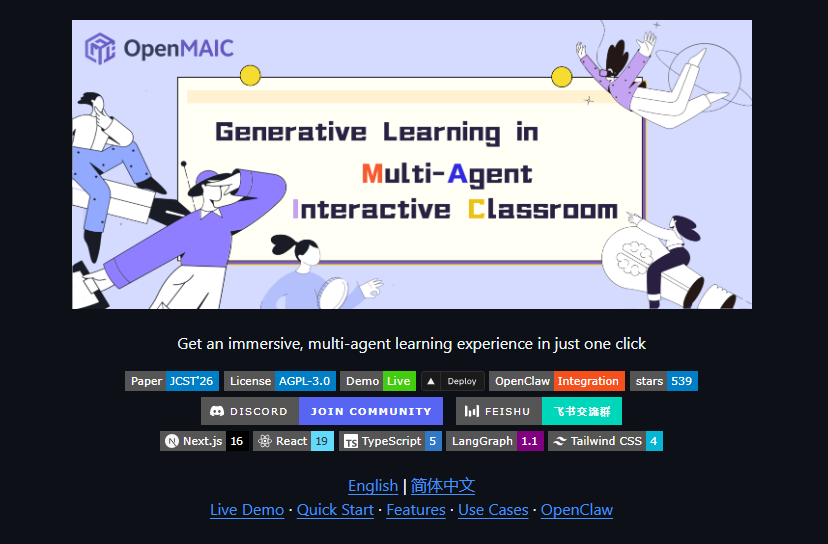
Imagine walking into a classroom where the teacher explains complex concepts with perfect clarity, teaching assistants offer personalized help, and classmates engage in lively discussions - all powered by AI. This vision became reality when Tsinghua University recently open-sourced OpenMAIC (Open Multi-Agent Interactive Classroom), their groundbreaking educational platform.
Beyond Chatbots: A Complete Learning Ecosystem
While most educational AI tools stop at simple chatbots or note generators, OpenMAIC creates an entire virtual learning environment. "We wanted to capture the magic of real classroom dynamics," explains the development team. The system features:
- AI Teachers that deliver lectures while writing on virtual whiteboards
- Teaching Assistants providing one-on-one support tailored to each student's needs
- AI Classmates with distinct personalities who ask questions and debate concepts
The result? An experience that feels remarkably close to physical classrooms but available anytime, anywhere.
Simple Setup, Powerful Results
The platform's beauty lies in its simplicity. Users just upload a document or enter a topic - within 30 minutes and for less than $2, OpenMAIC generates:
- Comprehensive lesson materials
- Interactive quizzes and exercises
- Hands-on simulation experiments
- Practical project assignments
The system integrates seamlessly with popular messaging apps like Slack and Telegram, making adoption effortless.
Smart Technology Behind the Scenes
OpenMAIC employs advanced LangGraph technology to coordinate its AI agents smoothly. Key components include:
The Adaptive Engine personalizes instruction based on cognitive models and learning theories The Classroom Manager orchestrates discussions naturally by monitoring engagement levels Early trials at Tsinghua involving 500+ students demonstrated impressive scalability while maintaining personalization.
The team emphasizes openness: "We've designed this as infrastructure anyone can build upon." Developers can customize everything from course formats to interaction styles using various large language models.
The implications excite educators worldwide. Remote learners could soon access "Tsinghua-level" instruction through smartphones alone. As one beta tester remarked: "It's not perfect yet, but I've never seen AI capture classroom energy this well."
The project invites global collaboration through its GitHub repository while offering immediate web access for curious educators.
Key Points:
- Tsinghua's OpenMAIC creates complete virtual classrooms from any topic
- Multiple AI agents simulate teachers, assistants and classmates realistically
- Generates full lessons automatically for under $2 per session
- Open-source design encourages worldwide educational innovation
- Currently free to try online with all code publicly available