Tencent Hunyuan Bolsters AI Team with Top Reinforcement Learning Expert
Tencent Strengthens AI Research with Key Hire
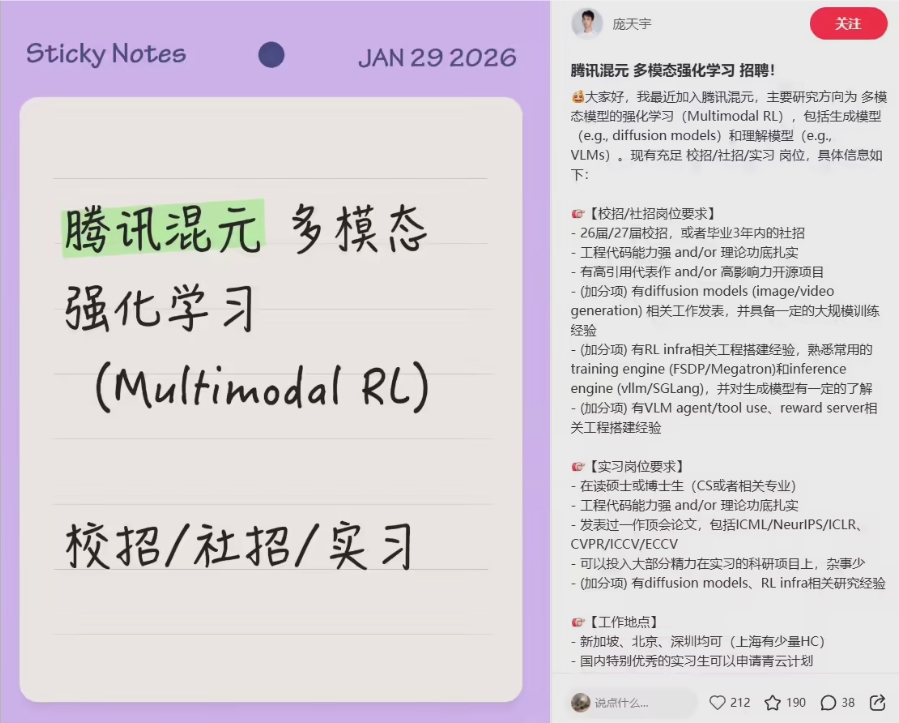
Tencent has made another significant addition to its growing roster of artificial intelligence experts. Dr. Tianyu Peng, formerly a senior researcher at Singapore's Sea AI Lab, has joined the company as Chief Research Scientist for Hunyuan's multimodal department.
From Tsinghua to Tech Leadership
The newly appointed scientist brings impressive credentials to Tencent:
- Earned his doctorate from Tsinghua University's prestigious computer science program
- Published multiple papers at top-tier AI conferences
- Won several technical competitions demonstrating practical applications of his research
- Developed specialized expertise in machine learning during his tenure at Sea AI Lab
"Dr. Peng represents exactly the caliber of talent we're bringing into Hunyuan," said a Tencent spokesperson. "His work bridging reinforcement learning with multimodal systems will be crucial for our next-generation models."
Strategic Talent Acquisition Continues
The appointment marks the latest in a series of high-profile hires for Tencent's AI division:
- Follows recruitment of former OpenAI researcher Yao Shunyu earlier this year
- Reflects growing emphasis on multimodal capabilities in large language models
- Signals commitment to maintaining technological leadership position
The company appears focused on assembling what industry observers call an "all-star team" of AI researchers.
Why Reinforcement Learning Matters Now?
The timing of Dr. Peng's hiring coincides with increased industry focus on:
The timing couldn't be better as the tech world turns its attention to:
- Making AI systems more autonomous and adaptable
- Improving how models integrate different data types (text, images, etc.)
- Developing more sophisticated reasoning capabilities
- Creating systems that learn continuously from interactions
- Addressing current limitations in logical consistency
- Enhancing safety protocols through better training methods
- Pushing boundaries beyond current chatbot paradigms
- Exploring novel approaches to knowledge acquisition
- Optimizing resource efficiency during training processes 10.Bridging gaps between theoretical research and practical applications 11.Accelerating development cycles for new model versions 12.Exploring commercial applications beyond basic text generation 13.Enhancing personalization capabilities while maintaining privacy standards 14.Addressing challenges around bias mitigation at scale 15.Pioneering new evaluation metrics beyond traditional benchmarks