Superconductor: The Rust-Powered AI Agent Hub That's Changing How Developers Work

A New Era for AI-Assisted Development

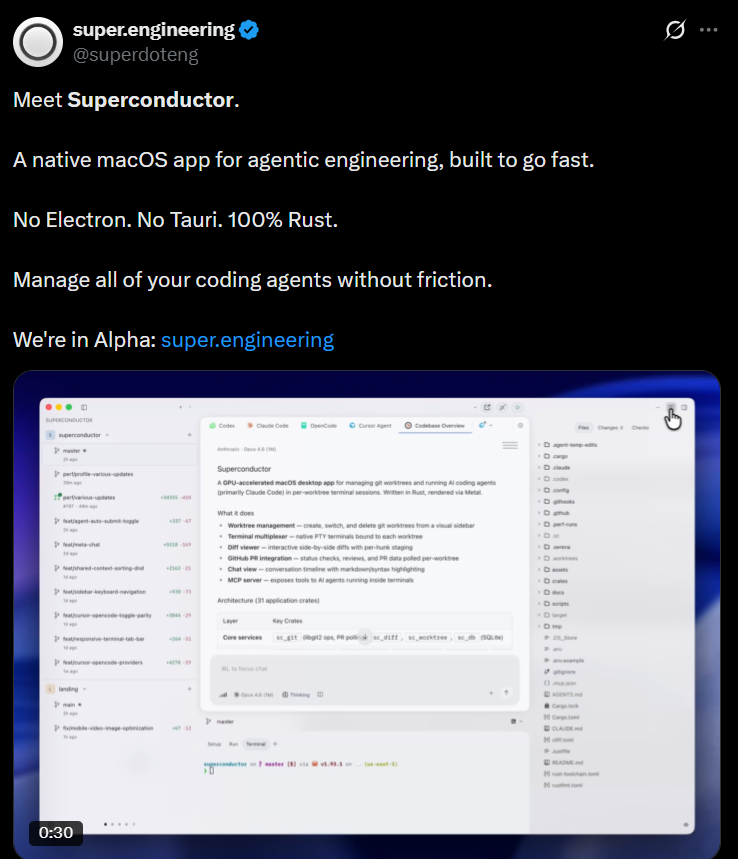
The world of AI coding tools just got more interesting with the launch of Superconductor, currently in its Alpha testing phase. What makes this tool stand out? It's built entirely in Rust - no Electron framework here - which means lightning-fast performance that developers are already raving about.
Image

Built for Speed and Efficiency

Superconductor isn't just another pretty interface. Its pure Rust foundation and Metal GPU-accelerated terminal rendering mean it boots up in under 50 milliseconds - faster than you can blink. Memory usage is kept impressively low, making it a dream for developers who value performance above all else. Currently macOS-only, but Windows and Linux versions are in the pipeline.

Try it out: https://super.engineering/

Your Coding Agents, United at Last

Imagine having all your favorite AI coding assistants working together in one place. With Superconductor, you can run Claude Code, Codex, Gemini CLI, and others simultaneously without the headache of switching between tools. Each agent runs as a native child process, supporting unlimited parallel tabs and workspaces - a game-changer for complex projects.

Smart Git Integration

Ever wrestled with version control while using multiple AI tools? Superconductor solves this with isolated Git worktrees that create separate environments for each agent. The built-in Git workflow handles everything from real-time diffs to PR creation with simple clicks. Even better? All your work stays persistent, so you can pick up right where you left off.

Designed for Developer Happiness

Power users will appreciate the customization options:

  • Flexible layouts (stacked, horizontal, or bottom terminal)
  • Picture-in-picture floating tabs
  • Theme switching (dark/light/system)
  • Custom colors, fonts, and keyboard shortcuts

Everything stays local too - no telemetry or data collection to worry about.

Why It Matters

Unlike web-based tools that choke after 5-7 agents, Superconductor's native architecture scales beautifully. GPU acceleration, multi-session terminals, and rich text interfaces make it faster and more stable than competitors. It's currently in Alpha, but developers eager to try can download it from the official site.

Key Points

  • Native Rust build means unbeatable speed and efficiency
  • Run multiple AI coding agents simultaneously in one interface
  • Isolated Git worktrees prevent conflicts between agents
  • Highly customizable to fit any workflow
  • Currently macOS-only, with other platforms coming soon
Enjoyed this article?

Subscribe to our newsletter for the latest AI news, product reviews, and project recommendations delivered to your inbox weekly.

Weekly digestFree foreverUnsubscribe anytime

Related Articles

News

AI Clash: Anthropic's Brief Ban on OpenClaw Founder Sparks Debate

A temporary suspension of OpenClaw founder Peter Steinberger's Anthropic account has ignited a heated discussion in the AI community. Lasting just two hours, the ban raised questions about platform policies and the challenges open-source projects face when dealing with major AI providers. While the account was quickly reinstated, the incident highlights growing tensions between commercial AI companies and independent developers in this fast-evolving field.

April 13, 2026
AI GovernanceOpen SourceAnthropic
Xiaomi's AI Model Joins Leading Open-Source Framework with Free Trial
News

Xiaomi's AI Model Joins Leading Open-Source Framework with Free Trial

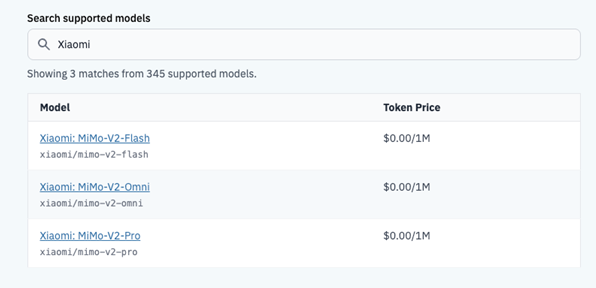
Xiaomi has integrated its MiMo-V2 AI model series into the Hermes Agent framework, a major player in open-source AI development. Developers can now access Xiaomi's Pro, Omni, and Flash models for free for two weeks. This partnership combines Xiaomi's hardware expertise with Hermes' self-evolving capabilities, offering new possibilities for AI assistants. The move signals a shift in AI competition from conversational quality to execution efficiency.

April 10, 2026
XiaomiAI DevelopmentOpen Source
Claude Mythos Stuns AI Community With Premium Pricing - Developers Get Creative
News

Claude Mythos Stuns AI Community With Premium Pricing - Developers Get Creative

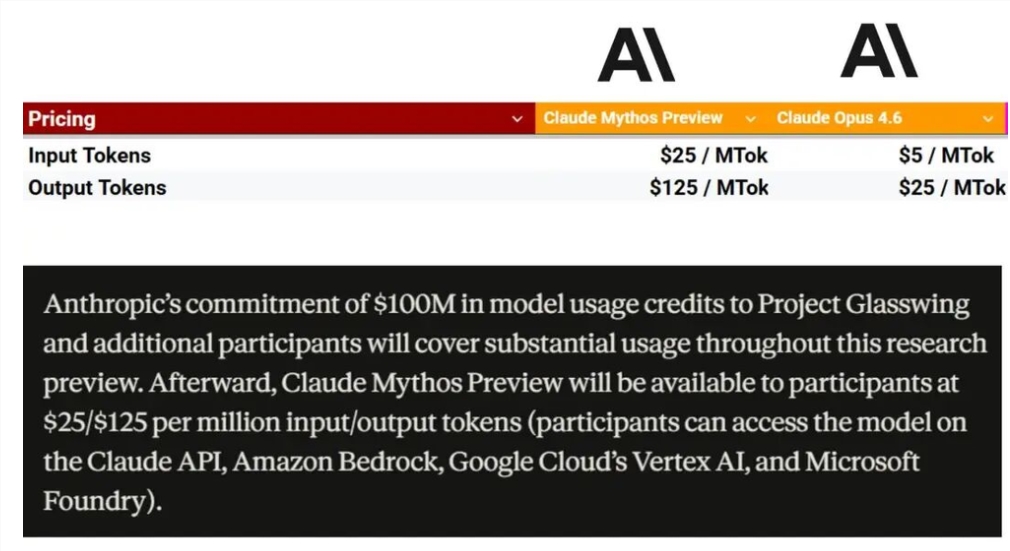
Anthropic's new Claude Mythos model has sent shockwaves through the developer community with its premium pricing - $125 per million output tokens, nearly 8 times costlier than current offerings. Faced with these eye-watering prices, coders have developed ingenious workarounds like the 'Caveman' method that strips AI responses down to bare essentials, saving up to 65% in token costs while maintaining accuracy.

April 9, 2026
AI PricingClaude MythosDeveloper Tools
News

DeepSeek V4 Emerges: A Glimpse Into China's Next-Gen AI Powerhouse

The tech world is abuzz as DeepSeek V4 enters intensive testing, revealing three distinct versions tailored for different needs. From lightning-fast responses to advanced visual analysis, this homegrown AI showcases China's push for technological independence. What makes this release particularly exciting is its deep integration with domestic chips, signaling a strategic move away from foreign dependencies. As the AI arms race heats up, could this be the model that redefines what Chinese-developed artificial intelligence can achieve?

April 8, 2026
AI DevelopmentChinese TechMachine Learning
Cursor 3 Ushers in a New Era of AI-Powered Coding
News

Cursor 3 Ushers in a New Era of AI-Powered Coding

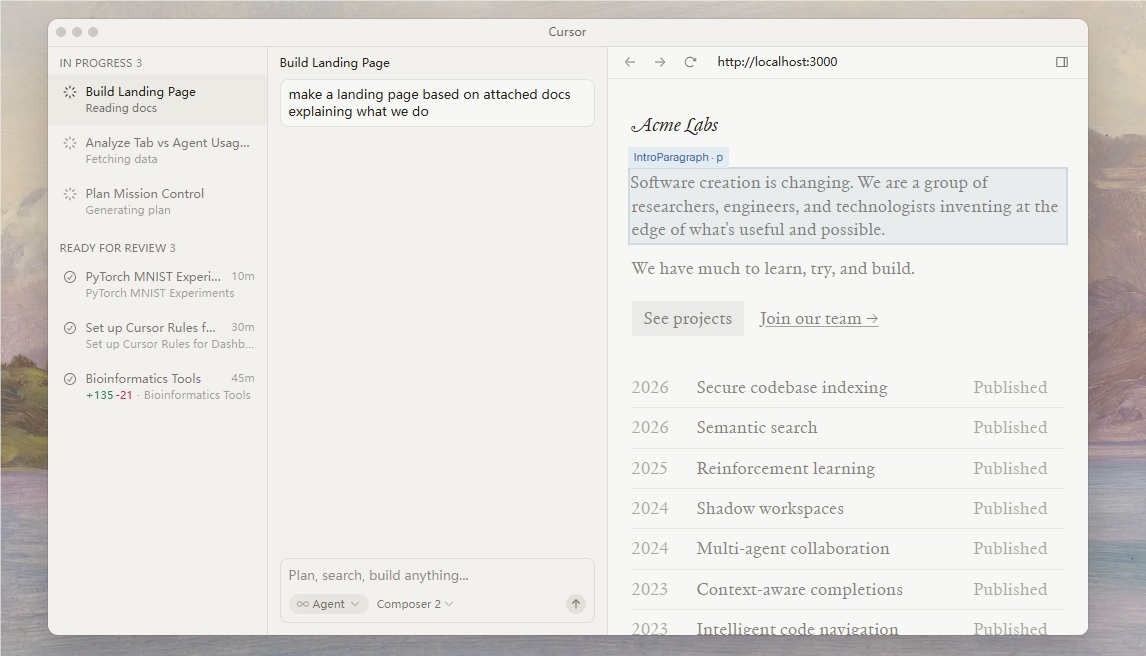
The latest version of Cursor introduces groundbreaking agent autonomy, transforming how developers work. With seamless local-cloud switching and unified workspaces, Cursor 3 lets multiple AI agents collaborate across repositories. The update brings intuitive progress tracking and streamlined code reviews, making it easier than ever to harness AI for programming.

April 3, 2026
AI DevelopmentProgramming ToolsSoftware Innovation
News

Hackers Exploit Claude Code Leak in Sophisticated GitHub Phishing Scheme

A major security breach has put developers at risk after Anthropic's Claude Code tool accidentally exposed over half a million lines of source code. Cybercriminals have seized the opportunity, creating fake GitHub repositories that distribute malware disguised as 'unlocked' versions of the leaked code. Security experts warn these traps install Vidar trojan malware capable of stealing sensitive data including cryptocurrency wallets. The attackers are using search engine optimization to make their malicious repositories appear legitimate, prompting urgent warnings for developers to stick to official channels.

April 3, 2026
CybersecurityAI DevelopmentPhishing Attacks