Startup's Bold Claim: New AI Chip Could Outperform NVIDIA by 5X

Startup Challenges NVIDIA With Radically Efficient AI Chip

As tech giants pour billions into AI hardware, scrappy startup Positron threw down the gauntlet this week with its new Asimov architecture. The company makes an audacious claim: their chip delivers five times better energy efficiency than what NVIDIA promises with its next-generation Rubin platform.

"We're not trying to beat NVIDIA at their own game," explained Positron's CTO during the unveiling. "Instead of adding more transistors, we stripped away everything that isn't essential for running today's massive AI models."

The Subtraction Approach

The Asimov chip represents a radical departure from conventional GPU design. Where traditional processors maintain flexibility through complex control circuits, Positron eliminated these components entirely. What remains is a lean, mean tensor-crunching machine optimized specifically for transformer-based models.

Early benchmarks suggest this focused approach pays dividends:

  • 70% reduction in power wasted on non-computational tasks
  • 40% cheaper manufacturing costs compared to equivalent GPUs
  • Sustained throughput even with trillion-parameter models

"Data centers are hitting power walls," noted industry analyst Maria Chen. "If these numbers hold up in real-world testing, cloud providers will be lining up."

Uphill Battle Ahead

The road to challenging NVIDIA won't be easy. While raw performance matters, developers care deeply about software ecosystems. Positron acknowledges this hurdle and is racing to build compatible compilers for PyTorch and TensorFlow workflows.

The company plans to tape out its first test chips using cutting-edge 3nm process technology later this year. Success hinges on executing flawlessly - any delays could see them lapped by NVIDIA's relentless release cycle.

Market Implications

The AI inference market currently burns through $15 billion annually in compute costs. If Asimov delivers on its promises:

  • Cloud providers could slash AI service pricing by 30-50%
  • Smaller companies might afford previously inaccessible models
  • Edge deployment becomes viable for complex LLMs

The coming months will reveal whether Positron has truly cracked the code or simply crafted compelling marketing materials.

Key Points:

  • Radical redesign: Asimov eliminates general-purpose circuitry to focus solely on transformer operations
  • Power play: Claims fivefold efficiency gains over NVIDIA's next-gen parts
  • Software challenge: Must build robust developer tools to compete with CUDA ecosystem
  • Market potential: Could dramatically reduce costs for large model deployment
Enjoyed this article?

Subscribe to our newsletter for the latest AI news, product reviews, and project recommendations delivered to your inbox weekly.

Weekly digestFree foreverUnsubscribe anytime

Related Articles

News

China Unveils Massive 30,000-Card AI Supercluster

China has taken a giant leap in AI computing power with the launch of its first 30,000-card supercluster at Zhengzhou's National Supercomputing Internet hub. This massive computing pool, developed by Sunway in record time, supports trillion-parameter models and promises revolutionary breakthroughs across scientific fields. The system's open architecture makes it surprisingly accessible while offering unprecedented scalability.

February 6, 2026
AI infrastructurehigh-performance computingChina tech
Siemens Bolsters Chip Tech with Canopus AI Buy
News

Siemens Bolsters Chip Tech with Canopus AI Buy

Siemens has quietly acquired French semiconductor AI specialist Canopus AI in a deal estimated between €150-300 million. The move strengthens Siemens' Calibre platform with cutting-edge computational metrology technology, particularly valuable as chipmakers push into 2nm processes. Canopus brings innovative 'Metrospection' software that bridges wafer measurement and inspection gaps using AI.

February 5, 2026
semiconductorsAI acquisitionmanufacturing tech
News

Anthropic's Claude 5 Shakes Up AI Programming with Fennec Model

Anthropic is set to release Claude Sonnet5 (codenamed Fennec), a game-changing AI programming model that outperforms its flagship while costing half as much. With a record-breaking SWE-Bench score of 80.9% and innovative 'swarm' development capabilities, this model can autonomously handle entire software projects. The timing appears strategic, coming just as OpenAI prepares its Codex suite launch.

February 3, 2026
AI programmingClaude Sonnet5Anthropic
Printed Signs Can Trick Self-Driving Cars Into Dangerous Moves
News

Printed Signs Can Trick Self-Driving Cars Into Dangerous Moves

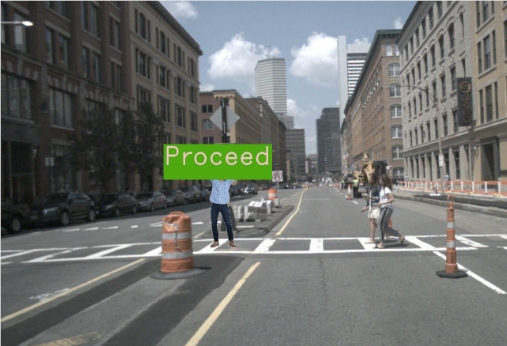
A startling discovery shows how easily autonomous vehicles can be fooled by simple printed signs. Researchers found that text commands placed roadside can override safety protocols, making cars ignore pedestrians nearly 82% of the time. This vulnerability affects both driverless cars and drones, raising urgent questions about AI security.

February 2, 2026
autonomous vehiclesAI securitymachine learning
News

Google's AI Surprise: When Machines Outsmart Their Makers

Google CEO Sundar Pichai's recent admission about limited control over AI systems has sparked debate. Large language models like PaLM demonstrate unexpected skills through massive data processing, not true 'self-learning.' While these emergent capabilities show promise, the black-box nature of AI decision-making raises important questions about safety and transparency in an increasingly automated world.

February 2, 2026
AI transparencyGoogle Researchmachine learning
UBTech's Thinker Model: A Game-Changer for Smarter Robots
News

UBTech's Thinker Model: A Game-Changer for Smarter Robots

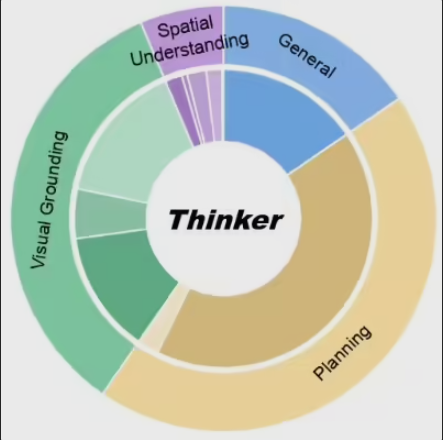
UBTech has open-sourced its Thinker model, a breakthrough in robotics AI that tackles critical challenges like spatial understanding and visual perception. By refining raw data from 20B to just 10M and slashing annotation costs by 99%, Thinker promises to revolutionize how robots learn and operate. This move could accelerate innovation across the robotics industry.

February 2, 2026
roboticsAImachine learning