Starbucks taps into AI to brew up mood-based drink suggestions

Starbucks' new AI barista knows what you're craving

Your morning coffee order might soon come with a side of artificial intelligence. Starbucks is testing a new ChatGPT-powered feature that acts like a digital barista, recommending drinks tailored to your mood, taste preferences, and even your daily goals.

How the mood-matching works

Imagine standing in line, unsure whether you need a calming chamomile tea or an extra shot of espresso. With this new feature, you'll simply type phrases like "I'm exhausted" or "I need creative fuel" into the Starbucks app. The AI then analyzes your input and suggests drinks that might hit the spot.

"We're seeing customers overwhelmed by choice," explains Starbucks digital product lead. "This isn't about replacing human connection—it's about using technology to enhance our ability to serve the perfect drink for every moment."

The personal touch

The recommendations go beyond simple mood matching. The system considers:

  • Time of day (no espresso shots suggested at 8 PM)
  • Weather conditions (more iced drinks when it's hot)
  • Previous orders (if you always skip whipped cream, it remembers)

Early testers report discovering new favorite drinks they wouldn't have tried otherwise. "I typed 'heartbroken' as a joke," shares beta tester Maria Gonzalez, "and it suggested a white chocolate mocha with cinnamon—turned out to be the comfort I didn't know I needed."

Experts voice caution

While the tech sounds convenient, psychologists raise interesting questions:

  • Are we outsourcing too many small decisions to algorithms?
  • Could this reduce serendipitous discoveries of new favorites?
  • What happens to the social aspect of asking a human barista for recommendations?

"Technology should assist, not replace, our decision-making muscles," warns behavioral scientist Dr. Ellen Park. "The danger comes when we stop listening to our own cravings entirely."

What's next?

Starbucks emphasizes this is still in testing phase, with plans to:

  • Refine the AI's understanding of nuanced emotional states
  • Expand recommendation factors (including health preferences)
  • Ensure the system explains why it suggests certain drinks

The company promises human baristas aren't going anywhere. "Think of this as giving every customer their own coffee concierge," says the spokesperson, "not replacing the warm welcome of our store teams."

Key Points

  • AI mixologist: ChatGPT suggests drinks based on your mood and goals
  • 🤖 Smart pairing: Considers weather, time, and your order history
  • ⚠️ Expert warning: Potential downside to over-relying on tech for small decisions
  • 🔄 Work in progress: Starbucks refining the feature based on user feedback
Enjoyed this article?

Subscribe to our newsletter for the latest AI news, product reviews, and project recommendations delivered to your inbox weekly.

Weekly digestFree foreverUnsubscribe anytime

Related Articles

News

NVIDIA's Lyra 2.0 Turns Single Photos into Expansive 3D Worlds

NVIDIA has unveiled Lyra 2.0, a groundbreaking AI system that transforms ordinary photos into detailed 3D environments spanning up to 90 meters. The technology addresses a major challenge in virtual world creation - maintaining consistency across large spaces. What sets Lyra apart? It remembers spatial details like a human would, correcting errors on the fly while outperforming competitors in visual quality. The system already integrates with NVIDIA's Isaac Sim, offering new possibilities for robot training and autonomous vehicle development.

April 17, 2026
NVIDIA3D generationAI innovation
News

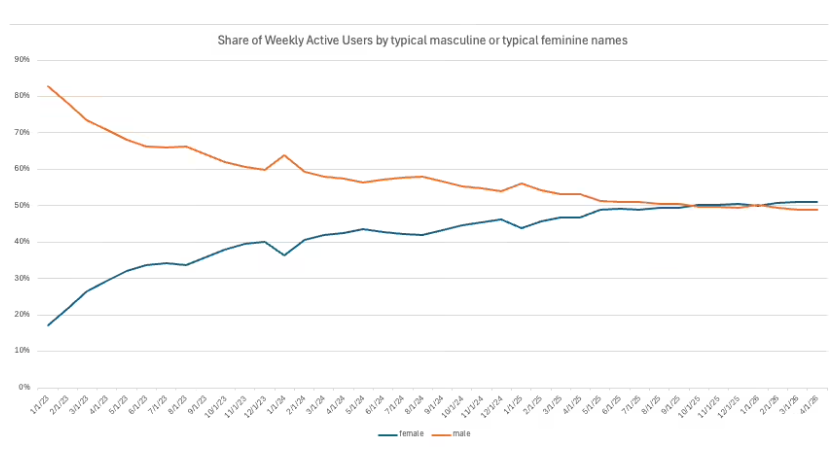
ChatGPT's Gender Shift: Women Now Dominate User Base as Growth Soars

OpenAI's latest data reveals a remarkable turnaround in ChatGPT's user demographics. What started as a male-dominated platform in 2022 with 80% male users has now flipped - women have crossed the 50% threshold. Nearly half a billion women worldwide regularly use the AI tool as total users approach 1 billion. Meanwhile, OpenAI's computing power expansion shows no signs of slowing, with ambitious plans to reach 30 gigawatts by 2030 through partnerships with industry leaders like NVIDIA.

April 17, 2026
AI TrendsChatGPTTechnology Adoption
ChatGPT Hits 1 Billion Users as Women Take the Lead
News

ChatGPT Hits 1 Billion Users as Women Take the Lead

OpenAI's latest figures reveal a major shift in ChatGPT's user base - women now make up over half of its nearly 1 billion weekly active users. This marks a dramatic change from its early days when male users dominated at 80%. The AI platform's computing power is also set for massive expansion, expected to grow nearly tenfold by 2025 as adoption surges across demographics.

April 17, 2026
ChatGPTAI TrendsOpenAI
Miniso Bets on AI to Power Global Retail Expansion
News

Miniso Bets on AI to Power Global Retail Expansion

The popular lifestyle retailer Miniso is diving headfirst into AI with a dedicated innovation team. Their new department will develop intelligent decision-making tools and multi-agent systems to optimize everything from store locations to supply chains. It's a strategic move that could give the brand an edge in international markets. They're already recruiting top AI talent to turn this vision into reality.

April 17, 2026
retail technologyAI innovationbusiness automation
Tencent's Latest AI Breakthrough Lets You Build 3D Worlds With a Click
News

Tencent's Latest AI Breakthrough Lets You Build 3D Worlds With a Click

Tencent has unveiled its open-source Huan Yuan 3D World Model 2.0, revolutionizing digital content creation. This cutting-edge AI tool transforms text, images, and videos into fully interactive 3D environments complete with realistic physics. Game developers and digital artists can now generate editable assets that work seamlessly with Unity and Unreal Engine, dramatically simplifying 3D world building.

April 16, 2026
3D modelingAI innovationgame development
MiniMax's MaxHermes: AI That Teaches Itself New Tricks
News

MiniMax's MaxHermes: AI That Teaches Itself New Tricks

MiniMax has unveiled MaxHermes, a groundbreaking cloud sandbox that learns autonomously. Unlike traditional AI tools requiring manual programming, MaxHermes extracts 'skills' from task performance and improves through user feedback. The system combines persistent memory, natural language scheduling, and multi-agent operations to create what might be the first truly self-evolving AI assistant. Powered by MiniMax's latest M2.7 model, this innovation could redefine how we think about AI capabilities in real-world applications.

April 16, 2026
AI innovationMachine learningAutonomous systems