
Siemens and NVIDIA slash AI chip verification time from months to days

Siemens and NVIDIA Revolutionize AI Chip Verification

In what could be a game-changer for AI hardware development, industrial giant Siemens and chip powerhouse NVIDIA have joined forces to tackle one of the most stubborn bottlenecks in semiconductor design: the agonizingly slow verification process.

The Verification Breakthrough

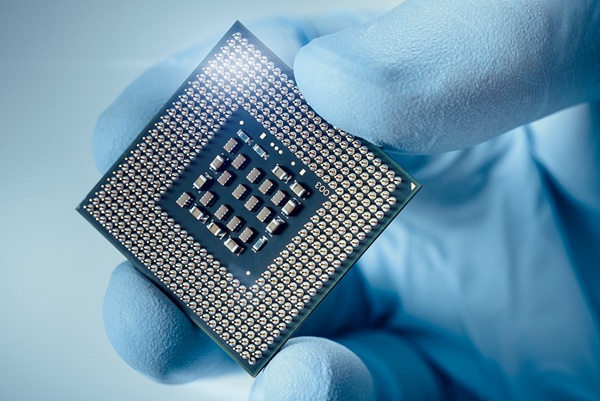
Traditionally, verifying chip designs before manufacturing - ensuring they'll work as intended - has been a months-long ordeal of running simulations. But by combining Siemens' Veloce™ proFPGA hardware-assisted verification system with NVIDIA's specially optimized chip architecture, the partners have compressed this timeline to just days.

"We're talking about validating designs that involve trillions of operations," explains a Siemens engineer involved in the project. "What used to take quarter-long marathons can now be done in a sprint."

Why This Matters for AI

The implications for AI development are profound:

  • Faster time-to-market: New AI chips can reach consumers and businesses quicker
  • Higher success rates: More thorough pre-production testing means fewer costly redesigns
  • Better optimization: Engineers can test real-world workloads before manufacturing begins

"This isn't just about speed," says an NVIDIA spokesperson. "It's about confidence. When you're pushing the limits of AI hardware, you need to know your designs will perform as expected."

Behind the Technology

The secret sauce lies in the integration of:

  1. Digital twin technology: Creating virtual replicas of physical chips for precise simulation
  2. Hardware acceleration: Using specialized FPGA systems to crunch through simulations
  3. Architecture optimization: Tailoring NVIDIA's designs specifically for efficient verification

Industry Impact

Analysts see this as part of a broader trend where industrial software companies like Siemens are becoming crucial players in cutting-edge tech development. "It's no longer just about the chip designers," observes tech analyst Maria Chen. "The tools you use to create and validate those designs are becoming just as important."

For AI developers, the partnership could mean access to more powerful, reliable chips arriving sooner than expected - potentially accelerating advancements in everything from self-driving cars to medical diagnostics.

Key Points

  • Verification acceleration: Months-long process now takes days
  • Technology combo: Siemens' Veloce system + NVIDIA architecture
  • Market impact: Faster AI chip development cycles
  • Strategic partnership: Marks deepening Siemens-NVIDIA collaboration
  • Future implications: Could accelerate entire AI hardware roadmap
Enjoyed this article?

Subscribe to our newsletter for the latest AI news, product reviews, and project recommendations delivered to your inbox weekly.

Weekly digestFree foreverUnsubscribe anytime

Related Articles

News

Amazon gears up to challenge NVIDIA with its own AI chips

Amazon is making a bold move into the AI chip market, shifting from renting computing power to selling its own hardware directly. With its Trainium chips offering better value and strong demand already lining up, the tech giant is eyeing a $50 billion revenue opportunity. This strategic pivot could reshape the AI computing landscape and provide much-needed alternatives to NVIDIA's dominance.

April 10, 2026
AmazonAI chipsNVIDIA
Amazon Shifts Gears: From Cloud Giant to AI Chip Powerhouse
News

Amazon Shifts Gears: From Cloud Giant to AI Chip Powerhouse

Amazon is making a bold move into the competitive AI chip market, planning to sell its custom-designed processors externally rather than keeping them exclusively for internal cloud services. CEO Andy Jassy revealed in his shareholder letter that the company's chip division could potentially generate $50 billion annually as an independent business. With their Trainium AI chips already outperforming competitors in cost-effectiveness and the upcoming Trainium3 showing strong pre-launch demand, Amazon appears poised to challenge NVIDIA and Intel's dominance in the AI hardware space.

April 10, 2026
AmazonAI chipssemiconductors
News

Tech Titans Back India's AI Rising Star in $350 Million Deal

Indian AI startup Sarvam is making waves with a massive funding round that could value the company at $1.5 billion. Tech heavyweights Amazon and NVIDIA are joining forces with venture capital firms to back this homegrown success story. What makes Sarvam special? Their focus on local Indian languages and voice-first AI solutions tailored for one of the world's most diverse markets.

April 3, 2026
Artificial IntelligenceTech InvestmentIndian Startups
News

Rebellions' $400M Boost Signals Korea's AI Chip Ambitions

South Korean AI chip maker Rebellions has secured $400 million in pre-IPO funding, sending its valuation soaring 67% to $2.34 billion. The investment frenzy highlights growing global appetite for alternatives to dominant US chip players. With its Rebel100 NPU platform gaining traction, the company is now eyeing expansion into US data centers while preparing for a potential Nasdaq listing.

March 31, 2026
AI chipsSemiconductorsTech funding
News

French AI Startup Mistral Secures $830M to Challenge US-China Dominance

Paris-based Mistral AI has raised $830 million in debt financing to purchase 13,800 NVIDIA chips and build a massive computing center near Paris. This bold move signals Europe's push to compete with US and Chinese tech giants in the AI infrastructure race. The company, valued at $14 billion, plans to launch its new data center by mid-2026.

March 30, 2026
Artificial IntelligenceEuropean TechNVIDIA
News

NVIDIA's NemoClaw: Armoring AI Agents for the Enterprise

At the 2026 GTC Conference, NVIDIA unveiled NemoClaw, a new platform designed to bring enterprise-grade security to AI agent development. Built on the popular OpenClaw framework, it tackles critical business concerns around privacy and control while maintaining hardware flexibility. As the AI industry shifts from simple chatbots to complex agent systems, NVIDIA's move positions them against competitors like OpenAI in this emerging market space.

March 17, 2026
NVIDIAAI AgentsEnterprise Tech