Robots Get Their Own Brain: ForceGPT Unveils Breakthrough AI Model
Robotics Enters New Era with Native AI Brain
The field of embodied intelligence just got its most significant upgrade yet. ForceGPT's newly launched DM0 model represents the first AI system designed specifically for robots from the ground up - think of it as giving machines their own native language rather than forcing them to speak ours.
Built Different From Day One
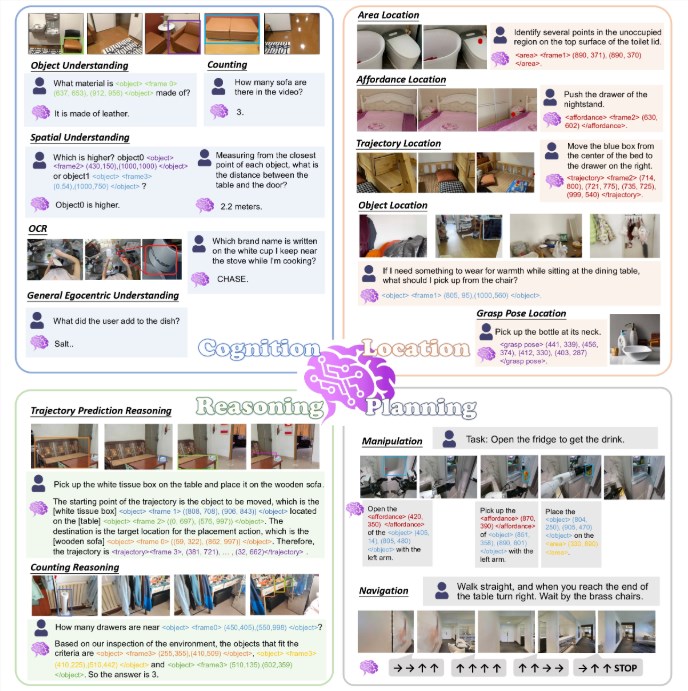
What makes DM0 special? It's not another repurposed language model. Developed collaboratively by ForceGPT and Step星辰, this system integrates:
- Multimodal internet data with real-world robotic sensory inputs
- Unified perception-action architecture that mimics biological learning
- Cross-platform adaptability working across eight robot models already
"We're not just teaching robots to understand us," explains a ForceGPT engineer. "We're creating intelligence that speaks their language from birth."
Small Package, Big Performance
In an industry obsessed with parameter counts, DM0 proves size isn't everything. The lean 2.4 billion parameter version recently topped global rankings in RoboChallenge evaluations - outperforming bulkier competitors while requiring far less computing power.
This efficiency breakthrough means:
- Lower hardware requirements: Runs on consumer-grade GPUs
- Faster deployment: Reduced computational overhead speeds adoption
- Energy savings: More sustainable robotics applications
The team compares it to "a small weight moving big objects" - achieving disproportionate impact through smarter design.
Opening the Floodgates
The complete open-sourcing of DM0 could revolutionize robotics development:
- Lowered barriers: Hobbyists can now experiment with advanced robotics AI
- Accelerated innovation: Developers worldwide can build on the platform
- Ecosystem growth: Companion tools Dexbotic 2.0 and DFOL streamline production Industry analysts see parallels to Android's impact on smartphones - standardized infrastructure enabling explosive growth. "This changes everything," says robotics researcher Dr. Elena Torres. "We're moving from handcrafted solutions to scalable platforms overnight."
The implications extend far beyond current applications as embodied intelligence prepares for its mass-market moment.
Key Points:
- Native design: First AI model built specifically for robots from inception
- Surprising efficiency: Small 2.4B parameter version outperforms larger models
- Democratizing access: Full open-source release lowers development barriers
- Industry impact: Potential to standardize robotics development globally