Robot Maker 1X Pivots to Factories After Home Market Hurdles

From Living Rooms to Assembly Lines: Neo Robots Find New Purpose

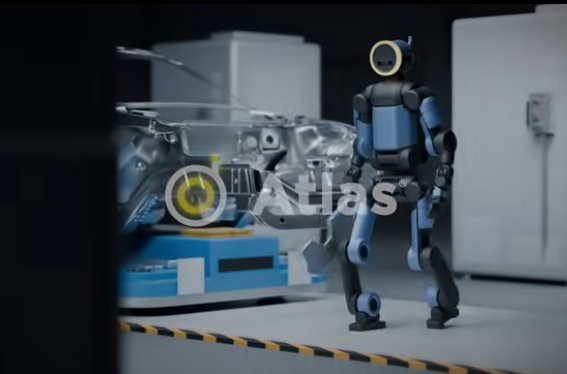
Norwegian robotics company 1X has made a strategic pivot from consumer homes to industrial settings, announcing Thursday a landmark agreement with investor EQT. The deal will see up to 10,000 Neo humanoid robots deployed across more than 300 of EQT's portfolio companies between 2026 and 2030.

The Industrial Turnaround

The robots initially marketed as "the first consumer-grade home helper" will now find their first major application in manufacturing plants, warehouses, and logistics centers. This shift comes after slower-than-expected progress in the consumer market.

"First prove reliability in warehouses, then we'll talk about living rooms," wrote CEO Bernt Børnich in an internal email obtained by reporters. The industrial environment offers several advantages: standardized workflows, controlled safety measures, and abundant opportunities for collecting performance data.

Deal Mechanics

While exact pricing remains confidential, insiders reveal industrial units cost less than the $20,000 pre-sale price of consumer models. Each deployment will involve customized contracts with varying terms and service packages.

EQT Ventures, which led 1X's Series B funding round, leveraged its extensive corporate network to broker this arrangement. The partnership helps both parties - giving EQT companies early access to automation while providing 1X with crucial real-world testing environments.

Why Homes Can Wait

The Neo robot was originally designed for domestic tasks like laundry folding and childcare assistance. While pre-order numbers reportedly exceeded expectations three months after launch, significant barriers remain:

  • Privacy concerns over remote operator access through robot cameras
  • Safety worries about large humanoid devices coexisting with pets and children
  • Multiple analysts pushing back household adoption timelines by 5-10 years

The industrial pivot allows continued refinement of core technologies like object manipulation and spatial navigation in more forgiving environments before tackling complex home settings.

Key Points:

  • Strategic shift: From consumer homes to industrial applications
  • Scale: Up to 10k robots deployed across EQT's network
  • Timeline: Rollout between 2026-2030
  • Focus areas: Manufacturing, warehousing and logistics initially
  • Advantage: Industrial settings offer better standardization/safety for development
Enjoyed this article?

Subscribe to our newsletter for the latest AI news, product reviews, and project recommendations delivered to your inbox weekly.

Weekly digestFree foreverUnsubscribe anytime

Related Articles

Robotics Firm Zhiyuan Spins Off Dexterous Hand Unit Into New Venture
News

Robotics Firm Zhiyuan Spins Off Dexterous Hand Unit Into New Venture

Zhiyuan Robotics has carved out its dexterous hand division into a standalone company called Threshold, led by former Tencent Robotics X Lab expert Xiong Kun. The move signals Zhiyuan's push toward specialization as it restructures into three business units. With shipments surpassing 5,100 units last year and revenue projected to cross 1 billion yuan in 2025, the company appears poised for significant growth.

January 15, 2026
RoboticsCorporateSpinOffTechCommercialization
Robotics Startup ZiLiangJi Lands $140M Boost From Tech Heavyweights
News

Robotics Startup ZiLiangJi Lands $140M Boost From Tech Heavyweights

Chinese robotics innovator ZiLiangJi has secured a massive 1 billion yuan ($140M) funding round backed by ByteDance and Sequoia China. The investment signals strong confidence in the company's general-purpose robotics technology, which shows promise across industrial, logistics and elderly care applications. Founder Wang Qian reveals plans to accelerate global deployment of their intelligent systems.

January 12, 2026
RoboticsTechInvestmentArtificialIntelligence
News

Siemens and NVIDIA team up to create AI-powered factories of the future

Industrial giants Siemens and NVIDIA are joining forces to revolutionize manufacturing with artificial intelligence. By combining Siemens' industrial automation expertise with NVIDIA's AI computing power, they aim to build the world's first fully AI-driven factories by 2026. These smart manufacturing bases will feature autonomous quality control, predictive maintenance, and digital twin technology - essentially giving factories their own 'nervous system'. The first pilot plants will launch in Germany, the US and China, focusing on automotive, electronics and energy sectors.

January 7, 2026
Industrial AutomationArtificial IntelligenceSmart Manufacturing
Boston Dynamics' Atlas Robot Steps Off Demo Stage Into Hyundai Factories
News

Boston Dynamics' Atlas Robot Steps Off Demo Stage Into Hyundai Factories

Boston Dynamics' iconic Atlas robot is shedding its research lab origins and heading to Hyundai's production lines. The humanoid machine, now equipped with Google DeepMind's AI smarts and 360-degree vision, promises to transform manufacturing floors while working safely alongside humans. This marks a pivotal moment as robotics transitions from flashy prototypes to real-world workhorses.

January 7, 2026
RoboticsIndustrialAutomationArtificialIntelligence
AutoNavi's Bold Leap: From Digital Maps to Intelligent Robots
News

AutoNavi's Bold Leap: From Digital Maps to Intelligent Robots

AutoNavi, Alibaba's mapping subsidiary, is making waves with its ambitious pivot from digital navigation to embodied intelligence. After topping Stanford's spatial AI benchmarks, the company has quietly formed a new division focused on bringing its world model technology into physical form—potentially through robots. This move signals AutoNavi's transformation from a simple map app into what could become the 'brain' for next-generation intelligent machines.

January 5, 2026
AutoNaviEmbodiedAIRobotics
China's Humanoid Robot Pioneer Hits Regulatory Speed Bump
News

China's Humanoid Robot Pioneer Hits Regulatory Speed Bump

Yuque Technology, China's leading humanoid robotics firm, faces a setback as its fast-track IPO approval gets suspended. While regulators aim to cool overheated market enthusiasm, the company remains profitable with billion-yuan revenues. Industry watchers see this as a move to prevent valuation bubbles rather than a rejection of Yuque's fundamentals.

January 4, 2026
RoboticsIPOTechRegulation