
Qwen App Now Shops for You as AI Moves from Talk to Action

AI Shopping Goes Mainstream with Qwen-Taobao Integration

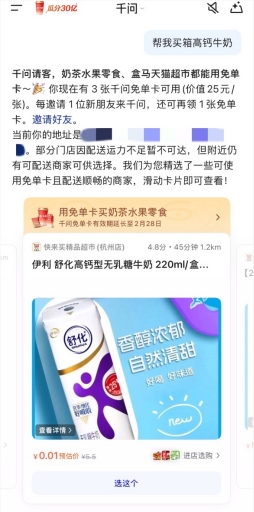
Imagine telling your phone "buy me a spring jacket" and having it not just show options, but actually complete the purchase. That's now reality with Alibaba's Qwen app, which has seamlessly connected with Taobao and Alipay to create what may be the world's first fully functional AI shopping assistant.

From Assistant to Buyer

The upgrade transforms Qwen from an information provider to a true task executor. Users can now say natural commands like "book two tickets for a weekend trip to Chengdu" and watch as the system handles product selection, price comparison, ordering and payment - all without switching apps. This breakthrough represents years of Alibaba's e-commerce, payment and local service capabilities converging through AI.

Capital Shifts Focus from Hype to Reality

Investors are sending clear signals about what kind of AI they value now. Owl Capital recently pulled a planned $1 billion investment in Oracle, citing concerns about the company's "over-leveraged" AI business amid $105 billion in net debt. The message? Flashy AI concepts no longer captivate investors like proven cash flow and technical execution.

In China, money is flowing toward companies with tangible applications. Ziliang Robotics just secured 1 billion yuan in Series A++ funding from major players including ByteDance and Sequoia China. What makes Ziliang stand out? It's the only embodied intelligence firm currently backed by all three Chinese internet giants - Alibaba, Meituan and ByteDance - highlighting its potential in logistics, delivery and service robots.

From Factories to Stock Markets: AI's Real-World Impact

The transformation extends beyond apps into physical spaces:

  • Smart Factories: SHEIN has revolutionized clothing production through digitization, boosting daily output while cutting sampling cycles by 70%. Their secret? AI-powered demand forecasting and production scheduling that enables ultra-responsive "small batch" manufacturing.
  • Market Realities: MiniMax's Hong Kong IPO saw shares surge 109% on debut, valuing the company at over HK$100 billion. But behind the headlines lies a challenge common to many AI firms - while their business-focused services enjoy strong margins, consumer products struggle with low conversion rates.

As we move through 2026, China's AI sector has clearly entered an era of practical validation. Whether it's Qwen handling your shopping or robots working in warehouses, success now depends on creating real value that users will pay for - not just technological potential.

Enjoyed this article?

Subscribe to our newsletter for the latest AI news, product reviews, and project recommendations delivered to your inbox weekly.

Weekly digestFree foreverUnsubscribe anytime

Related Articles

News

Virtual Try-On Goes Mainstream: Pianmi's New API Lets You Digitally Test Drive Accessories

Pianmi Mobile has unveiled an upgraded fashion API that brings virtual try-on capabilities to nine product categories, from watches to handbags. Powered by generative AI and computer vision, the technology creates hyper-realistic simulations of how items will look on users. This innovation promises to transform online shopping by boosting consumer confidence and reducing returns while keeping shoppers engaged longer.

January 22, 2026
virtual try-onfashion techAI shopping
News

Amazon's AI Shopping Buddy Helps You Choose Wisely

Amazon just rolled out 'Help Me Decide,' a smart shopping assistant that analyzes your preferences to suggest personalized product options. Available across Android, iOS, and mobile browsers, this feature sorts recommendations into three categories: Top Picks, Budget Options, and Upgrade Choices. It's like having a personal shopper who knows your taste and wallet.

January 20, 2026
AmazonAI shoppingretail tech
News

Google's AI Shopping Assistant Makes Checkouts Disappear

Google just revolutionized online shopping with its new AI-powered system. Forget clicking through multiple pages - now you can search, compare prices, apply coupons, and checkout all through a simple conversation. The tech combines Gemini CX customer service with a universal commerce protocol that connects retailers seamlessly. While Chinese platforms race to catch up, Google's deep search integration gives it an edge in creating truly conversational commerce.

January 14, 2026
AI shoppingconversational commerceretail technology
News

Google's New Shopping Protocol Lets You Buy Anything Without Leaving Chat

Google has unveiled its Universal Commerce Protocol (UCP) at the 2026 NRF conference, revolutionizing how we shop with AI. The open standard allows users to complete entire purchases within chat interfaces like Google Search AI Mode or Gemini - from product discovery to payment - without ever switching apps. Developed with major retailers and payment providers, UCP keeps merchants in control while offering unprecedented convenience.

January 12, 2026
AI shoppingGoogle UCPretail innovation
News

Zhuzhou's AI Manufacturing Push: Solving Real Factory Problems

Zhuzhou, China's rail manufacturing hub, is tackling concrete industrial challenges with AI. The city unveiled 51 real-world scenarios where artificial intelligence can transform production lines - from welding inspections to robotic decision-making. Local manufacturers like CRRC Zhuzhou are leading the charge, moving beyond theoretical applications to solve actual quality control and efficiency issues.

January 9, 2026
smart manufacturingindustrial AIfactory automation
News

Corporate AI Spending Set to Shrink Vendor Lists by 2026

After years of experimentation, businesses are preparing to consolidate their AI investments. Industry experts predict companies will dramatically increase budgets while narrowing their focus to fewer proven providers. The shift promises higher efficiency but may squeeze startups offering redundant solutions.

December 31, 2025
AI investmententerprise technologyvendor consolidation