NVIDIA Bets Big on Silicon Photonics with $500M Ayar Labs Investment

NVIDIA Doubles Down on Optical Computing Future

In a move that underscores the growing importance of silicon photonics, Ayar Labs announced today it has raised $500 million in Series E funding. The round was spearheaded by Neuberger Berman, with significant participation from tech heavyweights NVIDIA and MediaTek.
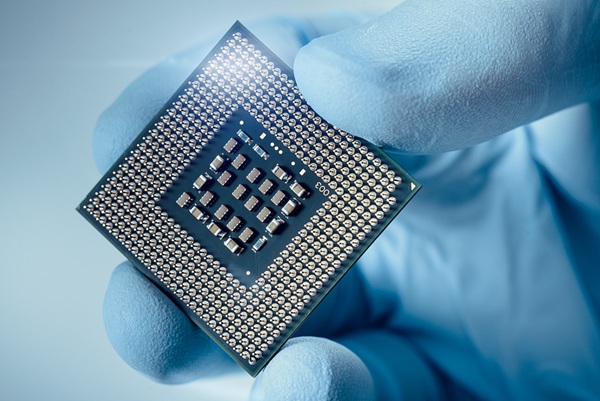
Image

The Copper Conundrum: Why AI Needs Light

As artificial intelligence models grow exponentially larger, traditional copper wiring is hitting physical barriers. Beyond 800Gbps transmission rates, copper cables become impractical - limited to just a few meters while guzzling power and introducing errors.

"We're seeing copper interconnects become the bottleneck in AI infrastructure," explains an industry analyst familiar with the deal. "When you're moving terabytes of data between GPUs, every watt and nanosecond counts."

Ayar's Optical Breakthrough

The startup's TeraPHY chip offers what could be the solution:

  • Massive bandwidth: Eight TeraPHY chips working together can push 200Tbps - nearly seven times NVIDIA's current Rubin GPU capability
  • Energy efficiency: By integrating optics directly into GPU packages (co-packaged optics), systems avoid the power drain of traditional pluggable modules
  • Scalability: The technology theoretically supports connecting up to 10,000 GPUs while maintaining manageable rack power densities around 100kW

The timing couldn't be better. Just one day before this announcement, NVIDIA revealed $4 billion investments in photonics suppliers Coherent and Lumentum - painting a clear picture of where Jensen Huang believes computing is headed.

From Lab to Data Center

Founded in 2015 through collaborations with Intel and DARPA, Ayar Labs is now working with manufacturing partners GlobalWafers and Alchip to transition its technology from prototype to mass production. Industry watchers suggest we could see commercial deployments within two years.

The implications extend beyond just faster AI training. Data centers grappling with power constraints may find optical interconnects help them stay within energy budgets while continuing performance scaling.

Key Points:

  • NVIDIA joins $500M funding round for silicon photonics pioneer Ayar Labs
  • Optical interconnects solve bandwidth/power challenges facing AI infrastructure
  • TeraPHY technology enables 200Tbps connections between processors
  • Move follows NVIDIA's $4B investment in other photonics companies
Enjoyed this article?

Subscribe to our newsletter for the latest AI news, product reviews, and project recommendations delivered to your inbox weekly.

Weekly digestFree foreverUnsubscribe anytime

Related Articles

News

NVIDIA's Lyra 2.0 crafts vast 3D worlds from a single snapshot

NVIDIA's research team unveiled Lyra 2.0, a groundbreaking system that transforms simple photos into expansive 3D environments spanning 90 meters. This innovation tackles a persistent challenge in virtual world creation—maintaining visual consistency over long distances. The technology outperforms six competing systems in image quality and camera control, with its fast version delivering 13 times quicker generation. Already integrated with physical engines like Nvidia Isaac Sim, Lyra 2.0 opens new possibilities for AI training in fully simulated environments, potentially revolutionizing fields from robotics to autonomous vehicles.

April 17, 2026
NVIDIA3D generationAI research
OpenAI Bets Big on Chip Startup Cerebras in $2 Billion AI Hardware Push
News

OpenAI Bets Big on Chip Startup Cerebras in $2 Billion AI Hardware Push

OpenAI has made a strategic $2 billion commitment to AI chip startup Cerebras, marking a bold move to diversify its hardware infrastructure and reduce dependence on NVIDIA. The deal includes stock warrants and funding for specialized data centers, leveraging Cerebras' innovative wafer-scale technology to boost AI performance. This partnership could reshape the competitive landscape of AI computing hardware.

April 17, 2026
AI hardwaresemiconductorsOpenAI
News

NVIDIA's Open-Source Quantum AI Breakthrough: Error Correction Gets Major Boost

NVIDIA has just shaken up the quantum computing world with its groundbreaking open-source AI model. The 'NVIDIA Ising' system tackles two of quantum's toughest challenges—processor calibration and error correction—with remarkable efficiency. What used to take days now happens in hours, while error correction sees triple the accuracy. Major institutions like Harvard and IonQ are already adopting this game-changing technology that blends quantum mechanics with AI smarts.

April 16, 2026
QuantumComputingNVIDIAAIInnovation
News

NVIDIA Unveils Open-Source Quantum AI Breakthrough, Sparking Market Rally

NVIDIA has made waves in the tech world by releasing Ising, the first open-source quantum AI model series. This groundbreaking development addresses critical challenges in quantum computing, offering researchers tools to build more reliable quantum processors. The announcement sent quantum tech stocks soaring, with some Chinese companies seeing massive fund inflows. The Ising models - one for calibration, another for error correction - promise speeds 2.5 times faster than current standards with a 300% accuracy boost.

April 15, 2026
Quantum ComputingArtificial IntelligenceNVIDIA
SiFive Raises $400M in Major Bet on RISC-V Chips, With NVIDIA Joining In
News

SiFive Raises $400M in Major Bet on RISC-V Chips, With NVIDIA Joining In

SiFive, the RISC-V chip design firm founded by Berkeley engineers, just landed a massive $400 million funding round that values the company at $3.65 billion. NVIDIA's participation signals growing industry confidence in RISC-V's potential to challenge Arm and x86 architectures, especially in AI applications. The funding will accelerate SiFive's push into high-performance computing markets traditionally dominated by established players.

April 13, 2026
SiFiveRISC-VSemiconductors
News

Amazon gears up to challenge NVIDIA with its own AI chips

Amazon is making a bold move into the AI chip market, shifting from renting computing power to selling its own hardware directly. With its Trainium chips offering better value and strong demand already lining up, the tech giant is eyeing a $50 billion revenue opportunity. This strategic pivot could reshape the AI computing landscape and provide much-needed alternatives to NVIDIA's dominance.

April 10, 2026
AmazonAI chipsNVIDIA