Notion Embraces Open-Source AI to Cut Costs Without Sacrificing Power
Notion's Bold Move: Mixing Open-Source AI With Premium Models
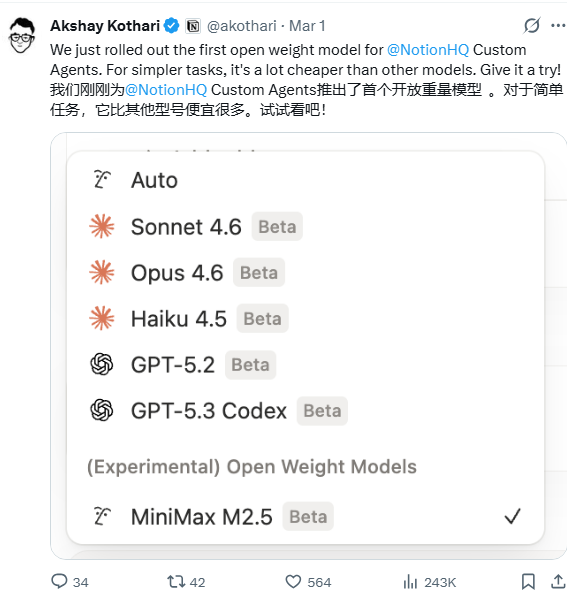
In a strategic shift, Notion announced today it's integrating China's MiniMax M2.5 open-source model into its AI toolkit. The addition marks a departure from the productivity platform's previous reliance solely on premium closed-source models like Claude Sonnet and GPT-5.
Why This Matters
The inclusion of MiniMax M2.5—the only open-source option in Notion's model library—signals a pragmatic approach to AI implementation. Co-founder Akshay Kothari explained that while premium models still handle complex tasks, MiniMax delivers comparable performance for basic functions at "a fraction of the cost."
"We're not replacing our high-end models," Kothari clarified. "We're giving users smarter choices based on their needs and budgets."
The Cost Factor
Early tests show MiniMax cutting operational expenses dramatically:
- Document processing costs dropped by 60%
- Meeting note summarization expenses fell by 45%
- Project management tasks became 30% cheaper to automate
The savings come without noticeable quality differences for routine operations—though Notion still recommends premium models for creative or highly specialized work.
Industry Implications
This hybrid approach reflects broader trends:
- Enterprise practicality: Companies want AI benefits without bankrupting themselves
- Global collaboration: Chinese tech innovations gaining international acceptance
- Tool democratization: Making advanced features accessible to smaller teams
"The one-size-fits-all era of AI is ending," observed tech analyst Maria Chen. "Smart platforms will mix and match solutions like chefs combining premium and pantry ingredients."
What Users Can Expect
The MiniMax integration rolls out gradually:
- Available now as experimental feature
- Full release scheduled for Q2 2026
- Automatic model selection based on task complexity
- Option to manually override defaults
The move positions Notion competitively against rivals still locked into costly single-model systems.
Key Points:
- Cost savings: MiniMax cuts routine task expenses significantly
- Strategic shift: Hybrid approach blends open-source and premium models
- User benefits: More affordable automation without sacrificing quality
- Industry trend: Signals move toward pragmatic, mixed-model ecosystems