
NeurIPS Conference Rocked by Fake Citation Scandal

NeurIPS Conference Faces Credibility Crisis Over Fake Citations

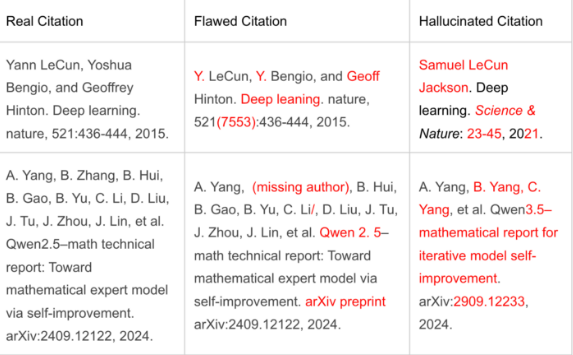
In a scandal shaking the artificial intelligence research community, the prestigious NeurIPS conference has been caught up in a widespread case of citation fraud. AI detection firm GPTZero uncovered that 51 accepted papers contained at least 100 fabricated references between them - complete with fictional authors and bogus publication details.
Image

The 'Vibe Citing' Phenomenon

Researchers have dubbed this troubling trend "vibe citing" - where authors include references that look legitimate but are completely fabricated. Some papers listed non-existent authors like "John Doe," while others cited papers with clearly fake arXiv identifiers (such as arXiv:2305.XXXX). These phantom citations slipped past peer review despite their obvious flaws.

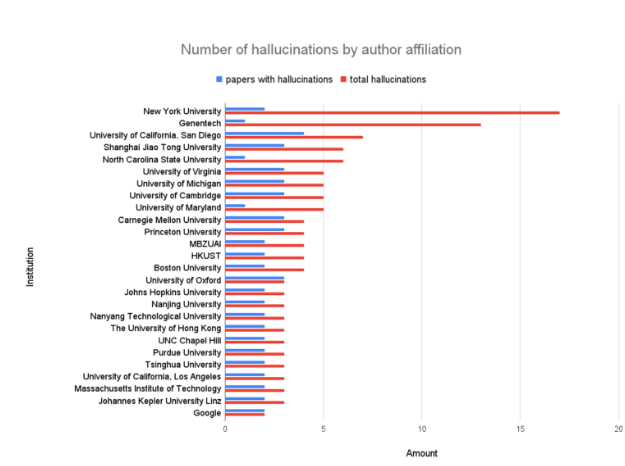
The problem appears concentrated among submissions from top-tier institutions, including New York University and tech giants like Google. "It's particularly concerning because these are papers we'd expect to meet the highest standards," said a source familiar with the investigation.
Image

A System Under Pressure

The scandal reveals deeper cracks in academic publishing's foundation. NeurIPS submissions have skyrocketed from 9,467 in 2020 to 21,575 this year - a staggering 220% increase. This deluge forced organizers to recruit many inexperienced reviewers just to handle the volume.

Some reviewers reportedly cut corners by using AI tools instead of carefully reading submissions. "When you're expected to review dozens of complex papers in weeks, the temptation to take shortcuts becomes overwhelming," explained one anonymous reviewer.

Consequences and Reforms

NeurIPS has responded by declaring fabricated citations grounds for paper rejection or withdrawal. But the damage to trust may be harder to repair in a field where citations serve as academic currency.

The incident raises tough questions about how to maintain quality control as AI research expands exponentially. With preprint servers and conferences flooded with submissions, traditional peer review systems appear increasingly strained.

Key Points:

  • 51 papers at NeurIPS contained 100+ fake citations
  • Fabrications included fake authors and invalid publication IDs
  • Submissions more than doubled since 2020, overwhelming reviewers
  • Conference organizers now treating fake citations as grounds for rejection
  • Scandal highlights growing pains in AI research publishing
Enjoyed this article?

Subscribe to our newsletter for the latest AI news, product reviews, and project recommendations delivered to your inbox weekly.

Weekly digestFree foreverUnsubscribe anytime

Related Articles

NYU Professor's 42-Cent AI Oral Exams Expose Cheating Gap
News

NYU Professor's 42-Cent AI Oral Exams Expose Cheating Gap

An NYU professor found students acing written assignments often couldn't explain basic concepts when quizzed verbally. His solution? AI-powered oral exams costing just 42 cents per student. While stressful for some, 70% agreed these tests better measured real understanding than traditional methods. The experiment reveals both cheating vulnerabilities and AI's potential to transform academic assessment.

January 5, 2026
AI in EducationAcademic IntegrityNYU Innovation
News

DeepSeek Finds Smarter AI Doesn't Need Bigger Brains

DeepSeek's latest research reveals a breakthrough in AI development - optimizing neural network architecture can boost reasoning abilities more effectively than simply scaling up model size. Their innovative 'Manifold-Constrained Hyper-Connections' approach improved complex reasoning accuracy by over 7% while adding minimal training costs, challenging the industry's obsession with ever-larger models.

January 4, 2026
AI ResearchMachine LearningNeural Networks
News

Meta's AI Shakeup: LeCun Questions New Leader's Credentials

AI pioneer Yann LeCun didn't mince words about Meta's new AI chief Alexandr Wang, calling him inexperienced in research leadership. The criticism comes as Zuckerberg reshuffles Meta's AI team following disappointing performance. LeCun reveals deep divisions over Meta's AI direction while launching his own venture focused on alternative approaches.

January 4, 2026
MetaArtificial IntelligenceTech Leadership
GPT-5 Makes Math History With First Independent Proof
News

GPT-5 Makes Math History With First Independent Proof

In a landmark moment for AI research, GPT-5 has independently solved a complex mathematical problem without human guidance. Swiss mathematician Johannes Schmitt revealed the breakthrough, noting the AI employed creative techniques from unexpected areas of algebraic geometry. The achievement validates predictions by mathematician Terence Tao while sparking debates about AI's role in academic research and the need for new attribution standards in scientific publishing.

December 23, 2025
AI ResearchMathematicsMachine Learning
Claude Opus4.5 Shatters AI Endurance Records
News

Claude Opus4.5 Shatters AI Endurance Records

Anthropic's flagship AI model Claude Opus4.5 has set a new benchmark in long-duration task processing, maintaining effectiveness for nearly 5 hours on complex challenges. While the achievement marks progress toward AI that can handle extended projects, experts caution about limitations in the testing methodology.

December 22, 2025
AI ResearchMachine LearningArtificial Intelligence
News

Twitter Spat Sparks Breakthrough: Xie's Team Unveils Game-Changing AI Tool

What began as a heated Twitter debate about self-supervised learning models has blossomed into a significant academic breakthrough. Xie Saining's team transformed online discussions into iREPA - an innovative framework that boosts generative AI performance with just three lines of code. Their research overturns conventional wisdom, showing spatial structure matters more than global semantics for image generation quality.

December 17, 2025
AI ResearchComputer VisionMachine Learning