Musk Applauds Kimi's AI Breakthrough That Could Reshape Long-Text Processing
Musk Backs Revolutionary AI Approach from Kimi
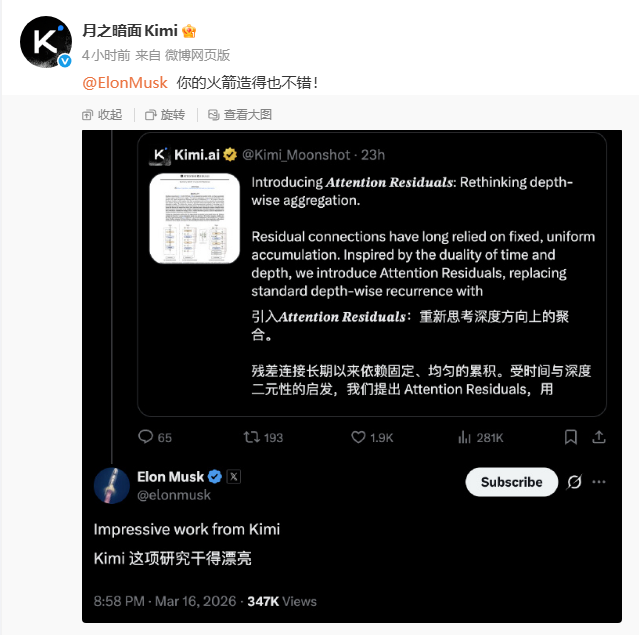
The artificial intelligence world is buzzing after Elon Musk threw his weight behind groundbreaking research from Chinese startup Moonshot AI (Kimi). Their paper titled "Attention Residuals: Rethinking depth-wise aggregation" proposes a radical shift in how large language models process information.
A Tweet That Started Conversations
Musk, never one to shy away from tech discussions, called the work "impressive" on social media. Kimi's official account responded with characteristic wit: "You're also good at building rockets." This exchange quickly went viral, bringing serious AI research into mainstream conversations.
Why This Matters
The breakthrough centers on replacing rigid recursive structures with flexible "depth-wise aggregation" mechanisms. Traditional models follow predictable computation paths when analyzing text - imagine reading every sentence exactly the same way regardless of context. Kimi's approach adapts dynamically based on content complexity.
Early tests show particular promise for:
- Legal document analysis where context shifts dramatically between sections
- Scientific paper processing requiring nuanced understanding of technical terms
- Long-form creative writing where narrative flow matters as much as individual words
"This isn't just incremental improvement," explains Stanford AI researcher Dr. Elena Petrov. "They're challenging fundamental assumptions about how neural networks should handle sequential data."
Practical Implications
The technology could soon impact:
- Customer service chatbots that lose context in lengthy conversations
- Medical diagnosis systems analyzing patient histories spanning decades
- Financial forecasting tools processing years of market data
Industry analysts suggest this innovation might help overcome the "context window" limitations plaguing current models - where performance degrades significantly beyond certain sequence lengths.
The team at Moonshot AI declined interview requests but hinted at upcoming product integrations in their GitHub repository comments.
Key Points:
- Flexible processing: Attention Residuals adapt computation paths based on content needs rather than following fixed patterns
- Efficiency gains: Early benchmarks show 15-20% faster processing for documents exceeding 10,000 tokens
- Industry validation: Musk's endorsement adds credibility despite his usual skepticism toward Chinese tech firms
- What's next: Watch for implementation in Kimi Chat and potential licensing deals with major cloud providers